Millet
- First taste
- 6 months
- Choking risk
- low
- Common allergen
- no
- Iron
- medium
Gluten-free · loose grains can scatter
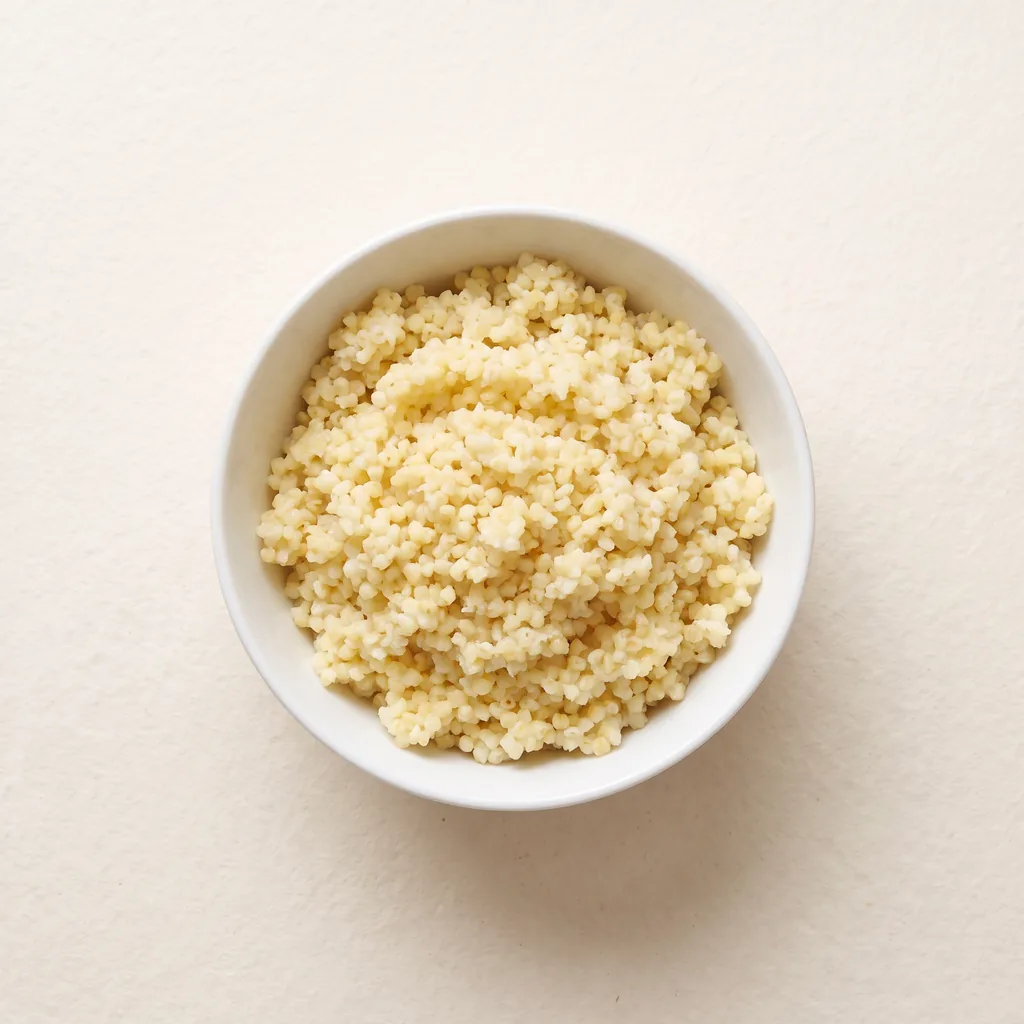
When can babies eat millet?
You can offer millet once baby is ready for solids, usually around 6 months.
Millet is a small-seeded grain. Its tiny seeds form plentifully on grasses that grow all over the world. It is a staple food, especially in Africa and Asia. Pearl millet is the most widely found type. Others include finger millet, fonio, foxtail, kodo, proso and sawa. Today most of the world's millet comes from India, where it goes by bajra, ragi and other names by type.
Millet gives carbohydrate, fiber and protein. Calcium, folate, vitamin B6, zinc and a small amount of iron come with millet. It is also high in antioxidants. These support energy, digestion, growth, bone density, red blood cells and taste.
How do you prepare millet for babies?
6 months and older
Stir cooked millet into a soft food baby can scoop up, such as raita, yogurt, stewed greens or mashed vegetables. This helps the tiny grains cling and cuts the mess. You can make a warm porridge, or let cooked millet hold together dosa batter, fritters, meatballs and pancakes.
9 months and older
Serve cooked millet plain. It also folds into hand-held foods such as pancakes, meatballs, dosa, idli or fritters. Break them into bite-sized pieces. When serving plain, crushing the grains lightly with a fork makes them stick and eases self-feeding. Also keep serving porridge and millet blended into soft foods.
12 months and older
Cooked millet can sit beside stir-fries, stews and savory sauces. Pressing it with a fork back makes the grains cling a bit. If you like, add an age-suitable utensil for practice. No problem if your child shows no interest. Utensils tire new eaters, and children often swing between fingers and utensils. Steady, accurate utensil use usually comes after 24 months.
Preparation by age
The same food is served differently at each age. What matters is how your baby sits, grasps and chews, more than the calendar.
Prep time: 25 min
6 months
6 months · How to prepare as a mashmash
Rinse millet well, then simmer 1 part millet in 3 parts water until soft. Loosen to a porridge with breast milk or water. Being gluten-free, it can be one of the first grains. You can stir it into vegetable mash. Mixing it into yogurt or stewed greens also helps bind the tiny grains.
9 months
9 months · How to preparemash
Cut: Fork mashed
Lightly mash well-cooked millet, or serve a thick porridge on a preloaded spoon. You can also mix it with vegetables and lentils and shape small balls to eat by hand. Pressing the grains flat with a fork back helps them stick together.
12 months
12 months · How to servecube
Serve cooked millet as whole grains like rice, or inside millet patties and fritters. Cook with little salt. If the grains fall apart, bind them with yogurt. Pressing with a fork back also helps. You can add an age-suitable utensil for practice, but no pressure.
Is millet a choking hazard for babies?
Choking risk: low
Cooked millet is low risk. Loose grains can scatter in the mouth and cause gagging or coughing, so help them cling together.
Cooked millet is low risk when prepared to suit the child's age. In theory any food can cause choking. Millet grains that are loose can spread through the mouth and lead to coughing or gagging. When your baby struggles, mash the grains with a fork. You can also stir in coconut milk, broth or sauce so they cling. Stay beside baby, within arm's reach, for the whole meal.
Is millet a common allergen?
Millet is a rare allergen. Millet allergy is rare but can be severe. A rice allergy can bring sensitivity to millet. Sometimes wheat or corn allergy does too, but this needs more study. Millet has no gluten, so it suits people with celiac disease or gluten sensitivity that is not celiac.
As with any new food, start with a small amount for the first servings. If there is no reaction, raise the amount slowly.
Key nutrients
Frequently asked questions about millet
Is millet gluten-free?
Yes, millet is gluten-free. People with celiac disease or non-celiac gluten sensitivity can eat it.
Is millet rich in iron?
The source counts it as iron-rich. All kinds of millet give a bit of iron. For better absorption you can pair it with foods that have vitamin C.
Must I start solids with purees?
You can if you like, but there is no developmental need. Babies can have suitably prepared versions of what you eat.
Sources for this page
- Dünya Sağlık Örgütü. (2023). Guideline for complementary feeding of infants and young children 6-23 months of age.
- NHS. (n.d.). Preparing food safely for babies.
- CDC, Infant and Toddler Nutrition. (n.d.). Choking Hazards.
- Devi PB, Vijayabharathi R, Sathyabama S, Malleshi NG, Priyadarisini VB. (2014). Health benefits of finger millet (Eleusine coracana L.) polyphenols and dietary fiber: a review. Journal of Food Science and Technology. doi:10.1007/s13197-011-0584-9
- Hemmer W, Sesztak-Greinecker G, Wöhrl S, Wantke F. (2017). Food allergy to millet and cross-reactivity with rice, corn and other cereals. Allergology International. doi:10.1016/j.alit.2016.11.002
Guides on iron, allergen introduction, gagging and drinks. Read the starting solids guides
Medical note
This page is for information only and is not a substitute for medical advice, diagnosis or treatment. Talk to your pediatrician before any feeding decision, especially about allergen introduction and reactions.
The Lokmini app
Log millet, reactions and your allergen journey in the app.
Open in LokminiLokmini is coming soon to the App Store.
Astro Tasarım Simay Yenice · Türkiye · merhaba@lokmini.com