Lamb shank
- First taste
- 6 months
- Choking risk
- medium
- Common allergen
- no
- Iron
- high
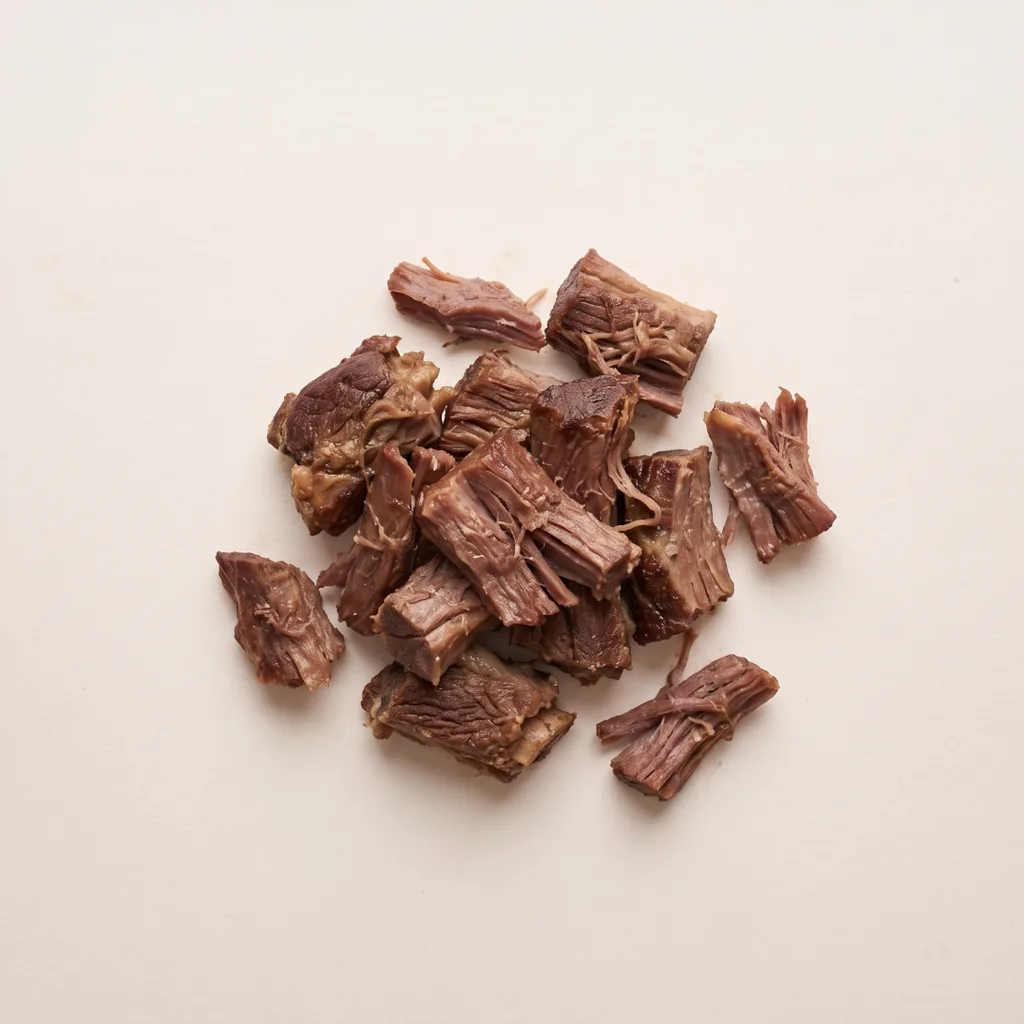
Slow-cooked and pulled apart
When can babies eat lamb shank?
Lamb shank can start when your baby is ready for solids, usually around 6 months, as long as it is well cooked. A lamb is a young domestic sheep. Shank comes from the lower leg, and it takes slow cooking before it turns tender. You will find it in braises worldwide, like Moroccan tagine, kleftiko from Greece and stews across South Asia. Slow cooking gives it a rich taste and soft texture that many cuisines love.
Along with protein and fat, it provides iron, choline, selenium, zinc, and vitamins B6 and B12. These support growth, brain development, energy for play, healthy red blood cells, immunity and hormone function. A baby's iron stores run low after month 6, and lamb is a good source at that stage.
How do you prepare lamb shank for babies?
Why slow cooking
The shank comes from the leg, so it has a lot of connective tissue. It needs long, slow cooking to turn tender. Cooking in sauce or stew keeps the meat soft and juicy.
On the bone
A bone-in shank is a good shape for a young baby to hold and suck. Remove loose bits of meat and fat around the bone first. Check that no bone fragments have broken off.
Sauce
Serving the meat in sauce, or dipping it, helps swallowing. Add no salt, or keep it low.
Preparation by age
The same food is served differently at each age. What matters is how your baby sits, grasps and chews, more than the calendar.
6 months
6 months · How to serve on the bone or as a thick stripstrip
Give a shank on the bone, trimmed of loose meat and fat, or a braised shank cut into a wide, thick strip about two adult fingers across. Babies mostly suck and gnaw. Scraping a bit more meat off the bone leaves a longer bone to hold. Should your baby tear off a large bite, take a breath. Usually the baby spits it out, or gagging moves it forward. A hand placed beneath the chin shows that spitting is allowed.
6 months · How to mix into a mashmash
Cut: Shredded
Pull the tender shank meat into very fine shreds and stir it into a spoonable food such as mashed potato.
9 months
9 months · How to serve as thin shredsstrip
Cut: Shredded
Serve well-cooked, tender shank as thin shreds, alone or in a meal. If your baby cannot pick up small pieces yet, keep offering the bone-in shank. Serving the meat in sauce, or dipping it, helps swallowing. If a big piece breaks off in the mouth, show spitting by sticking out your tongue and saying "ah".
12 months
12 months · How to serve as long shreds and thin stripsstrip
Serve braised shank as long shreds or thin strips. Bite-sized shreds can be dipped in sauce to stay tender. Do not serve chunks or cubes of meat, which keep a high choking risk.
Is lamb shank a choking hazard for babies?
Choking risk: medium
Meat can be tough to chew. Skip chunks and cubes. Serve pulled shreds or thin strips. Do not overcook.
Lamb can be firm and hard to chew. These traits raise the choking risk. Do not cut the meat into chunks or cubes. Serve it as shreds or strips that suit your child's age. Do not overcook it, because dry meat is harder to swallow. Stay close at meals, within arm's reach.
Chunks and cubes
Do not give cubed shank meat to a young child. Pull it into shreds.
Is lamb shank a common allergen?
Lamb rarely causes allergy. Reports of lamb and mutton allergy do exist, though. Cooking the meat lowers this risk. Some tick bites (the Lone Star tick in the US, other ticks elsewhere) are linked to alpha-gal allergy. Alpha-gal is a sugar found in the meat of all non-primate mammals. A delayed allergic reaction appears 3 to 8 hours after eating red meat. Some people with alpha-gal allergy also react to the small amount of this sugar in dairy, gelatin, or organ meats like liver.
A few people with lamb allergy are also sensitive to wool or lanolin (wool grease) on contact. Most people with wool or lanolin sensitivity eat lamb without trouble.
Delayed reaction
If you see a rash, stomach upset or swelling hours after red meat, contact a doctor.
Key nutrients
Frequently asked questions about lamb shank
When can a baby have lamb shank?
Well cooked, once ready for solids, usually around 6 months.
Why cook lamb shank slowly?
It comes from the leg and has plenty of connective tissue. It needs long, slow cooking to turn tender.
Can I cut shank meat into cubes?
No. Chunks and cubes carry a high choking risk. Pull it into shreds or cut thin strips.
Is lamb shank rich in iron?
Yes. A baby's iron need rises after 6 months and lamb is a good source.
Sources for this page
- Dünya Sağlık Örgütü. (2023). Guideline for complementary feeding of infants and young children 6-23 months of age.
- CDC, Infant and Toddler Nutrition. (n.d.). Choking Hazards.
- NHS. (n.d.). Preparing food safely for babies.
Guides on iron, allergen introduction, gagging and drinks. Read the starting solids guides
Medical note
This page is for information only and is not a substitute for medical advice, diagnosis or treatment. Talk to your pediatrician before any feeding decision, especially about allergen introduction and reactions.
The Lokmini app
Log lamb shank, reactions and your allergen journey in the app.
Open in LokminiLokmini is coming soon to the App Store.
Astro Tasarım Simay Yenice · Türkiye · merhaba@lokmini.com