Labneh
- First taste
- 6 months
- Choking risk
- low
- Common allergen
- yes
- Iron
- low
Choose pasteurized, no honey
Contains allergens
Each new allergen is offered on its own and watched for two hours. Our allergen introduction guide is available in Turkish for now.
When can babies eat labneh?
Labneh can start when your baby is ready for solids, usually around 6 months. A pasteurized product lowers the chance of food poisoning.
This cheese is made by draining and salting yogurt. It began in the lands that link Africa, Asia and Europe. It is also known as laban and lebni. It is prized because it kept yogurt usable once the milking season ended. Its flavor varies with the milk used (cow, goat, or sheep) and with the straining time. Fresh labneh is creamy and eaten as a dip or spread. Aged types such as labneh tabat are rolled into balls and kept in olive oil.
Expect protein, fat and calcium, plus vitamin A, vitamin B12 and probiotic bacteria. These support brain growth, bones, skin, immunity and the gut microbiome. Breast milk holds a lot of saturated fat, and a balanced diet can include some.
How do you prepare labneh for babies?
By spoon and by hand
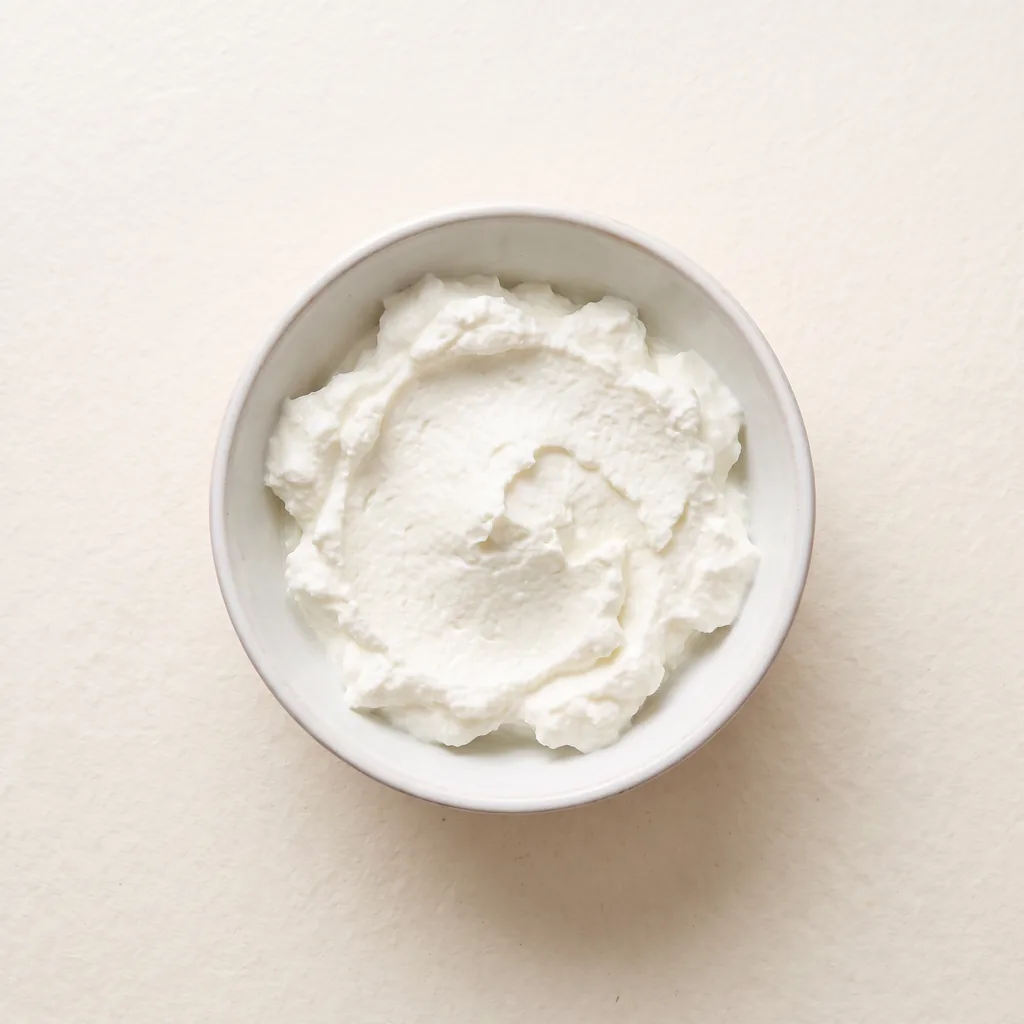
Spoon soft labneh into a bowl and let your baby help themselves. Olive oil can go on top, along with some minced herbs. Skip honey, because infant botulism means honey waits until after age one.
With other foods
Work labneh into lentil and rice dishes to make balls that are easy to grab. Spread it on toast strips or stir it into other soft foods.
Salt
Some labneh types are high in sodium. Babies who feed themselves eat little, so intake usually stays low. Still, a low-salt one is a good pick.
Preparation by age
The same food is served differently at each age. What matters is how your baby sits, grasps and chews, more than the calendar.
Prep time: 5 min
6 months
6 months · How to prepare as a spoonable dipmash
Serve plain labneh made from pasteurized milk with a spoon, or spread it thin on a bread strip or a cooked vegetable stick. Choose one with little salt and no additives. Cow's milk is a new allergen, so give a small amount the first time and in the morning. A drizzle of olive oil and finely chopped herbs are fine, but no honey before the first birthday.
9 months
9 months · How to servemash
Serve labneh as a dip or spread it on a soft bread strip. You can also mix it with mashed avocado or cooked vegetables for a thick blend. It also binds rice and lentil dishes into easy-to-grab balls.
12 months
12 months · How to servemash
Keep spreading labneh on bread and crepes, or add it to low-salt mezze and vegetable patties. Set out a little dish of spices beside it so your toddler can season it. Fill a spoon ahead of time and rest it by the bowl to nudge utensil use. Break firm labneh balls into small crumbles. Keep portions small for salty store-bought labneh.
Is labneh a choking hazard for babies?
Choking risk: low
Soft labneh carries little risk. Firm labneh balls are round and slippery, so serve them to babies as small crumbles.
That varies by style. Labneh that is soft enough to spoon carries little risk. Firm labneh balls are hard, round and slippery, which raises the choking risk. Break firm labneh into small crumbles, and serve it by itself or as part of a meal. Stay close at meals, within arm's reach.
Is labneh a common allergen?
Labneh is mostly made from cow's milk. Cow's milk is a common allergen in young children, which accounts for about one in five food allergies in children in the US. Milk products from sheep, goat and buffalo can cause similar reactions. Milk allergy often passes with time. By age 6, most children have grown out of it. Many babies with milder signs (such as painless blood in the stool) can take cow's milk again around the first birthday, with a doctor's guidance.
Milk can also trigger a delayed allergy called FPIES. Repeated vomiting and diarrhea start some hours after the meal. Untreated, it can lead to fluid loss. FPIES that starts early usually passes by age 3 to 5 and is considered uncommon.
Lactose intolerance is not an allergy, but it causes belly pain, bloating and diarrhea. It is uncommon in babies. Many cheeses, especially aged ones, have less lactose and are better tolerated. If you suspect a milk allergy, ask an allergist before offering dairy. Keep the first few servings small and plain.
Milk allergy
If you see lip swelling, hives, or repeated vomiting hours after eating, contact a doctor.
Key nutrients
Frequently asked questions about labneh
When can a baby have labneh?
Once ready for solids, usually around 6 months. Choose pasteurized.
Can I add honey?
No. Honey is not given before the first birthday because of infant botulism.
Is labneh a choking risk?
Soft labneh is not. Firm labneh balls are round and slippery, so serve them as small crumbles.
Is salty labneh okay?
Pick a low-salt one. Some types are high in sodium, so keep portions small.
Sources for this page
- Dünya Sağlık Örgütü. (2023). Guideline for complementary feeding of infants and young children 6-23 months of age.
- NHS. (n.d.). Preparing food safely for babies.
- CDC, Infant and Toddler Nutrition. (n.d.). Choking Hazards.
- Halken S, Muraro A, de Silva D, Khaleva E, Angier E, Arasi S, et al. (2021). EAACI guideline: Preventing the development of food allergy in infants and young children (2020 update). European Academy of Allergy and Clinical Immunology. doi:10.1111/pai.13496
- Türkiye Ulusal Alerji ve Klinik İmmünoloji Derneği. (n.d.). Besin Alerjisi, öncelikli 10 besin.
- Ramiro-Cortijo D, Singh P, Liu Y, Medina-Morales E, Yakah W, Freedman SD, et al. (2020). Breast Milk Lipids and Fatty Acids in Regulating Neonatal Intestinal Development and Protecting against Intestinal Injury. Nutrients. doi:10.3390/nu12020534
- Warren CM, Jhaveri S, Warrier MR, Smith B, Gupta RS. (2013). The epidemiology of milk allergy in US children. Annals of Allergy, Asthma and Immunology. doi:10.1016/j.anai.2013.02.016
- Nowak-Węgrzyn A. (2015). Nowak-Wegrzyn A. Allergy and Asthma Proceedings 36(3):172-184. Allergy and Asthma Proceedings. doi:10.2500/aap.2015.36.3811
Guides on iron, allergen introduction, gagging and drinks. Read the starting solids guides
Medical note
This page is for information only and is not a substitute for medical advice, diagnosis or treatment. Talk to your pediatrician before any feeding decision, especially about allergen introduction and reactions.
The Lokmini app
Log labneh, reactions and your allergen journey in the app.
Open in LokminiLokmini is coming soon to the App Store.
Astro Tasarım Simay Yenice · Türkiye · merhaba@lokmini.com