Grape
- First taste
- 6 months
- Choking risk
- high
- Common allergen
- no
- Iron
- low
Choking risk · never whole, quarter them
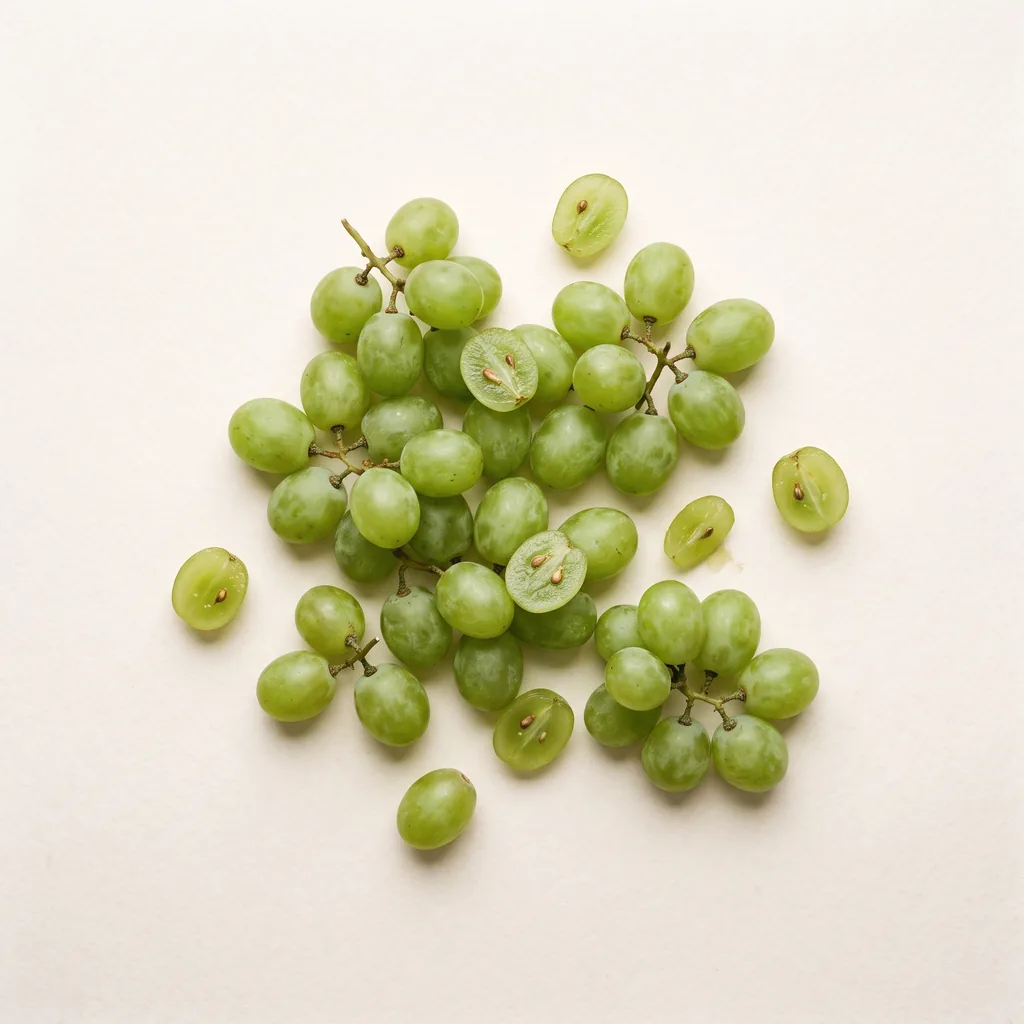
When can babies eat grape?
Grapes can be offered once your baby is about 6 months old and ready for solids, as long as they are prepared to lower the choking risk.
Today the bulk of the crop becomes wine, while the remainder is sold as fresh table grapes, dried as raisins and sultanas, or made into oil, vinegar, jam, jelly, molasses and syrup.
Grapes supply carbohydrates, fiber, and water, as well as potassium and the vitamins C, K, and B6. These help with energy, the gut microbiome, fluid balance, skin health, iron absorption, immunity and blood clotting.
How do you prepare grape for babies?
At 6 months cook grapes until they burst, or make a sauce. Serve alone or stir into ricotta, warm porridge or yogurt.
At 9 months quarter them lengthwise from stem to tip. Pick large, oblong grapes. If your baby cannot pick up the pieces, wait a few weeks or keep cooking them.
At 12 months halve or quarter them lengthwise. Leave the skin and take out large seeds.
A whole grape is round and slippery, and its flesh is firm. Most health bodies do not advise whole grapes before age 4. Once your child's eating skills mature, whole grapes can be tried at the table under supervision. Start with the halved size. Pick large, oblong grapes and leave them on the stem, which stops the child from overfilling the mouth. Show how to crush one with the molars first. Whole grapes should not be given when the child is away from the table.
After 12 months, pasteurized grape juice is fine in small portions. Regular juice raises cavity risk and fills the belly, so waiting until the second birthday helps.
Preparation by age
The same food is served differently at each age. What matters is how your baby sits, grasps and chews, more than the calendar.
6 months
6 months · How to prepare as a puréemash
Cook grapes until they burst and soften, or blend them into a sauce. Serve alone or stir into yogurt or warm porridge. Skins and seeds are not a choking hazard, but you can remove them if you like. Whole grapes are not given at this age.
9 months
9 months · How to cut and serveslice
Cut: Quartered
Cut grapes lengthwise from stem to tip into quarters. When shopping, pick large, oblong grapes over small round ones. If your baby struggles to pick up the quarters, keep going with cooked grapes for a few more weeks.
12 months
12 months · How to cut and serveslice
Cut: Halved
Cut grapes in half lengthwise, or keep quartering them if you prefer. Leave the skin on and take out large seeds. Whole grapes are round and slippery and carry a high risk, so health bodies advise not giving them whole until age four.
Is grape a choking hazard for babies?
Choking risk: high
Whole or halved grapes carry a choking risk. Always quarter them lengthwise and peel them before 12 months. Do not give whole grapes until age 4.
Grapes are round and slippery, with firm flesh. These traits greatly raise the choking risk.
Prepare them for the child's age: cook and mash, or cut lengthwise into quarters or halves. Skins and seeds are not a high choking risk, but you can remove them if you like. Stay within arm's reach during meals.
Is grape a common allergen?
Grape allergy is rare, though not unheard of. As with any new food, start with a small amount for the first meals and raise it over later meals if nothing happens.
Key nutrients
Frequently asked questions about grape
How should grapes be cut for a baby?
Quarter them lengthwise at 9 months, halve or quarter at 12 months. Do not give them whole.
Should grape skins and seeds be removed?
Not required. Skins and seeds are not a high choking risk. After 12 months just remove large seeds.
When can whole grapes be given?
Most health bodies advise waiting until age 4. When skills mature, try at the table under supervision, after showing how to chew.
Can a baby drink grape juice?
Small amounts of pasteurized juice after 12 months. Waiting until the second birthday is better for regular juice.
Sources for this page
- Dünya Sağlık Örgütü. (2023). Guideline for complementary feeding of infants and young children 6-23 months of age.
- NHS. (n.d.). Preparing food safely for babies.
- CDC, Infant and Toddler Nutrition. (n.d.). Choking Hazards.
- American Academy of Pediatrics, HealthyChildren. (n.d.). Choking Prevention for Babies and Children.
- ESPGHAN Committee on Nutrition, Fidler Mis N, Braegger C, Bronsky J, Campoy C, Domellöf M, et al. (2017). Sugar in Infants, Children and Adolescents. Journal of Pediatric Gastroenterology and Nutrition 65(6):681-696. doi:10.1097/MPG.0000000000001733
Guides on iron, allergen introduction, gagging and drinks. Read the starting solids guides
Medical note
This page is for information only and is not a substitute for medical advice, diagnosis or treatment. Talk to your pediatrician before any feeding decision, especially about allergen introduction and reactions.
The Lokmini app
Log grape, reactions and your allergen journey in the app.
Open in LokminiLokmini is coming soon to the App Store.
Astro Tasarım Simay Yenice · Türkiye · merhaba@lokmini.com