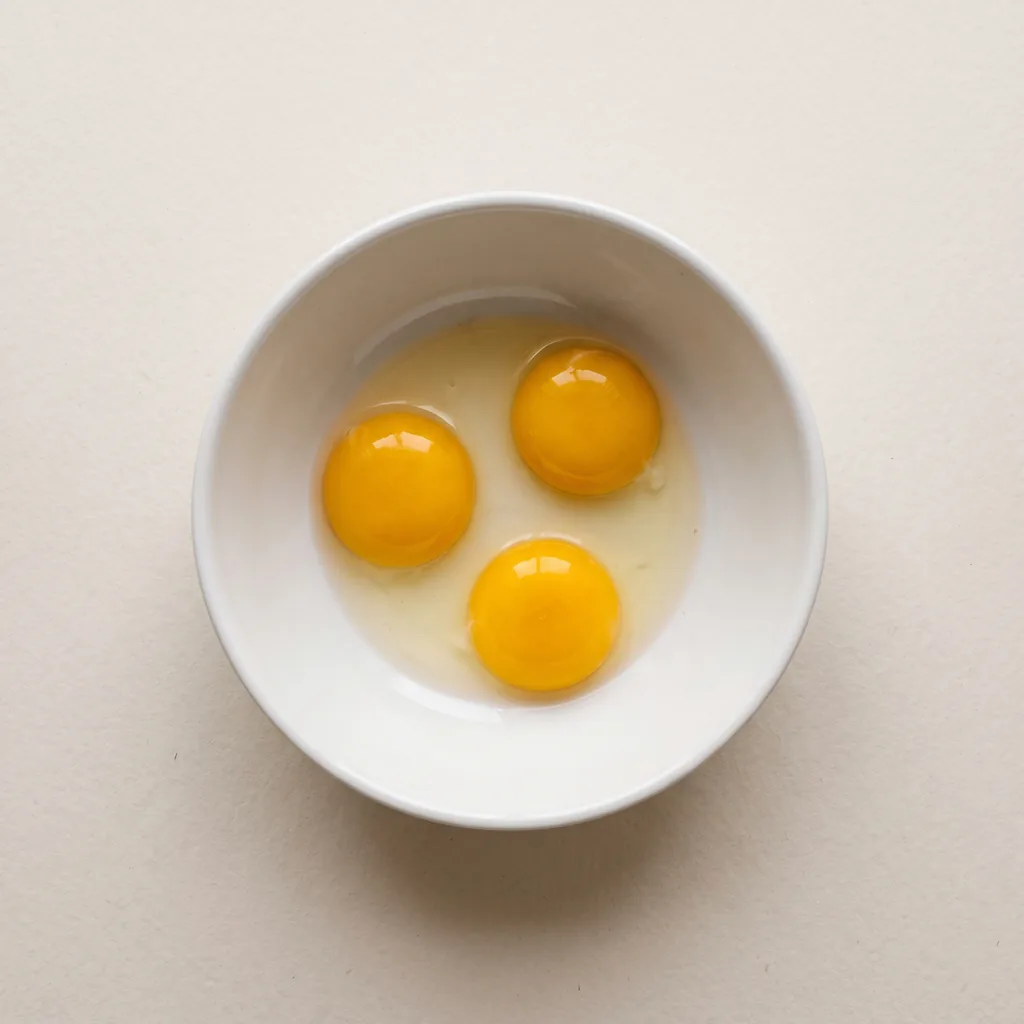
Egg yolk
- First taste
- 6 months
- Choking risk
- low
- Common allergen
- yes
- Iron
- high
Egg allergen · serve well cooked
Contains allergens
Each new allergen is offered on its own and watched for two hours. Our allergen introduction guide is available in Turkish for now.
When can babies eat egg yolk?
When can babies have egg yolk?
Egg yolk can be offered once your baby is ready for solids, from about 6 months. Along with protein, the yolk has choline, vitamin A and vitamin D. It is also a useful source of iron.
Make sure the egg is cooked well. Cook until both the white and the yolk are firm.
Why the whole egg?
Offering egg early and regularly may help lower the chance of egg allergy later. The NHS notes that holding back hen's eggs until after 6 to 12 months may raise the risk of allergy. So rather than stopping at the yolk, plan to add the white as your baby tolerates it.
How do you prepare egg yolk for babies?
Preparation basics
Hard boil the egg for at least 10 minutes. Mash the yolk with a fork and loosen it with breast milk, water or yogurt. Dry, crumbly yolk is hard for a baby to manage, so keep it moist. You can stir it into vegetable purée, oat porridge or yogurt.
Do not serve raw or runny egg. This also applies to eggs with cracked or dirty shells.
Preparation by age
The same food is served differently at each age. What matters is how your baby sits, grasps and chews, more than the calendar.
6 months
6 months · How to prepare as a puréemash
Cut: Fork mashed
Boil the egg for 10 to 12 minutes, then mash the yolk with a fork. Loosen it with breast milk or water. Current allergy research suggests that offering the whole egg (white and yolk) early may help lower the risk of allergy. So do not stay with the yolk alone. Add the white as your baby tolerates it. Start with a small amount at the first feeding and watch for a reaction.
12 months
12 months · How to cut and servecube
Cut a hard boiled egg, yolk included, into small pieces, or mash it with a fork and spread it on bread. Scrambled egg and omelet also work. Cook until both the white and the yolk are firm. Offer water with dry pieces.
Is egg yolk a choking hazard for babies?
Choking risk: low
Dry, crumbly yolk can turn powdery in the mouth and dry the throat. Mash it with a little liquid and offer water alongside.
Choking risk
Egg yolk is soft and carries a low choking risk. The concern is dryness. Crumbly yolk can turn powdery in the mouth. Mash it with a little liquid, begin with small amounts and stay with your baby during meals. Your baby should sit upright and eat calmly.
Is egg yolk a common allergen?
Allergen status
Egg is a common food allergen. When you offer a new allergen, give one food at a time and start with a very small amount. The NHS recommends this approach from about 6 months.
A rash, vomiting, diarrhea, cough, wheeze or swollen lips can be signs of a reaction. For severe symptoms, call emergency services. If your baby has eczema or there is allergy in the family, talk to your doctor first.
Please note
If egg allergy has already been diagnosed, do not serve egg without your doctor's advice.
Key nutrients
Frequently asked questions about egg yolk
Should I give only the yolk?
No. Current allergy guidance suggests that introducing the whole egg (yolk and white) may be more helpful. You can begin with the yolk and add the white as your baby tolerates it.
When should I start to lower the chance of egg allergy?
The AAP says there is no evidence that waiting beyond 4 to 6 months to offer soft foods like egg prevents allergy. The NHS suggests starting with small amounts from about 6 months. Your baby should be ready for solids first.
How should I cook the egg?
Cook until both the white and the yolk are firm. Hard boiling takes about 10 to 12 minutes. Do not serve raw or runny egg.
Is egg yolk a source of iron?
Yes, the yolk contains iron. The WHO stresses iron as a priority nutrient at this age. Ask your doctor about your baby's own iron needs.
Sources for this page
- Dünya Sağlık Örgütü. (2023). Guideline for complementary feeding of infants and young children 6-23 months of age.
- NHS. (n.d.). Preparing food safely for babies.
- CDC, Infant and Toddler Nutrition. (n.d.). Choking Hazards.
- Halken S, Muraro A, de Silva D, Khaleva E, Angier E, Arasi S, et al. (2021). EAACI guideline: Preventing the development of food allergy in infants and young children (2020 update). European Academy of Allergy and Clinical Immunology. doi:10.1111/pai.13496
- NHS Start for Life. (n.d.). Introducing foods that could trigger an allergic reaction.
- NHS. (n.d.). Foods to avoid giving babies and young children.
- AAP, HealthyChildren.org. (n.d.). Starting solid foods.
- Washington University in St. Louis, Brown School (Iannotti ve ark. çalışması). (2017). Eggs improve biomarkers related to infant brain development.
- T.C. Sağlık Bakanlığı, Halk Sağlığı Genel Müdürlüğü. (2022). Türkiye Beslenme Rehberi (TÜBER) 2022, sunum.
Guides on iron, allergen introduction, gagging and drinks. Read the starting solids guides
Medical note
This page is for information only and is not a substitute for medical advice, diagnosis or treatment. Talk to your pediatrician before any feeding decision, especially about allergen introduction and reactions.
The Lokmini app
Log egg yolk, reactions and your allergen journey in the app.
Open in LokminiLokmini is coming soon to the App Store.
Astro Tasarım Simay Yenice · Türkiye · merhaba@lokmini.com