Egg
- First taste
- 6 months
- Choking risk
- low
- Common allergen
- yes
- Iron
- medium
Egg allergen
Contains allergens
Each new allergen is offered on its own and watched for two hours. Our allergen introduction guide is available in Turkish for now.
When can babies eat egg?
Egg can be offered from about 6 months, once baby is ready for solids. Egg is a common allergen, so start with a small amount. Serve the white and yolk together, fully cooked.
Nutrition
Egg is a good source of protein and fat. It has DHA, an omega 3 fat. It carries vitamins A, B12, and D, plus choline, iodine, iron, selenium, zinc, and folate. It also holds lutein and zeaxanthin for eye health. These nutrients support growth, brain development, blood cells, immunity, and bones.
Eggs every day
A child can eat egg every day. If you serve it the same way too often, your child may get bored. Vary the forms. Recent research shows that cholesterol from food does not raise heart risk.
How do you prepare egg for babies?
Give a small amount of well cooked egg the first time. Watch for 5 to 10 minutes after the first bite. If there are no signs, give the rest. Omelet strips, mashed scrambled egg, and well cooked boiled egg all work. For scrambled egg and baked goods, whisk the yolk and white until fully blended. This spreads the protein evenly so it cooks evenly.
Well cooked egg usually means 71 degrees C inside. For boiled egg, simmer 15 minutes. Stir scrambled egg until no runny part is left.
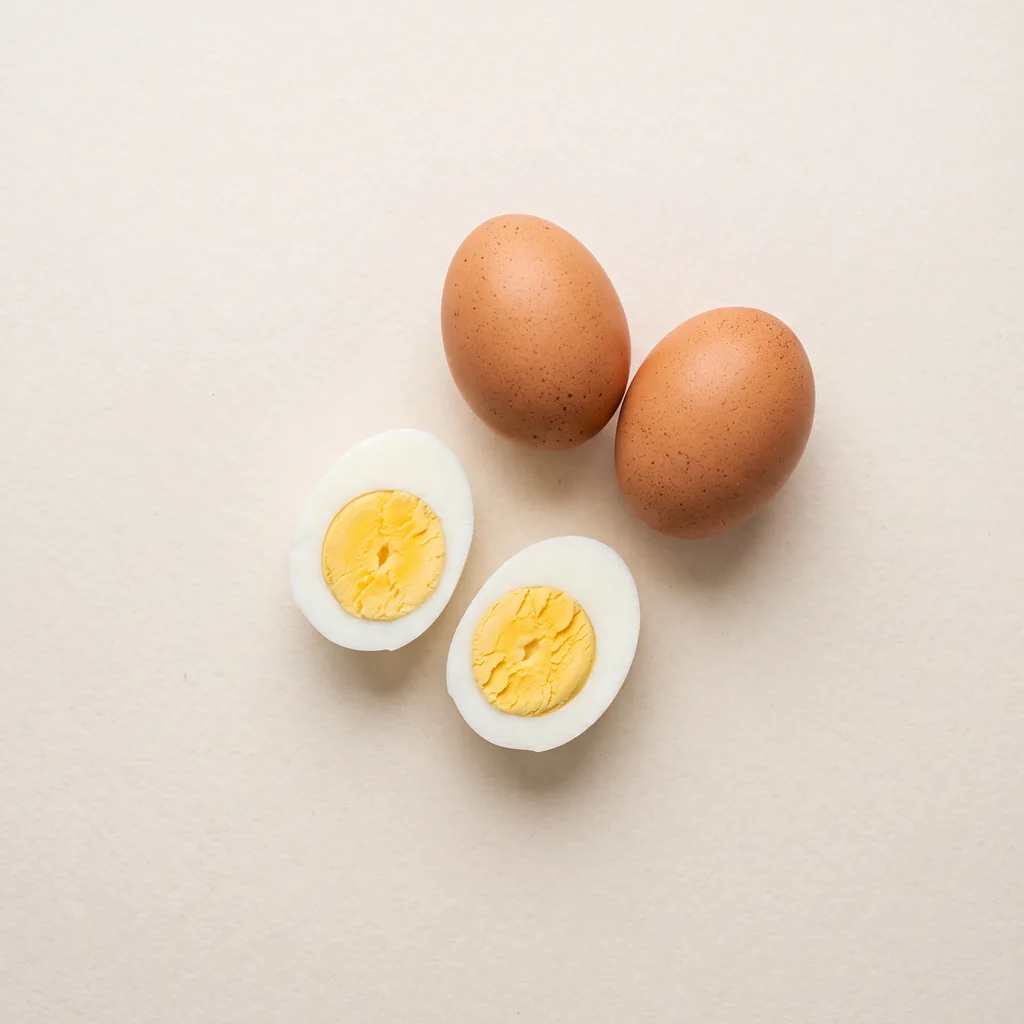
Dry yolk of boiled egg is hard for small babies to move in the mouth. After 9 months you can serve quarters or slices. To serve it earlier, mash the egg with water, breast milk, formula, or yogurt.
Runny egg
There is no age at which runny or raw egg is surely safe. Children under 5 are in the group at highest risk of Salmonella poisoning. Do not use cracked or dirty eggs.
Preparation by age
The same food is served differently at each age. What matters is how your baby sits, grasps and chews, more than the calendar.
6 months
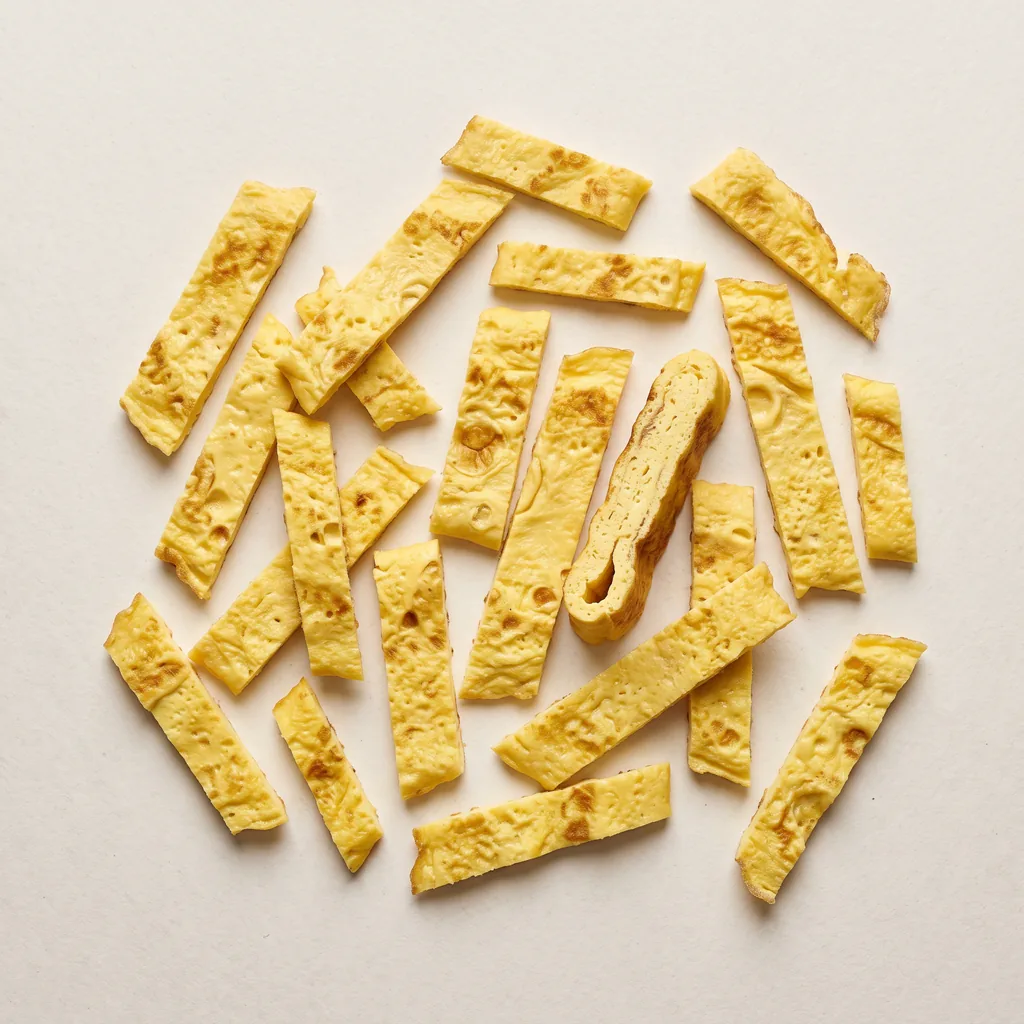
6 months · How to cut and serve for baby-led weaningstrip
Cut: Finger strip
Whisk two or three eggs until the yolk and white are fully blended. Cook in a small pan over medium heat for about 6 to 8 minutes, until the edges curl and the top is dry. Cut into strips about as thick as two adult fingers. Egg is a common allergen, so start small. Watch closely for 5 to 10 minutes after the first bite.
6 months · How to prepare as a puréemash
Cut: Fork mashed
Boil the egg in water for 15 minutes. Peel it and mash with a little water, breast milk, or formula. The yolk is dry and hard to swallow, so keep the mix loose. Offer a little water in an open cup.
9 months
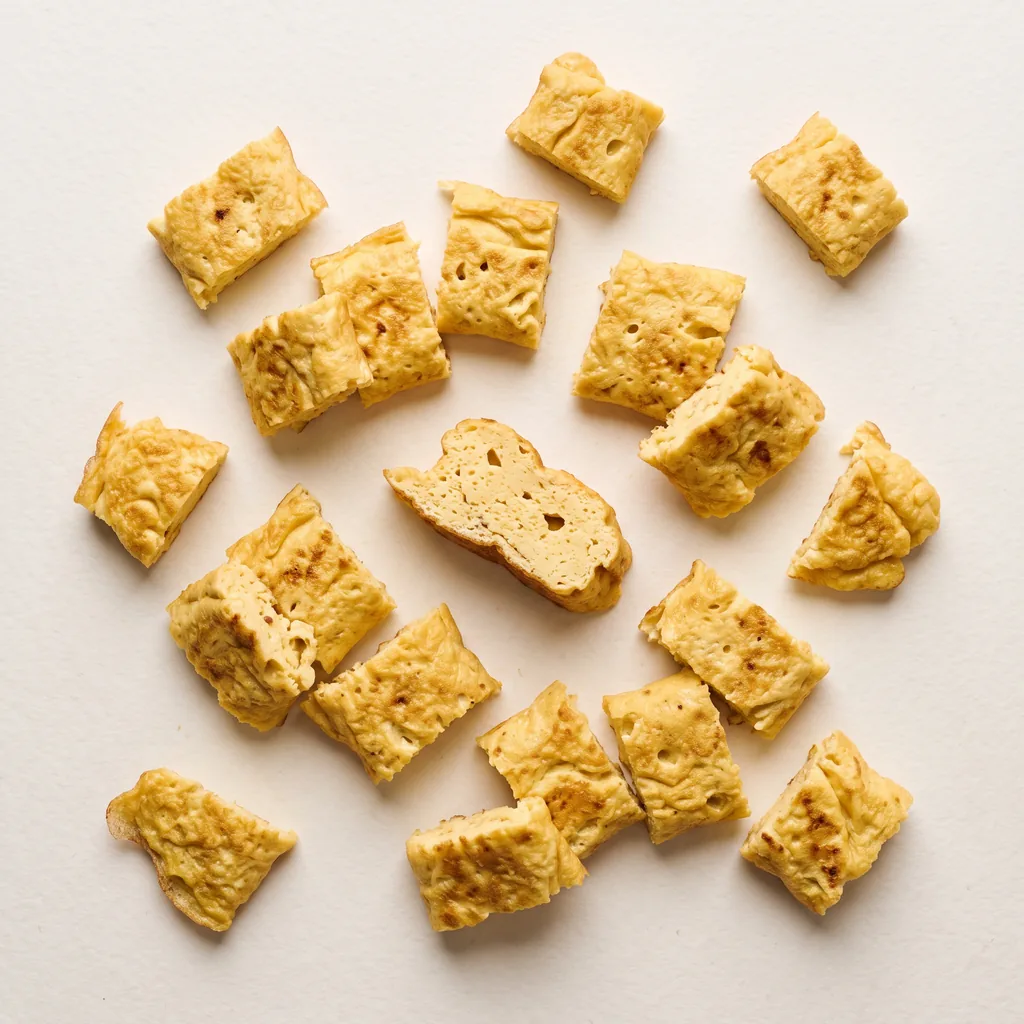
9 months · How to cut and servecube
Cut: Bite sized piece
Once the pincer grasp develops, serve omelet or boiled egg in bite-sized cubes. Make sure the egg is cooked through to 71 °C inside. Offer water, breast milk, or formula in an open cup to help the pieces go down.
12 months
12 months · How to cut and servecube
Cut: Bite sized piece
Serve cooked egg in bite-sized cubes. This size also suits fork practice. You can make egg muffins or baked egg cups and freeze them, then reheat when needed. If you serve a whole boiled egg, put a cup of water or milk next to it.
Is egg a choking hazard for babies?
Choking risk: low
Egg is low risk. Dry boiled yolk can stick to the tongue. Offer a little water, breast milk, or formula in an open cup alongside.
Egg carries a low choking risk. Dry yolk can stick to the tongue and palate and cause gagging. Offer a little water, breast milk, or formula in an open cup. Stay with your child during meals.
Is egg a common allergen?
Egg is a common allergen. About 2% of children are allergic to egg. The good news: about 70% of them outgrow it before adulthood. About two thirds of children with egg allergy tolerate cooked egg.
The old advice was to wait until age 2. Today there is evidence that giving well cooked egg early and often in infancy may help prevent allergy. Ovalbumin, a main egg allergen, is sensitive to heat. In baked, boiled, steamed, or fully scrambled egg, most of it breaks down.
A family history of food allergy is usually not a reason to delay egg. Severe eczema or another food allergy in the baby raises the risk. If that fits your baby, ask the doctor before starting. The doctor may suggest a test or a trial with an allergist.
Once your child tolerates egg, keep it in the diet regularly. Some babies react strongly to even a tiny amount. Reactions range from mild to anaphylaxis. Make sure you know the signs before you start.
Egg is also a known cause of FPIES. FPIES brings repeated vomiting and diarrhea a few hours after eating. Untreated, it can cause fluid loss. FPIES that starts early usually passes by age 3 to 5.
Emergency
If there is trouble breathing, facial swelling, widespread hives, or repeated vomiting, call emergency services right away.
Key nutrients
Frequently asked questions about egg
Can babies eat egg every day?
Yes. If you repeat the same preparation too often, your child may tire of it. Serve egg in different forms.
When can I give boiled egg?
Dry yolk can be a choking risk. After 9 months you can give quarters or slices. To give it earlier, mash it with water, milk, or yogurt.
What can replace egg?
Applesauce, flax egg, and yogurt can stand in for egg in recipes. The choice depends on the dish.
Should I give yolk and white separately?
No. The source says to start with a small amount of well cooked egg, white and yolk together.
Sources for this page
- Dünya Sağlık Örgütü. (2023). Guideline for complementary feeding of infants and young children 6-23 months of age.
- NHS. (n.d.). Preparing food safely for babies.
- CDC, Infant and Toddler Nutrition. (n.d.). Choking Hazards.
- Halken S, Muraro A, de Silva D, Khaleva E, Angier E, Arasi S, et al. (2021). EAACI guideline: Preventing the development of food allergy in infants and young children (2020 update). European Academy of Allergy and Clinical Immunology. doi:10.1111/pai.13496
- Perkin MR, Logan K, Tseng A, Raji B, Ayis S, Peacock J, et al. (2016). Randomized Trial of Introduction of Allergenic Foods in Breast-Fed Infants. New England Journal of Medicine. doi:10.1056/NEJMoa1514210
- Fleischer DM, Chan ES, Venter C, Spergel JM, Abrams EM, Stukus D, et al. (2021). A Consensus Approach to the Primary Prevention of Food Allergy Through Nutrition: Guidance from the American Academy of Allergy, Asthma, and Immunology; American College of Allergy, Asthma, and Immunology; and the Canadian Society for Allergy and Clinical Immunology. J Allergy Clin Immunol Pract. doi:10.1016/j.jaip.2020.11.002
- Nowak-Węgrzyn A. (2015). Nowak-Wegrzyn A. Allergy and Asthma Proceedings 36(3), 172-184. Allergy and Asthma Proceedings. doi:10.2500/aap.2015.36.3811
- Blesso C, Fernandez M. (2018). Dietary Cholesterol, Serum Lipids, and Heart Disease: Are Eggs Working for or Against You? Nutrients. doi:10.3390/nu10040426
Guides on iron, allergen introduction, gagging and drinks. Read the starting solids guides
Medical note
This page is for information only and is not a substitute for medical advice, diagnosis or treatment. Talk to your pediatrician before any feeding decision, especially about allergen introduction and reactions.
The Lokmini app
Log egg, reactions and your allergen journey in the app.
Open in LokminiLokmini is coming soon to the App Store.
Astro Tasarım Simay Yenice · Türkiye · merhaba@lokmini.com