Dill
- First taste
- 6 months
- Choking risk
- low
- Common allergen
- no
- Iron
- low
Fresh herb · finely chopped, small amounts
When can babies eat dill?
Dill can go into your baby's meals from about 6 months, once baby is ready for solids.
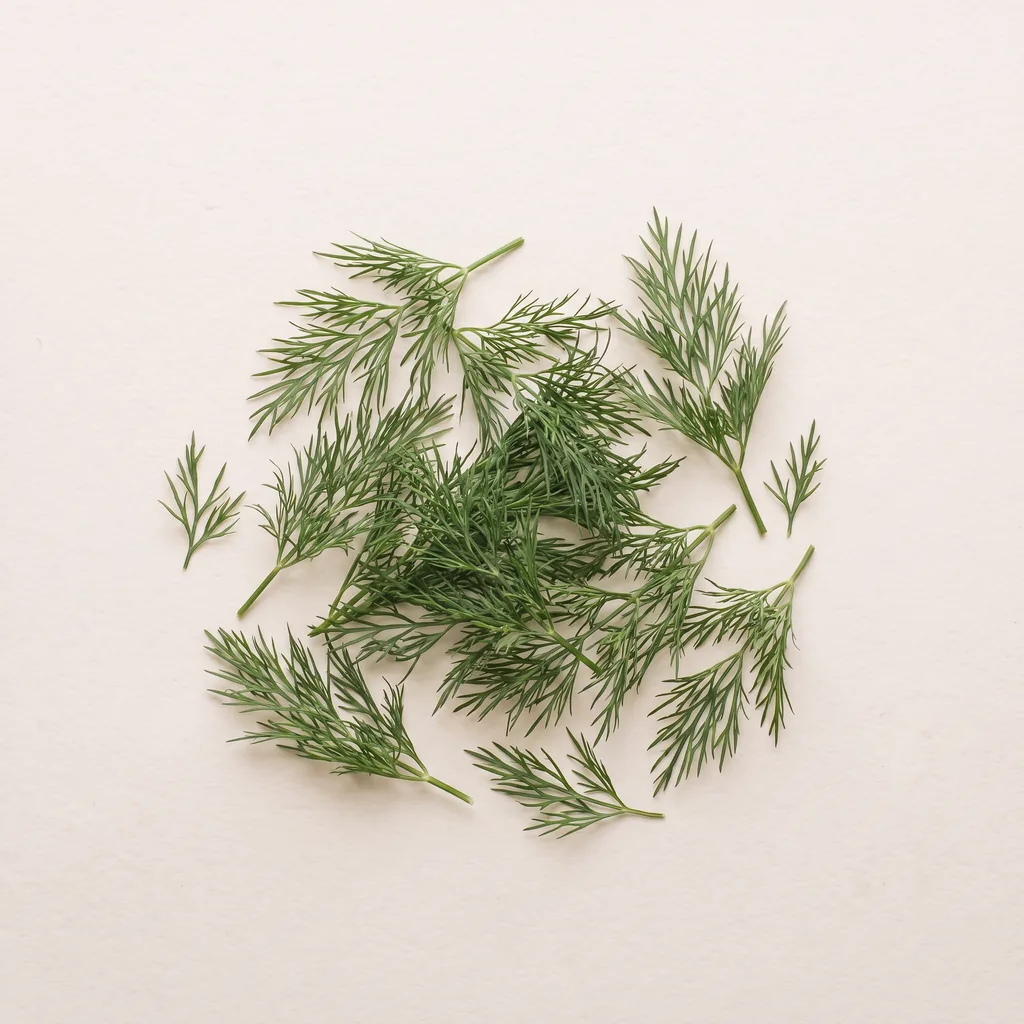
Dill is an herb native to the Mediterranean region. The seeds and the fine, lacy fronds are edible. They give sauces, soups, and stews a citrusy taste and a fresh scent.
Nutrition
Dill is used in small amounts, so its nutritional contribution is modest. It holds some vitamins, minerals, fiber, and a little vitamin C. It also carries plant compounds such as phenolic acids and flavonoids. These may help digestion and may act against microbes and oxidation.
How do you prepare dill for babies?
Wash the dill and chop it very finely. Add it to yogurt, vegetable dishes, meatballs, omelets, and soups. Adding it at the end keeps the scent fresher.
Do not give dill essential oil to babies or young children. There is not enough safety research on it. The normal amounts used in cooking are generally considered safe.
Preparation by age
The same food is served differently at each age. What matters is how your baby sits, grasps and chews, more than the calendar.
6 months
6 months · How to add to mealsmash
Cut: Finely chopped
Chop fresh dill very finely. Stir it into a sauce for cooked vegetables or into a meat dish. A soft stem can go into the chop with the leaves. Use leaves alone when the stem is woody and tough. Dried dill or dill powder works too.
12 months
12 months · How to servecube
Add fresh, dried or powdered dill to meals the way you usually do. Whatever size of fronds a recipe asks for, big pieces can make a toddler gag. Keep an open cup of water or milk handy and invite a sip if a bit feels uncomfortable.
Is dill a choking hazard for babies?
Choking risk: low
Low risk. Large pieces of dill can make toddlers gag or cough a little. Chop it finely.
Dill carries a low choking risk when prepared to suit your child's age. Larger pieces of frond may cause gagging or a little coughing. Chop it very finely.
Stay near your baby during meals.
Is dill a common allergen?
Dill is not a common allergen. Rare cases have been reported, and some were severe. Dill belongs to the Apiaceae family. People sensitive to carrot, celery, coriander, cumin, or fennel may react to dill too. Those with birch or mugwort pollen allergy can feel a brief itch, tingle, or burn in the mouth. Cooking may reduce the reaction.
Dill can also cause contact rashes. Together with sunlight it may cause a dark, sometimes blistering rash called phytophotodermatitis. For babies with sensitive skin, wash hands and face after long contact.
Give a little at the first meals. If all is well, raise the amount slowly.
Key nutrients
Frequently asked questions about dill
Can babies have dill essential oil?
No. Research on how safe it is for infants and toddlers is thin. Dill used as a cooking herb in normal amounts is considered safe.
Can I use the stems too?
If the stem is soft, chop it finely with the leaves. If it is woody and tough, use only the leaves.
Can dill cause a skin rash?
Rarely. For babies with sensitive skin, wash hands and face after long contact.
Sources for this page
- Shekhawat G, Jana S. (2010). Anethum graveolens: An Indian traditional medicinal herb and spice. Pharmacognosy Reviews. doi:10.4103/0973-7847.70915
- Chiu AM, Zacharisen MC. (2000). Anaphylaxis to dill. Annals of Allergy, Asthma & Immunology. doi:10.1016/S1081-1206(10)62523-9
- Monteseirín J, Pérez‐Formoso JL, Sánchez‐Hernández MC, Hernández M, Camacho MJ, Bonilla I, et al. (2002). Occupational contact dermatitis to dill. Allergy. doi:10.1034/j.1398-9995.2002.23575_10.x
- Thiviya P, Gunawardena N, Gamage A, Madhujith T, Merah O. (2022). Apiaceae Family as a Valuable Source of Biocidal Components and their Potential Uses in Agriculture. Horticulturae. doi:10.3390/horticulturae8070614
- Kashyap RR, Kashyap RS. (2015). Kashyap RR, Kashyap RS. Journal of Allergy 2015, 543928. Journal of Allergy. doi:10.1155/2015/543928
Guides on iron, allergen introduction, gagging and drinks. Read the starting solids guides
Medical note
This page is for information only and is not a substitute for medical advice, diagnosis or treatment. Talk to your pediatrician before any feeding decision, especially about allergen introduction and reactions.
The Lokmini app
Log dill, reactions and your allergen journey in the app.
Open in LokminiLokmini is coming soon to the App Store.
Astro Tasarım Simay Yenice · Türkiye · merhaba@lokmini.com