Cream cheese
- First taste
- 6 months
- Choking risk
- medium
- Common allergen
- yes
- Iron
- low
Spread thin · no honey
Contains allergens
Each new allergen is offered on its own and watched for two hours. Our allergen introduction guide is available in Turkish for now.
When can babies eat cream cheese?
Cream cheese can start when your baby is ready for solids, around 6 months.
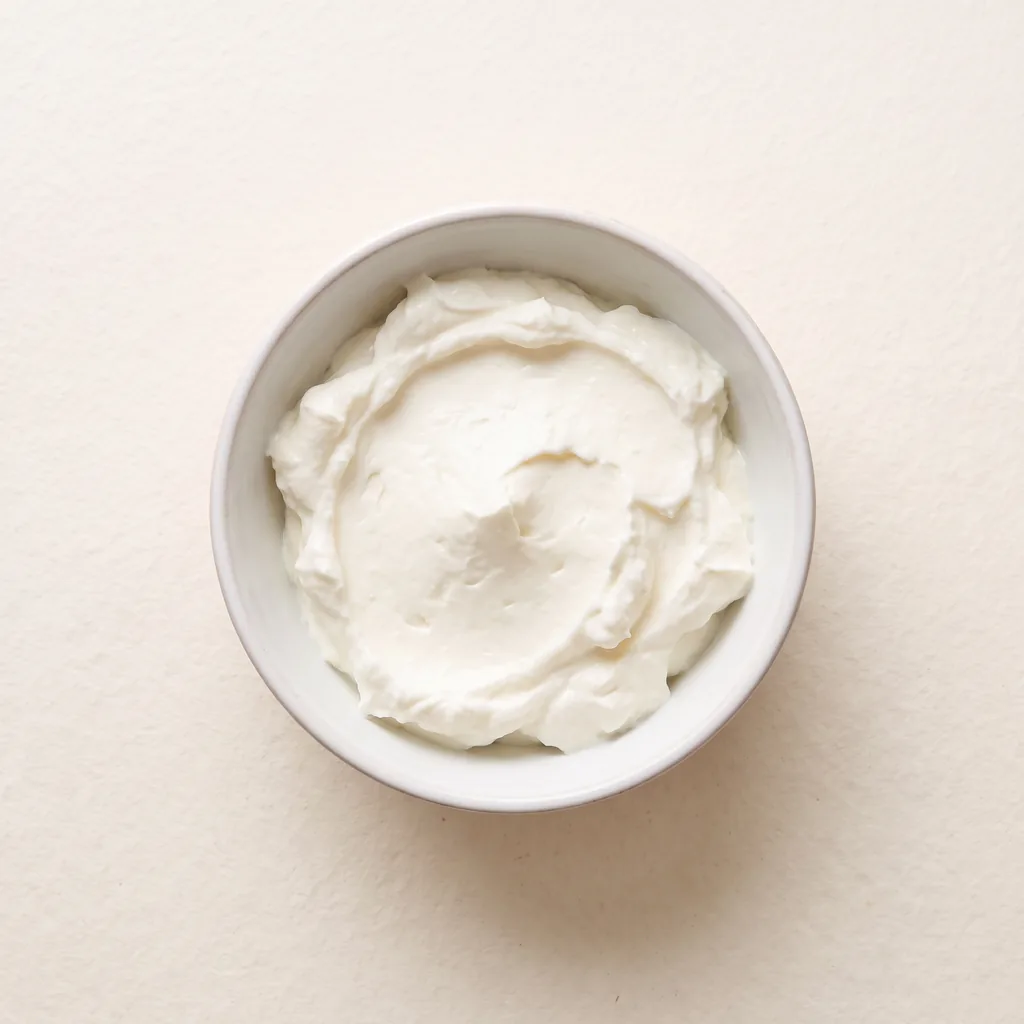
Cream cheese is a soft cheese made from the rich cream on top of milk.
Nutrition
Fat makes up much of cream cheese. Fat is a dense energy source for fast growth. It is high in saturated fat, one of the most abundant fats in breast milk. Saturated fat has been studied for its link to heart disease in adults. Research shows it has a place in a balanced diet and may affect the heart more neutrally than once thought. Vitamin A and carotenoids such as beta carotene are in it too. They support brain development, skin, immune defense and growth.
How do you prepare cream cheese for babies?
Honey
Do not combine cream cheese with honey. There is a risk of infant botulism. Honey is not given before 12 months.
Do not give honey to a baby under 12 months.
How it differs from neufchâtel
Cream cheese and neufchâtel are nearly identical in North America. Each has a fresh taste with a mild tang. Their textures are close, so recipes treat them as interchangeable. Pasteurized cow's milk and stabilizers go into both. At room temperature both are smooth and easy to spread. The difference is milk fat. By US law, neufchâtel has 20 to 33 percent fat and cream cheese at least 33 percent. The French cheese called neufchâtel is a different product. It is a soft, bloomy-rind cheese made from unpasteurized milk.
French-style neufchâtel can be made from raw milk. Give your baby a product that says pasteurized on the label.
Preparation by age
The same food is served differently at each age. What matters is how your baby sits, grasps and chews, more than the calendar.
6 months
6 months · How to spread on stripsstrip
Put a thin coat of cream cheese on a food that is easy to grab and chew. A bagel or bialy works too. Your baby will not eat much, but gnawing helps oral skills. Do not combine it with honey. Honey is not given before 12 months.
9 months
9 months · How to dip and mixmash
Put out pieces of fruit or vegetable so your baby can grab them and dip them in whipped cream cheese. You can also work it into a frittata, or blend it with mashed vegetables or grains.
12 months
12 months · How to spread and mixslice
You can try any kind of cream cheese. Spread it onto other foods suited to your baby's age, fold it into baking batter or family dishes, or put it out as a dip.
Is cream cheese a choking hazard for babies?
Choking risk: medium
Thick layers or globs raise the choking risk. Spread a thin layer.
Thick layers or globs make it a choking risk. Prepare it for your child's age. Stay within arm's reach at meals.
Cutting rule
Do not serve globs. Spread a thin layer.
Is cream cheese a common allergen?
Most cream cheese comes from cow's milk, which ranks among the usual food allergens for small children. About one in five childhood food allergies is to milk. Sheep, goat and buffalo milk can trigger similar reactions. Milk allergy often fades with time. Most children with cow's milk allergy outgrow it by age 6. Many babies with mild milk protein allergy (such as painless blood in stool) can restart milk around the first birthday with a doctor's guidance.
FPIES
Milk can set off food protein-induced enterocolitis syndrome (FPIES), a delayed type of allergy. A few hours after eating, it causes sudden, repeated vomiting and diarrhea. Untreated, it leads to serious fluid loss. FPIES that starts early is often outgrown by age 3 to 5.
If repeated vomiting and diarrhea start a few hours after a dairy food, seek medical care.
Lactose intolerance
Lactose intolerance is uncommon in babies and toddlers. Cream cheese may sit better than milk and some other dairy. If your child has lactose intolerance, calcium should come from other foods. Look for naturally low-lactose or lactose-free products.
If you suspect milk allergy, talk to an allergist before offering cheese. The allergist may suggest testing or may ask you to give dairy in the clinic under supervision. When risk is judged low, starting at home may be advised. Begin with a small amount for the first servings and raise it slowly if there is no reaction.
Key nutrients
Frequently asked questions about cream cheese
At what age can babies eat cream cheese?
When ready for solids, around 6 months. Serve it spread in a thin layer.
Can I serve honey with cream cheese?
No. Honey is not given before 12 months because of the risk of infant botulism.
Are cream cheese and neufchâtel the same?
In North America they are almost the same. The difference is fat content. French neufchâtel is a soft cheese made from raw milk.
Is cream cheese a choking risk?
Thick layers or globs raise the risk. Spread a thin layer.
Sources for this page
- Ramiro-Cortijo D, Singh P, Liu Y, Medina-Morales E, Yakah W, Freedman SD, et al. (2020). Breast Milk Lipids and Fatty Acids in Regulating Neonatal Intestinal Development and Protecting against Intestinal Injury. Nutrients. doi:10.3390/nu12020534
- Micha R, Mozaffarian D. (2010). Saturated Fat and Cardiometabolic Risk Factors, Coronary Heart Disease, Stroke, and Diabetes: a Fresh Look at the Evidence. Lipids. doi:10.1007/s11745-010-3393-4
- Pimpin L, Wu JHY, Haskelberg H, Del Gobbo L, Mozaffarian D. (2016). Is Butter Back? A Systematic Review and Meta-Analysis of Butter Consumption and Risk of Cardiovascular Disease, Diabetes, and Total Mortality. PLoS ONE. doi:10.1371/journal.pone.0158118
- Warren CM, Jhaveri S, Warrier MR, Smith B, Gupta RS. (2013). The epidemiology of milk allergy in US children. Annals of Allergy, Asthma & Immunology. doi:10.1016/j.anai.2013.02.016
- El-Agamy EI. (2007). El-Agamy EI. Small Ruminant Research 68:64-72. Small Ruminant Research. doi:10.1016/j.smallrumres.2006.09.016
Guides on iron, allergen introduction, gagging and drinks. Read the starting solids guides
Medical note
This page is for information only and is not a substitute for medical advice, diagnosis or treatment. Talk to your pediatrician before any feeding decision, especially about allergen introduction and reactions.
The Lokmini app
Log cream cheese, reactions and your allergen journey in the app.
Open in LokminiLokmini is coming soon to the App Store.
Astro Tasarım Simay Yenice · Türkiye · merhaba@lokmini.com