Coconut
- First taste
- 6 months
- Choking risk
- medium
- Common allergen
- no
- Iron
- high
Start with fine shreds, no chips
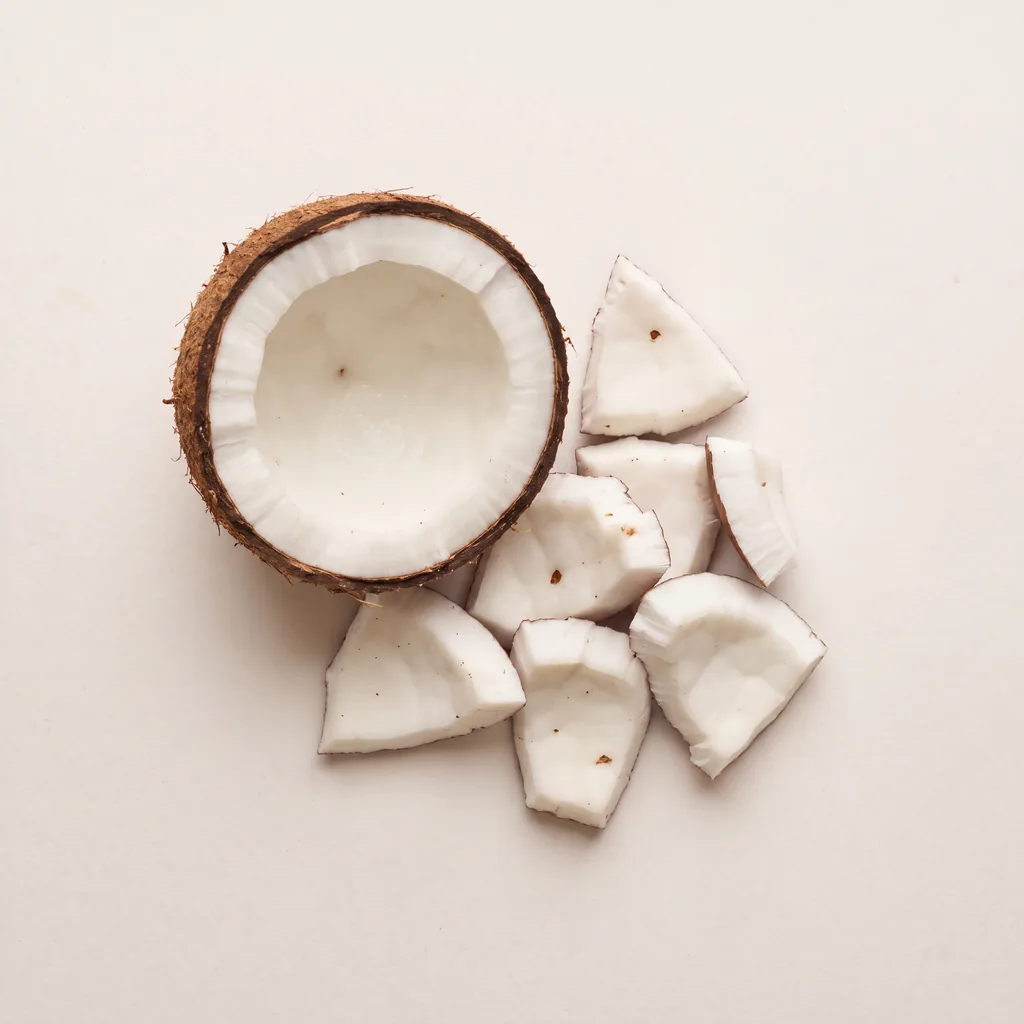
When can babies eat coconut?
Coconut can start when your baby is ready for solids, around 6 months.
It most likely comes from tropical Asia. Every part of the palm is put to use, for fiber, medicine, instruments, shelter and food. That is why some call it the tree of life. It is eaten at different stages, from young green coconuts to mature brown ones. Each stage works a little differently in the kitchen.
Nutrition
Coconut gives fat, fiber and protein. It also contains several B vitamins along with zinc, selenium, potassium, magnesium and iron. These nutrients give plenty of energy for growth and play. They support digestion, iron status, immunity and hormone function.
Coconut oil is a very good source of fat. It gives energy for your baby's fast growth at this stage.
How do you prepare coconut for babies?
Which form at which age
Start with dried fine shreds, coconut oil, milk and cream. Soft young coconut strips come after 9 months. Mature flat pieces and chips need molars and good chewing skills.
Milk and water
Give coconut milk and water as drinks after 12 months. In the first year, the main drinks are breast milk and formula. Milk can be part of a dish from 6 months.
Dried coconut with sulfites
Dried coconut is often preserved with sulfites. For a child without sulfite sensitivity, it poses no problem within a varied diet. If you want to avoid sulfites, look for a sulfite-free brand. Check the label for sulfur dioxide, sodium metabisulfite and similar names.
In children with asthma, sulfites can trigger allergy-like symptoms and asthma flares.
Preparation by age
The same food is served differently at each age. What matters is how your baby sits, grasps and chews, more than the calendar.
6 months
6 months · How to prepare with fine shredsmash
Cut: Grated
Stir dried, very finely shredded coconut into warm oatmeal, rice or another soft food. Coconut oil or milk can also be the base of these dishes. Avoid large flakes and chips. They can be sharp, and the tongue has a hard time moving them around.
9 months
9 months · How to prepare young coconut stripsstrip
Cut: Finger strip
Cut young coconut flesh into thin strips roughly as long as an adult little finger. The flesh should be soft enough to mash with light pressure. Keep stirring fine shreds into food or sprinkling them on top.
12 months
12 months · How to prepare with milk and shredsmash
Cut: Finger strip
Mix fine shreds into food or sprinkle them on top. Use coconut oil, milk and cream in meals. You can start offering a small amount of coconut milk or water as a drink. Keep serving young coconut strips.
12 months · How to prepare mature piecesslice
Offer mature coconut only once your child has molars, takes manageable bites, chews well and swallows safely. This is often after 18 months. Start with flat, thin pieces with the shell removed. Large baked flakes can be tried at this stage too. You can also let your child scoop half a fresh young coconut with a spoon.
Is coconut a choking hazard for babies?
Choking risk: medium
Mature raw coconut and chips are hard to chew. For a young baby, serve fine shreds or soft young coconut.
Coconut can be a choking risk at times. Young coconut, milk and cream carry little risk. Mature raw pieces and chips are hard and difficult to chew. Prepare it for your child's age and stay close at meals.
Cutting rule
At 6 months, fine shreds only. No large flakes or chips. At 9 months, thin strips of young coconut soft enough to mash. Mature pieces and chips only for a child who has molars and chews well.
Is coconut a common allergen?
Coconut allergy is rare. When it does happen, it has been linked to serious reactions. Children with a peanut or tree nut allergy are not usually allergic to coconut. Still, cross-reactions have been seen between coconut and macadamia, almond, walnut, hazelnut, lentil and latex.
Dried coconut may contain sulfites. Sulfites are rarely an allergen as such. In people with asthma, though, they can cause allergy-like reactions.
For the first try, offer a small amount and watch your baby's response.
Key nutrients
Frequently asked questions about coconut
Can babies drink coconut milk?
As a drink, after 12 months. In the first year, breast milk and formula are the main drinks. As a cooking ingredient, it can be used from 6 months.
Is coconut oil suitable for babies?
Yes. It is a good source of fat and works in many dishes. It gives energy for a baby's fast growth.
Can I give dried coconut with sulfites?
Yes, if your child has no sulfite sensitivity. You can choose a sulfite-free brand if you prefer. Sulfites can cause reactions in children with asthma.
Can a baby with peanut allergy eat coconut?
Coconut allergy does not usually come with peanut or tree nut allergy. Still, rare cross-reactions have been reported. Ask an allergist to be sure.
Sources for this page
- Anagnostou K. (2017). Coconut Allergy Revisited. Children (Basel). doi:10.3390/children4100085
- Cleveland Clinic. (2020). Sulfites.
Guides on iron, allergen introduction, gagging and drinks. Read the starting solids guides
Medical note
This page is for information only and is not a substitute for medical advice, diagnosis or treatment. Talk to your pediatrician before any feeding decision, especially about allergen introduction and reactions.
The Lokmini app
Log coconut, reactions and your allergen journey in the app.
Open in LokminiLokmini is coming soon to the App Store.
Astro Tasarım Simay Yenice · Türkiye · merhaba@lokmini.com