Cloves
- First taste
- 6 months
- Choking risk
- medium
- Common allergen
- no
- Iron
- low
Tiny pinch of ground, no clove oil
When can babies eat cloves?
Cloves can be added to your baby's food when your baby is ready for solids, around 6 months. If you cook with whole cloves, take them out before serving.
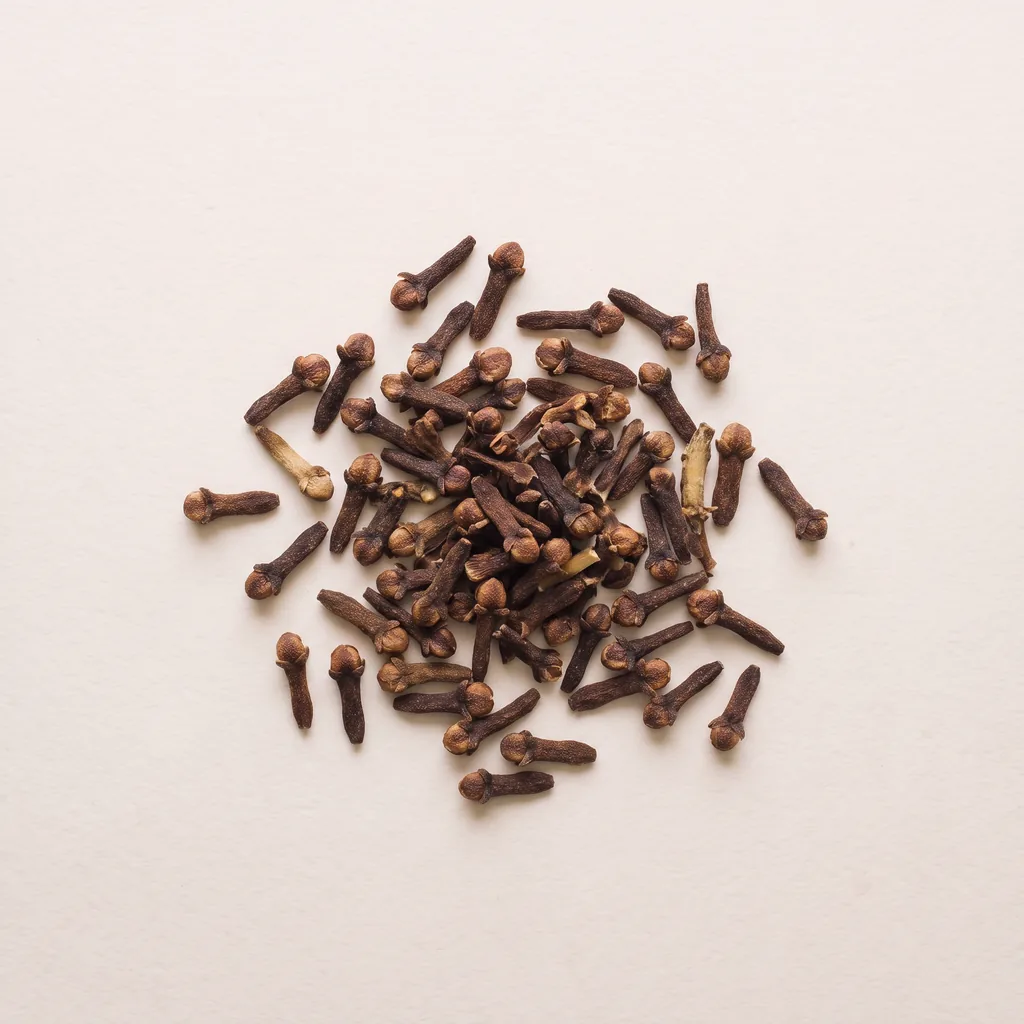
A clove is the dried flower bud of an evergreen tree from the islands of Southeast Asia. Today it is used all over the world. The taste is bittersweet and sharp. It adds warmth to many sweet and savory dishes, from pho and mole to pumpkin desserts.
Nutrition
The small amount of clove used in cooking adds little nutrition. It carries small amounts of vitamins, minerals and fiber. It also holds plant compounds such as eugenol.
Never give clove oil
Do not give clove oil or clove essential oil to babies or young children. It is sometimes rubbed on for teething pain, but swallowing too much has led to near fatal poisoning.
How do you prepare cloves for babies?
Use a little
Clove is a very strong spice. Add only a tiny pinch of the ground form to your baby's portion. If you put whole cloves in the family pot, find and remove all of them before plating your baby's food.
What it goes with
It pairs well with soft foods such as cooked vegetables, rice porridge, tofu, oatmeal and pancakes. After 12 months it can go into sauces and baked goods too.
Preparation by age
The same food is served differently at each age. What matters is how your baby sits, grasps and chews, more than the calendar.
6 months
6 months · How to use as a spicemash
Take a pinch of ground cloves. Sprinkle it over cooked vegetables, rice porridge or soft tofu strips. You can also stir a little into batter. The flavor is strong and too much hides other tastes. If you cooked with whole cloves, pick out every one before serving.
12 months
12 months · How to use in mealscube
Cut: Ground
You can cook with ground cloves in your child's meals, together with other ingredients. Add it to sauces, batters and baked goods. Clove-spiced drinks such as tea can be shared in small amounts from an open cup if they contain no alcohol. If whole cloves went into a dish or drink, take them all out before serving.
Is cloves a choking hazard for babies?
Choking risk: medium
A whole clove is tiny, round and extremely hard. Take them out of the dish before serving. Clove oil is never given to babies.
Whole cloves are a choking risk. They are small, round and very hard. Never give a baby a whole clove. Sit close to your baby at meals.
Do not forget to remove them
If you cooked a dish or drink with whole cloves, make sure you take every clove out before serving.
Is cloves a common allergen?
Clove is not a common allergen. Allergy to eating it is rare. A delayed skin contact allergy has been reported. Spice blends with cloves may hold common allergens, so read the label.
Spices can cause reactions that look like allergy. Breathing in ground clove can irritate the nose and set off sneezing and coughing. That may not be an allergy. A clove dish can leave a harmless red patch around the mouth or make diaper rash worse. Before the meal, a light coat of protective ointment on the face and bottom may help.
Someone whose skin reacts to allspice or Balsam of Peru may also react when clove or clove oil stays on the skin for long. This kind of allergy usually does not mean avoiding clove in food completely.
For the first try, start with a tiny amount. If there is no reaction, raise it slowly over later meals.
Key nutrients
Frequently asked questions about cloves
Can I use clove oil for teething?
No. Clove oil should not be given to babies or young children. Serious poisoning has been reported after swallowing too much.
Can my baby eat food cooked with whole cloves?
Yes, once you have taken every clove out. Whole cloves are hard and small, so they are a choking risk.
Can babies drink clove tea?
After 12 months, a small amount can be shared from an open cup if the drink has no alcohol. Remove all whole cloves first.
Sources for this page
- Lane BW, Ellenhorn MJ, Hulbert TV, McCarron M. (1991). Clove Oil Ingestion in an Infant. Human & Experimental Toxicology. doi:10.1177/096032719101000410
- Hartnoll G, Moore D, Douek D. (1993). Near fatal ingestion of oil of cloves. Archives of Disease in Childhood. doi:10.1136/adc.69.3.392
- Cortés-Rojas DF, de Souza CRF, Oliveira WP. (2014). Clove (Syzygium aromaticum): a precious spice. Asian Pacific Journal of Tropical Biomedicine. doi:10.1016/S2221-1691(14)60215-X
- Vicidomini C, Roviello V, Roviello GN. (2021). Molecular Basis of the Therapeutical Potential of Clove (Syzygium aromaticum L.) and Clues to Its Anti-COVID-19 Utility. Molecules. doi:10.3390/molecules26071880
- Markman L. (2009). Teething. Pediatrics in Review. doi:10.1542/pir.30-8-e59
Guides on iron, allergen introduction, gagging and drinks. Read the starting solids guides
Medical note
This page is for information only and is not a substitute for medical advice, diagnosis or treatment. Talk to your pediatrician before any feeding decision, especially about allergen introduction and reactions.
The Lokmini app
Log cloves, reactions and your allergen journey in the app.
Open in LokminiLokmini is coming soon to the App Store.
Astro Tasarım Simay Yenice · Türkiye · merhaba@lokmini.com