Clementine
- First taste
- 6 months
- Choking risk
- medium
- Common allergen
- no
- Iron
- low
Remove the membrane and seeds
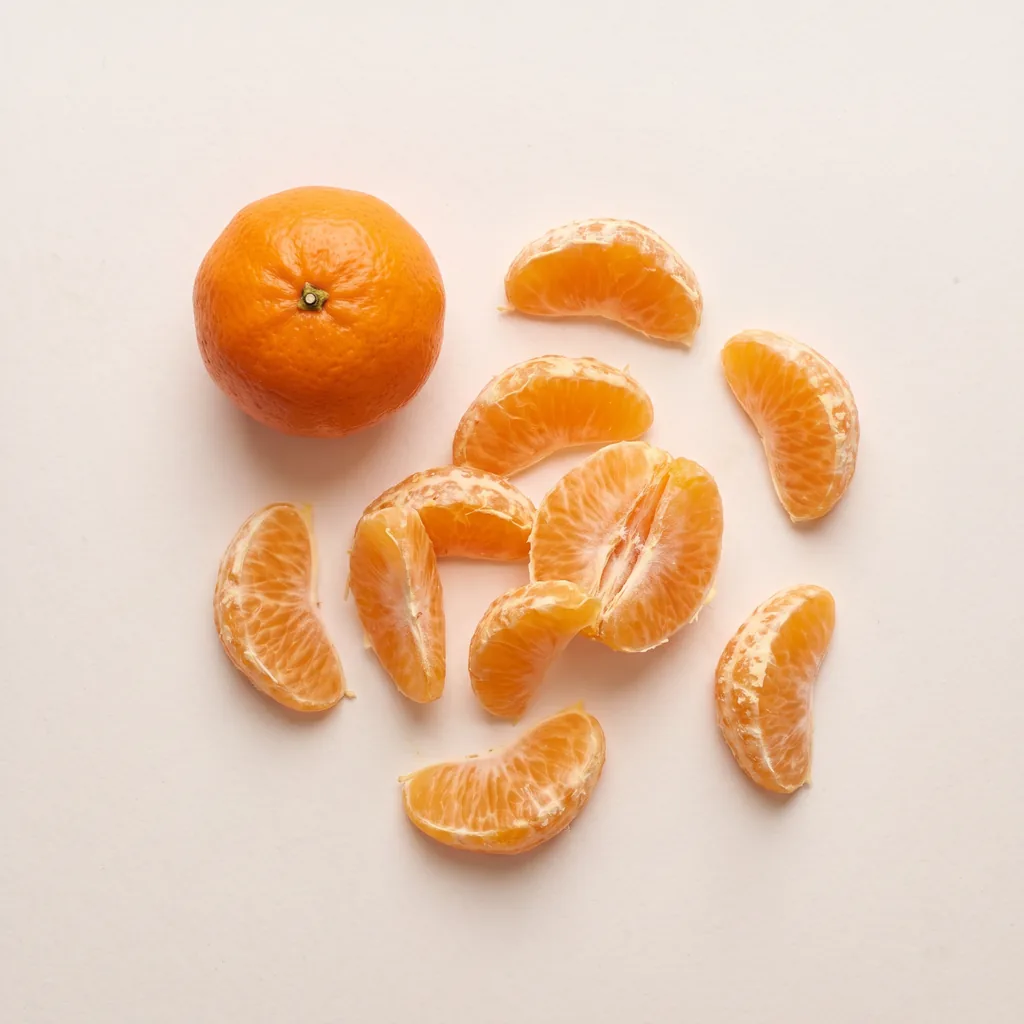
When can babies eat clementine?
Clementines can start when your baby is ready for solids, around 6 months. They are a small fruit with a bright orange rind. The flesh is sweet and juicy, and less acidic than an orange.
A clementine is a cross between a mandarin and a sweet orange. People disagree on whether the cross began in Algeria or China. Today it grows in groves in sunny regions around the world.
Nutrition
Clementines give carbohydrates, fiber and water. They contain vitamins A, B6 and C, potassium, folate and antioxidants such as flavonoids. These nutrients support energy, digestion and fluid balance. They also matter for vision, immunity and the nervous system.
How do you prepare clementine for babies?
Why the membrane matters
The thin skin around each segment is slippery and hard to chew. For young babies, take it off. Always pick out the seeds.
Juice
A small amount of clementine juice can be given as a drink from 12 months onward. Regular juice can raise the risk of cavities. It can also fill the belly and lower appetite at meals. The whole fruit is the better choice.
Medicines
Like grapefruit, clementine may interact with some medicines. If your child takes a regular medicine, check with a health professional.
The source compares this interaction to grapefruit. Ask your doctor about the specific medicine and dose.
Preparation by age
The same food is served differently at each age. What matters is how your baby sits, grasps and chews, more than the calendar.
6 months
6 months · How to prepare as a mashmash
Cut: Fork mashed
Peel the clementine and take the membrane off each segment. Pick out any seeds. Mash the flesh with a fork. Spooning it over yogurt or a similar food makes it easier to eat. Do not serve segments with the membrane left on.
9 months
9 months · How to prepare small piecescube
Cut: Bite sized piece
Slice off the top of the clementine. Lift each segment out of its membrane pocket and cut it into bite-sized pieces. When in doubt, always take the fruit out of the membrane.
12 months
12 months · How to prepare halved segmentscube
Cut: Halved
Once you trust your child's chewing and swallowing, offer membrane-on segments cut in half. If your child chews them well, move to whole segments and show how to take bites. You can keep offering membrane-free bites too. Around age 2, your child can try peeling a clementine alone. It is a good fine motor exercise.
Is clementine a choking hazard for babies?
Choking risk: medium
Segments left in their membrane are slippery with tapered ends. For a young baby, serve them without membrane or seeds.
Clementine is a choking risk. Segments in the membrane have small, tapered ends. The texture is mixed and slippery. Prepare it for your child's age and sit close at meals.
Cutting rule
At 6 months, mash. At 9 months, cut membrane-free segments small. Membrane-on segments need good chewing skills, often after 18 months. Cut them in half first.
Is clementine a common allergen?
Clementine is not a common allergen. Still, some people report sensitivity to citrus. People with pollen food allergy syndrome may react to clementines. This is more likely with grass and some tree pollen sensitivity. The result is brief itching in the mouth. A dangerous reaction is not expected.
In some people, orange proteins can cause a serious reaction. The main allergens seem to sit in the seed. Rarely, chewing seeds can trigger a reaction. This is another reason to pick out the seeds.
Citrus may worsen eczema. The acid can leave a harmless red patch around the mouth. It usually fades quickly.
For the first try, offer a small amount and watch your baby's response.
Key nutrients
Frequently asked questions about clementine
Can babies drink clementine juice?
A small amount is fine after 12 months. Regular juice can raise the risk of cavities and lower appetite. The whole fruit is the better choice.
Do I have to remove the membrane?
For young babies, yes. The membrane is slippery and hard to chew. When your child chews well, you can start with halved membrane-on segments.
Can clementine cause a rash around the mouth?
It can. The citrus acid may leave a harmless red patch around the mouth, and it fades fast. A thin layer of barrier ointment before the meal may help.
Sources for this page
- Theile D, Hohmann N, Kiemel D, Gattuso G, Barreca D, Mikus G, et al. (2017). Clementine juice has the potential for drug interactions: in vitro comparison with grapefruit and mandarin juice. European Journal of Pharmaceutical Sciences. doi:10.1016/j.ejps.2016.11.021
- Iorio RA, Del Duca S, Calamelli E, Pula C, Lodolini M, Scamardella F, et al. (2013). Citrus Allergy from Pollen to Clinical Symptoms. PLoS One. doi:10.1371/journal.pone.0053680
- ESPGHAN Committee on Nutrition, Fidler Mis N, Braegger C, Bronsky J, Campoy C, Domellöf M, et al. (2017). Sugar in Infants, Children and Adolescents. Journal of Pediatric Gastroenterology and Nutrition. doi:10.1097/MPG.0000000000001733
Guides on iron, allergen introduction, gagging and drinks. Read the starting solids guides
Medical note
This page is for information only and is not a substitute for medical advice, diagnosis or treatment. Talk to your pediatrician before any feeding decision, especially about allergen introduction and reactions.
The Lokmini app
Log clementine, reactions and your allergen journey in the app.
Open in LokminiLokmini is coming soon to the App Store.
Astro Tasarım Simay Yenice · Türkiye · merhaba@lokmini.com