Cilantro (coriander)
- First taste
- 6 months
- Choking risk
- low
- Common allergen
- no
- Iron
- low
Mince finely or blend into sauce
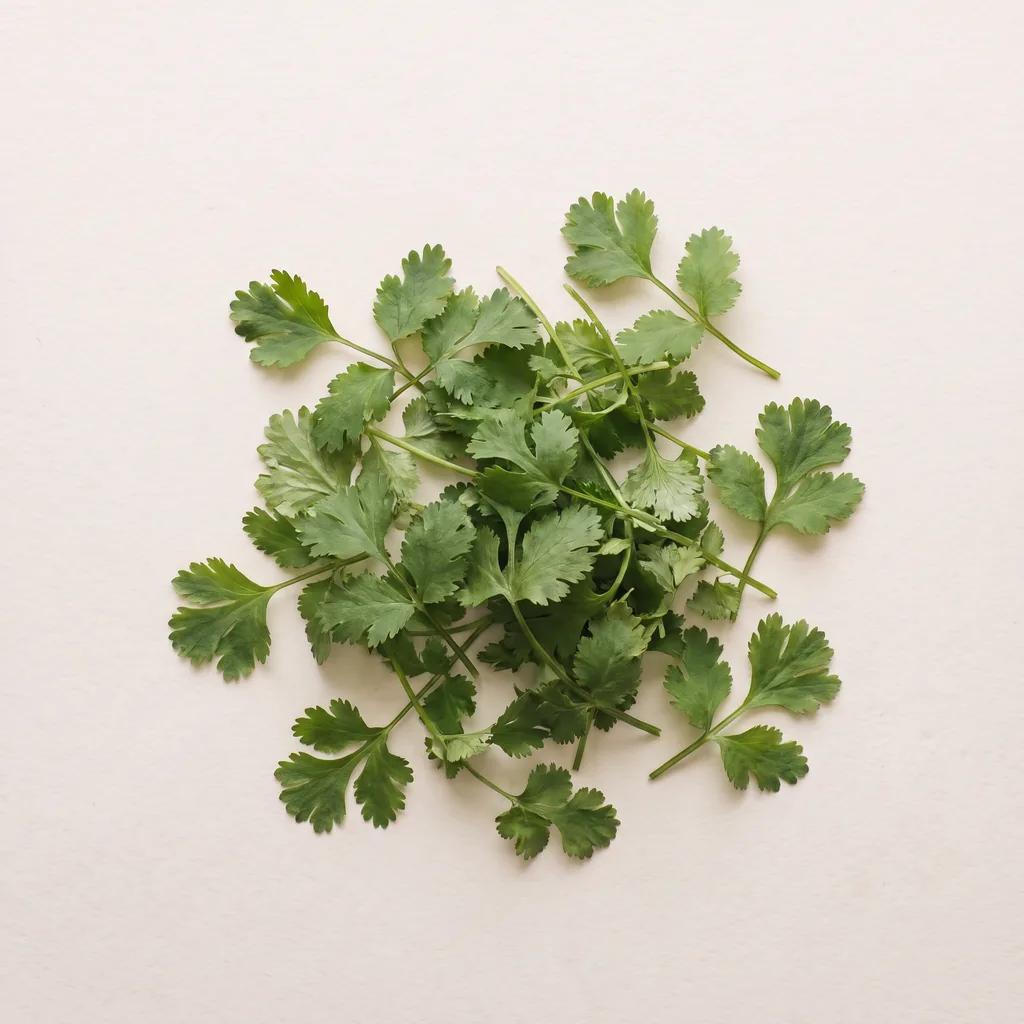
When can babies eat cilantro?
Cilantro can be offered when your baby is ready for solids, around 6 months.
Cilantro comes from the Mediterranean region, where the land is fertile. Today it is grown most in the Americas and South Asia. You find it in dishes around the world, for example South Asian chutney and larb, or Central American salsa and sofrito.
Nutrition
Cilantro is usually used in small amounts, so its nutrition is limited. Vitamins K and A in fresh or dried leaves and stems help bones and eyes. It also provides a little vitamin C and folate. It also has antioxidants. Coriander seed carries lysine, fiber, and small amounts of calcium, phosphorus and iron.
How do you prepare cilantro for babies?
Washing and storage
Rinse well before use, since sand and soil may have gotten onto the leaves at harvest. It spoils fast, so use it soon after buying. Leftovers keep in the fridge inside a closed bag, wrapped in damp paper. Another option is to puree it with some olive oil and freeze portions in an ice cube tray.
Soapy taste
For some people the taste of cilantro is bright and citrusy. To others it tastes bitter or soapy. Research points to a role for smell and taste genes. Environment matters too. Early, frequent use may help a baby get used to the taste. Crushing or heating the leaves breaks down the compound behind that taste. Serving it in a sauce or a cooked dish softens it.
Preparation by age
The same food is served differently at each age. What matters is how your baby sits, grasps and chews, more than the calendar.
6 months
6 months · How to add to sauces and mashesmash
Cut: Smooth puree
Puree fresh cilantro into a sauce and spoon it over steamed veggies, braised chicken or poached fish. Or mince it very fine and stir it into mashed vegetables, rice or yogurt. Rinse cilantro well first.
9 months
9 months · How to add to mealsmash
Cut: Finely chopped
Keep adding finely minced cilantro to soups, rice, yogurt and vegetable dishes. Cooking it or using it in a sauce softens its sharp taste. Avoid large leaves, since they can cling in the mouth.
12 months
12 months · How to use as leaves in dishesslice
Use cilantro the way a recipe calls for it, even whole leaves. Bigger leaves can set off a little gagging or coughing. Have an open cup of water or milk ready and offer a sip if needed.
Is cilantro a choking hazard for babies?
Choking risk: low
Low risk. Leaves can stick to the tongue and mouth and cause gagging or coughing. Keep an open cup of water nearby.
No, fresh and dried cilantro carry a low risk when prepared for the child's age. In theory any food can cause choking. Leaves can stick to a baby's tongue or the inside of the mouth and cause gagging or coughing. A sip from an open cup then helps it go down. Stay within arm's reach at meals.
Is cilantro a common allergen?
No, it is not a common allergen. Cilantro allergy is rare, though contact dermatitis and anaphylaxis have been reported. Cilantro and its seed may trigger a reaction if your child has oral allergy syndrome or is allergic to birch or mugwort pollen. That usually means a brief itch, tingle or burn in the mouth, and a dangerous reaction is unlikely.
Some people sensitive to cilantro may develop breathing symptoms or a rash when handling coriander powder while cooking.
Start with a small amount for the first servings. If there is no reaction, raise it slowly.
Key nutrients
Frequently asked questions about cilantro
Are cilantro and coriander the same?
Yes, same plant. Cilantro refers to the leaves and coriander to the seed, which is ground as a spice.
Why do some people find cilantro soapy?
Smell and taste genes play a part. Early, frequent use may help with getting used to it. Crushing or cooking softens the taste.
How do I store cilantro?
Keep it in the fridge in a bag that seals, wrapped in a damp towel. Another option is to blend it with olive oil and freeze the blend as cubes.
Sources for this page
- Dünya Sağlık Örgütü. (2023). Guideline for complementary feeding of infants and young children 6-23 months of age.
- CDC, Infant and Toddler Nutrition. (n.d.). Choking Hazards.
- Knaapila A, Hwang LD, Lysenko A, Duke FF, Fesi B, Khoshnevisan A, et al. (2012). Genetic Analysis of Chemosensory Traits in Human Twins. Chemical Senses. doi:10.1093/chemse/bjs070
- Eriksson N, Wu S, Do CB, Kiefer AK, Tung JY, Mountain JL, et al. (2012). Eriksson N, et al. A genetic variant near olfactory receptor genes influences cilantro preference (Flavour). Flavour. doi:10.1186/2044-7248-1-22
Guides on iron, allergen introduction, gagging and drinks. Read the starting solids guides
Medical note
This page is for information only and is not a substitute for medical advice, diagnosis or treatment. Talk to your pediatrician before any feeding decision, especially about allergen introduction and reactions.
The Lokmini app
Log cilantro, reactions and your allergen journey in the app.
Open in LokminiLokmini is coming soon to the App Store.
Astro Tasarım Simay Yenice · Türkiye · merhaba@lokmini.com