Chives
- First taste
- 6 months
- Choking risk
- low
- Common allergen
- no
- Iron
- low
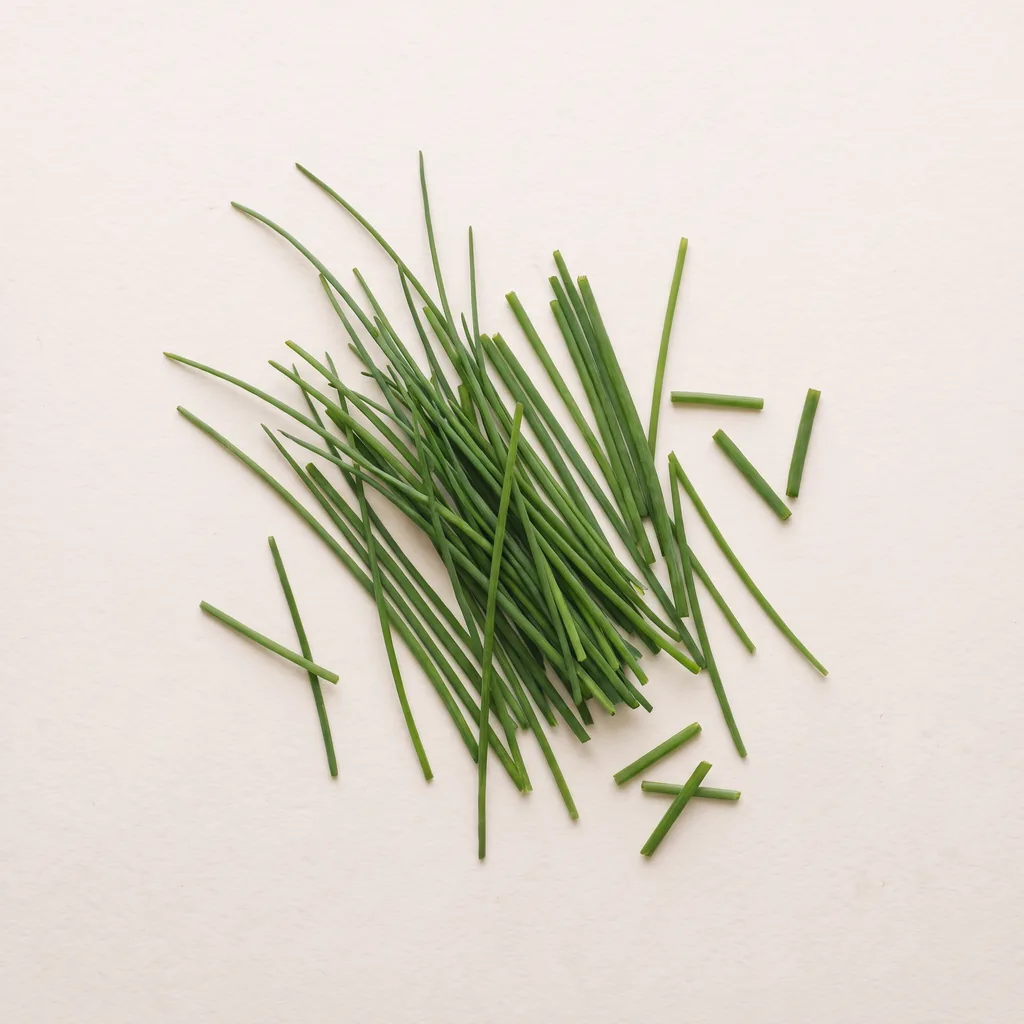
Mince finely · chop flowers, no salt needed
When can babies eat chives?
Chives can be offered when your baby is ready for solids, around 6 months.
Chives are in the allium group together with scallions, shallots, garlic and other onions. The slender green stems taste milder and sweeter. The whole plant is edible, roots and flowers included. The flowers smell like onion. They are used as a culinary herb across Asia, Europe and Southwest Asia, among other places. They give dishes a fresh grassy taste. Some cultures also use the fragrant stalks as medicine for their diuretic and germ-fighting properties.
Nutrition
Chives supply folate, fiber and vitamins K, C and A. Calcium, copper and iron appear only in trace amounts. The flowers hold a bit of vitamin E. They also hold plant compounds such as kaempferol, carotenoids and polyphenols. Since they are eaten in small garnish amounts, the nutrition they add is modest. Their real strength is giving flavor without added salt.
How do you prepare chives for babies?
Storage
Chives are easy to grow. Store-bought ones keep well in the fridge too. Wrap them unwashed in a towel and put them in a plastic bag. Press out extra air but leave the bag partly open. That way they last up to a week and do not turn mushy. You can also keep the roots standing in a jar of water.
If they are about to wilt
Mince them, mix with soft butter and freeze. That butter adds flavor to chicken, fish, rice and meat dishes, toast and eggs.
Preparation by age
The same food is served differently at each age. What matters is how your baby sits, grasps and chews, more than the calendar.
6 months
6 months · How to add to soft foodmash
Cut: Finely chopped
Mince the chives, and the flowers if you like, very fine. Stir them into yogurt, mashed vegetables, egg frittata or rice porridge, anything soft enough to scoop. Use them raw, since cooking and drying cost them their flavor.
9 months
9 months · How to use in mealsmash
Cut: Finely chopped
Taste preferences start forming now, so be generous with chives and chive flowers. Add minced chives to scrambled eggs or spread mascarpone with chives on toast. Chop or pull the flowers apart first.
12 months
12 months · How to add to family mealsmash
Keep serving what the family eats. Chives bring an onion note to noodles, meatballs, eggs, dumplings, lentil salad and quick breads. They also work as a garnish for color and flavor on finished dishes. If your child asks for only favorites, hold the line and keep variety.
Is chives a choking hazard for babies?
Choking risk: low
The stems carry no unusual risk. Flowers may be a risk unless they are chopped or pulled apart. Mince finely into food.
Chive stems carry no unusual risk. Flowers could be a risk if they are not chopped or pulled apart first. Stay within arm's reach at meals.
Is chives a common allergen?
No, it is not a common allergen. Chive allergy is rare but has been reported. People sensitive to garlic or onion can react to chives too, since they come from the same plant family. There is little data linking oral allergy syndrome to chives. People with grass or mugwort pollen sensitivity in particular may react to other vegetables in this family. That usually means a brief itch or burn in the mouth, and a dangerous reaction is unlikely.
Start with a small amount for the first servings. If there is no reaction, raise it slowly.
Key nutrients
Frequently asked questions about chives
Should I serve chives raw?
Raw is best, since cooking and drying cost them their flavor. Mince finely and mix in at the end.
Are chive flowers edible?
Yes. The flowers are edible, but chop them or pull them apart before serving.
Can a baby allergic to garlic or onion eat chives?
They come from the same plant family, so cross-sensitivity is possible. Ask an allergist first.
Sources for this page
- Dünya Sağlık Örgütü. (2023). Guideline for complementary feeding of infants and young children 6-23 months of age.
- CDC, Infant and Toddler Nutrition. (n.d.). Choking Hazards.
- Imran M, Salehi B, Sharifi-Rad J, Aslam Gondal T, Saeed F, Imran A, et al. (2019). Kaempferol: A Key Emphasis to Its Anticancer Potential. Molecules. doi:10.3390/molecules24122277
- Strati IF, Kostomitsopoulos G, Lytras F, Zoumpoulakis P, Proestos C, Sinanoglou VJ. (2018). Optimization of Polyphenol Extraction from Allium ampeloprasum var. porrum through Response Surface Methodology. Foods. doi:10.3390/foods7100162
Guides on iron, allergen introduction, gagging and drinks. Read the starting solids guides
Medical note
This page is for information only and is not a substitute for medical advice, diagnosis or treatment. Talk to your pediatrician before any feeding decision, especially about allergen introduction and reactions.
The Lokmini app
Log chives, reactions and your allergen journey in the app.
Open in LokminiLokmini is coming soon to the App Store.
Astro Tasarım Simay Yenice · Türkiye · merhaba@lokmini.com