Chicken
- First taste
- 6 months
- Choking risk
- medium
- Common allergen
- no
- Iron
- medium
Iron-rich · cook well, no cubes
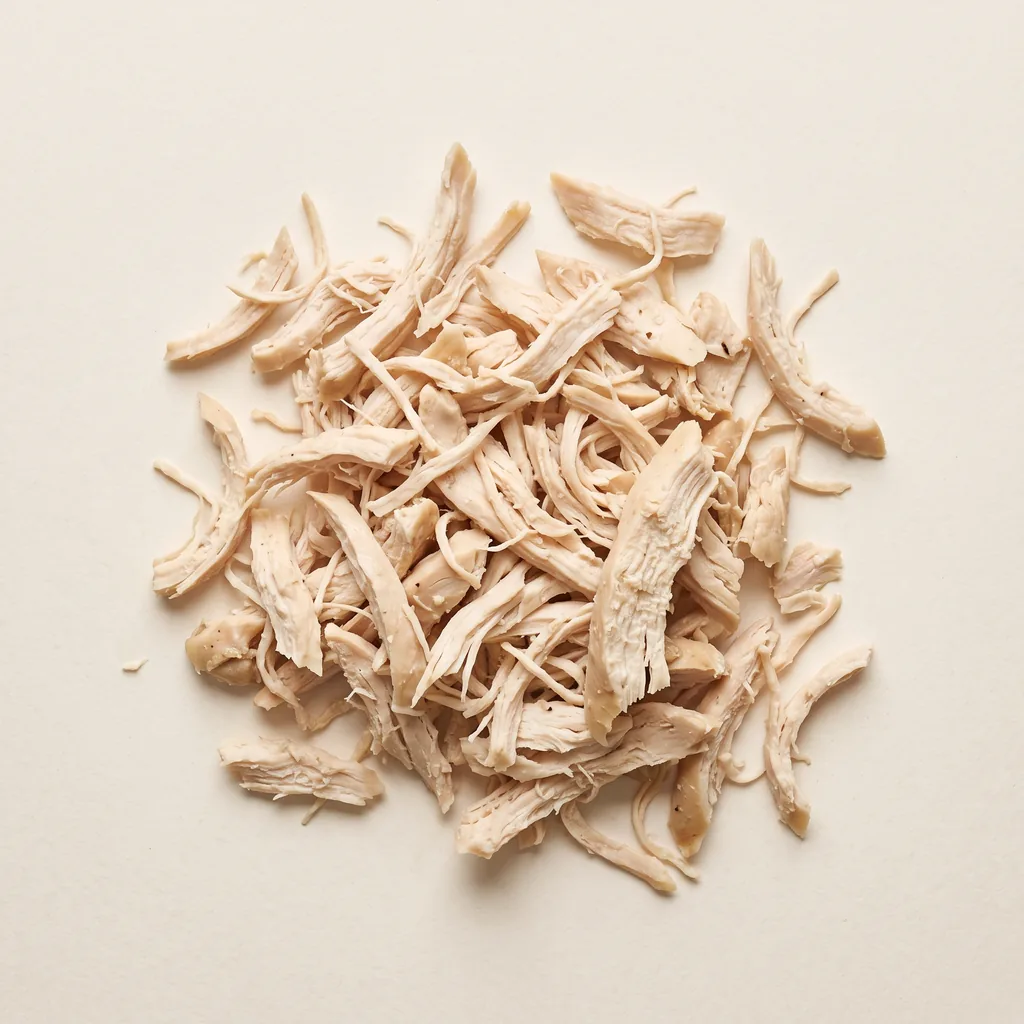
When can babies eat chicken?
Well-cooked chicken can be offered when your baby is ready for solids, around 6 months.
The chicken comes from a wild bird of South Asian jungles. Almost every part is used in cooking. Iron-rich liver becomes pâté. The carcass, feet and head give collagen-filled, protein-rich stock. The skin yields a tasty fat called schmaltz.
Nutrition
Chicken gives protein and fat along with choline, iron, selenium and zinc. It also holds vitamins B3, B6 and B12. They help growth, the brain, energy levels, red blood cells, the immune system, and hormones.
How do you prepare chicken for babies?
Drumstick and bone safety
At 6 months you can give a drumstick that is cooked through, with the skin, loose cartilage, and fat taken off. Your baby will not eat much, and that is fine. If a big piece is torn off, do not step in right away. Give your baby time to work with it. The thin bone along the drumstick, the pin bone, is out of reach for most babies' bites. When your baby gets the meat off down to the pin bone, remove the rest of the meat, the cartilage, and the pin bone, and let them hold only the main bone as a teether.
Before serving, bend the bone and press on its edges. If it snaps easily, crumbles at the edge or splinters, do not serve it. Simmering the drumstick or slow cooking it at low heat reduces brittleness.
Other forms
Long flat strips about as thick as two adult fingers, shredded chicken mixed into mashed vegetables, and chicken meatballs all work. Cook meatballs to 165 F (74 C). They should mash between thumb and finger and be larger than your baby's mouth. Simmering minced chicken in a sauce, or folding breadcrumbs, egg and milk into meatballs, keeps them tender.
Food safety
Chicken is linked with bacteria such as Salmonella and Campylobacter. Keep chicken in the fridge or freezer, apart from produce. Thaw frozen chicken in the fridge, never on the counter. Cook it to an inside temperature of 165 F (74 C) before serving. Wash hands and surfaces that touched raw meat.
Chicken nuggets
Nuggets tend to contain a lot of sodium. Now and then is okay, provided the nuggets are prepared to cut the choking risk. If the coating is very hard and crunchy, peel it off or wait until about 18 months. After 9 months, bite-sized pieces of soft, not-too-crunchy nuggets can be offered.
Preparation by age
The same food is served differently at each age. What matters is how your baby sits, grasps and chews, more than the calendar.
6 months
6 months · How to prepare as a pureemash
Cut: Smooth puree
Simmer breast meat until it is tender and make sure no bone or cartilage is left. Blend it with breast milk or cooking liquid until smooth. The WHO complementary feeding guideline advises prioritizing iron-rich foods from 6 months, and chicken is a good source of protein and iron. You can also give a well-cooked drumstick with skin, loose fat and cartilage removed, so your baby can gnaw it. Cook all chicken to 165 F (74 C).
9 months
9 months · How to serve shredded or thinly slicedstrip
Shred cooked chicken or slice it thin. You can also make bite-sized meatball pieces. Mix in breadcrumbs, egg or milk to keep meatballs soft. A baby with a developing pincer grasp can pick these small pieces up. If your baby overfills the mouth, put fewer pieces out at a time. The inside should reach 165 F (74 C).
12 months
12 months · How to serve as finger foodslice
Cut: Bite sized piece
Offer bite-sized chicken pieces as finger food or let your child practice with a fork. Skip big chunks and neat cubes. A drumstick still works, with the meat left on for tearing practice, or with it stripped off so it works as a teether. Do not overcook the chicken, since dry meat is harder to chew.
Is chicken a choking hazard for babies?
Choking risk: medium
Dry, large pieces of chicken are risky. Shred the meat or cook it minced and moist. Skip the skin and cartilage. Never cut it into cubes.
Chicken, as with every meat and poultry, can cause choking. Do not give large chunks or cubes. Do not overcook it, since dry meat is harder to chew and swallow. Stay within arm's reach at meals.
Form to avoid
Do not serve chicken as cubes or large chunks.
Is chicken a common allergen?
No. Chicken seldom causes allergy. Still, poultry allergy has been reported. Chicken can also trigger a delayed allergy called FPIES. Vomiting starts 2 to 4 hours after eating chicken, and diarrhea may go with it.
People with fish allergy are rarely at higher risk of reacting to chicken. Some people with feather and egg allergy test positive to chicken meat. The allergy-causing protein is heat sensitive, though, so well-cooked meat usually causes no symptoms. Routine testing for chicken meat is not advised in egg allergy.
Start with a small amount for the first servings. If there is no reaction, raise the amount slowly.
Key nutrients
Frequently asked questions about chicken
How hot should chicken be cooked?
The inside of the chicken should reach at least 165 F (74 C). The same goes for meatballs and ground chicken.
Can babies eat chicken nuggets?
Occasionally, yes. They are high in sodium. Peel off a hard coating. After 9 months, small pieces of soft nuggets are fine.
Can a baby with egg allergy eat chicken?
Well-cooked chicken usually causes no symptoms. Still, ask your allergist.
Sources for this page
- Dünya Sağlık Örgütü. (2023). Guideline for complementary feeding of infants and young children 6-23 months of age.
- NHS. (n.d.). Preparing food safely for babies.
- CDC, Infant and Toddler Nutrition. (n.d.). Choking Hazards.
- foodsafety.gov. (n.d.). Safe Minimum Internal Temperature Chart.
Guides on iron, allergen introduction, gagging and drinks. Read the starting solids guides
Medical note
This page is for information only and is not a substitute for medical advice, diagnosis or treatment. Talk to your pediatrician before any feeding decision, especially about allergen introduction and reactions.
The Lokmini app
Log chicken, reactions and your allergen journey in the app.
Open in LokminiLokmini is coming soon to the App Store.
Astro Tasarım Simay Yenice · Türkiye · merhaba@lokmini.com