Cardamom
- First taste
- 6 months
- Choking risk
- medium
- Common allergen
- no
- Iron
- low
Ground in small amounts, remove whole pods
When can babies eat cardamom?
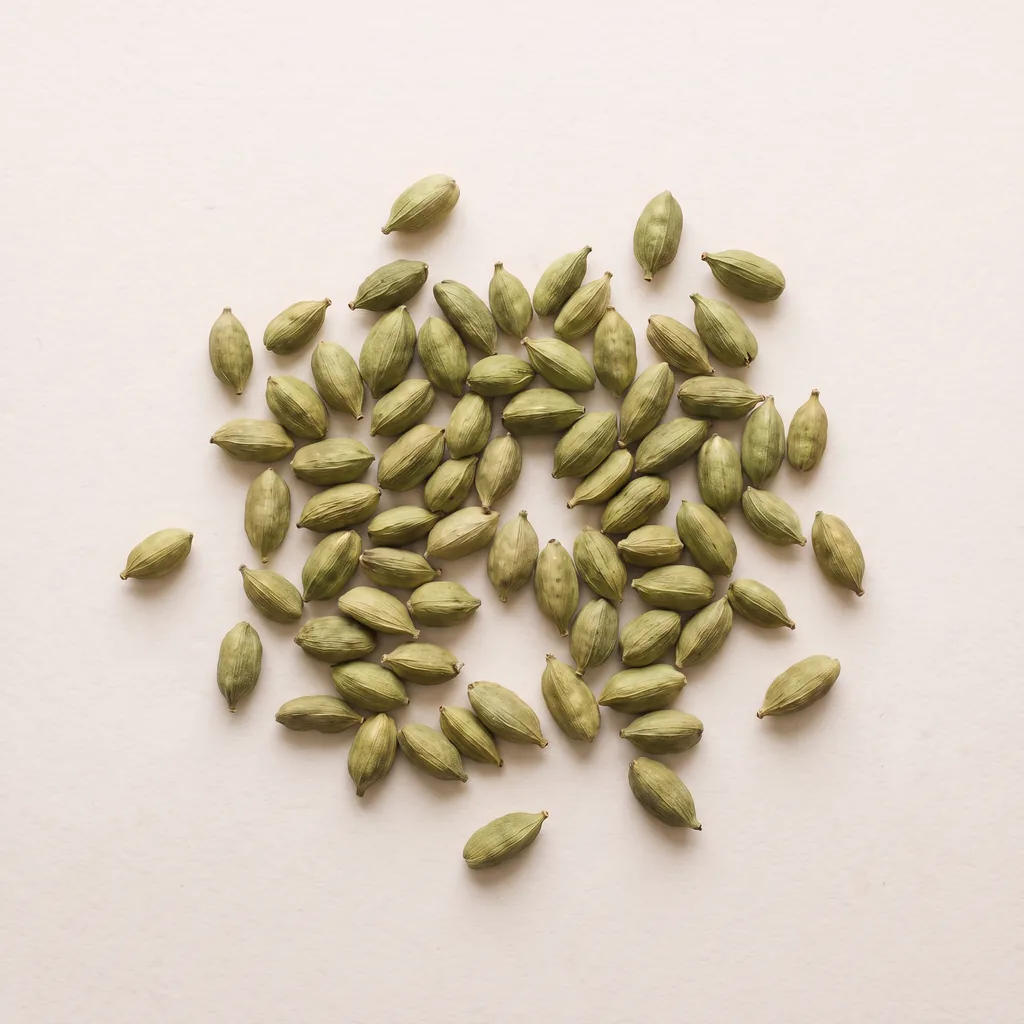
Cardamom can start when your baby is about 6 months old and ready for solids. It comes from South Asia and comes from dried fruits of a few plants related to ginger and galangal. Three kinds are common: black, green and white cardamom. Each has its own scent and flavor. Whole dried pods, cracked seeds and fine powder are the forms you can buy. It is also in spice blends such as baharat and garam masala, and in teas like chai.
It gives sweet and savory food a warm, bright note. South Asian chana masala and kheer are examples, and so are Scandinavian cardamom bread and pickles.
Cardamom is used in small amounts. Still, it provides various vitamins, minerals, fiber and plant compounds such as flavonoids, anthocyanins and phenols. It may support oral and digestive health.
How do you prepare cardamom for babies?
Safety and storage
Cardamom is generally seen as safe in the amounts used in cooking. To keep the aroma, store whole pods in a sealed container somewhere cool and dark. When a dish calls for cardamom, crush a few fresh pods in a mortar.
Preparation by age
The same food is served differently at each age. What matters is how your baby sits, grasps and chews, more than the calendar.
6 months
6 months · How to prepare groundmash
Cut: Ground
Sprinkle ground cardamom lightly over mango spears, dal or yogurt. You can also mix some into idli or pancake batter. The flavor is strong, so add very little to your baby's portion. If you cook with whole pods in curry or sauce, take every pod out before serving.
12 months
12 months · How to usecube
Use cardamom as you like in your child's meals. Pair it with other ingredients in sauces, batters and baked goods. You can give a small amount of caffeine-free cardamom tea or another alcohol-free cardamom drink in an open cup, no longer hot. Take out any whole pods and seeds from the cup.
Is cardamom a choking hazard for babies?
Choking risk: medium
Ground cardamom adds no risk. Whole pods and seeds are hard and round, so remove them before serving.
Whole cardamom pods left in a dish are hard and round and raise the choking risk. Ground cardamom does not add risk. Take out all whole pods and seeds before serving. Stay with your baby during meals.
Is cardamom a common allergen?
Cardamom is not a common allergen. Allergy is rare but has been reported. Some spice blends with cardamom may hold common allergens, so read the label.
Spices can cause reactions that look like allergy. Breathing in cardamom powder can irritate the nose and cause sneezing and coughing, which may not be an allergy. Cardamom and other spices can leave a mild rash near the mouth, which is harmless, and they can start or worsen diaper rash. A thin barrier ointment on your baby's face and bottom helps.
Offer a small amount for the first few meals. If there is no reaction, increase gradually.
Key nutrients
Frequently asked questions about cardamom
Can I serve whole cardamom pods?
No. Whole pods and seeds are hard and round. If you cooked with them, take them out before serving.
Can I give cardamom tea?
After 12 months, a small amount of caffeine-free cardamom tea is fine. It should not be hot, and pods and seeds should be removed from the cup.
Is a high chair required?
No. You can also feed your baby safely on your lap or by sitting together on the floor.
Sources for this page
- Cárdenas Garza GR, Elizondo Luévano JH, Bazaldúa Rodríguez AF, Chávez Montes A, Pérez Hernández RA, Martínez Delgado AJ, et al. (2021). Benefits of Cardamom (Elettaria cardamomum (L.) Maton) and Turmeric (Curcuma longa L.) Extracts for Their Applications as Natural Anti-Inflammatory Adjuvants. Plants (Basel). doi:10.3390/plants10091908
- Mobacken H, Fregert S. (1975). Allergic contact dermatitis from cardamom. Contact Dermatitis. doi:10.1111/j.1600-0536.1975.tb05361.x
- Dünya Sağlık Örgütü. (2023). Guideline for complementary feeding of infants and young children 6-23 months of age.
- CDC, Infant and Toddler Nutrition. (n.d.). Choking Hazards.
Guides on iron, allergen introduction, gagging and drinks. Read the starting solids guides
Medical note
This page is for information only and is not a substitute for medical advice, diagnosis or treatment. Talk to your pediatrician before any feeding decision, especially about allergen introduction and reactions.
The Lokmini app
Log cardamom, reactions and your allergen journey in the app.
Open in LokminiLokmini is coming soon to the App Store.
Astro Tasarım Simay Yenice · Türkiye · merhaba@lokmini.com