Cantaloupe
- First taste
- 6 months
- Choking risk
- high
- Common allergen
- no
- Iron
- low
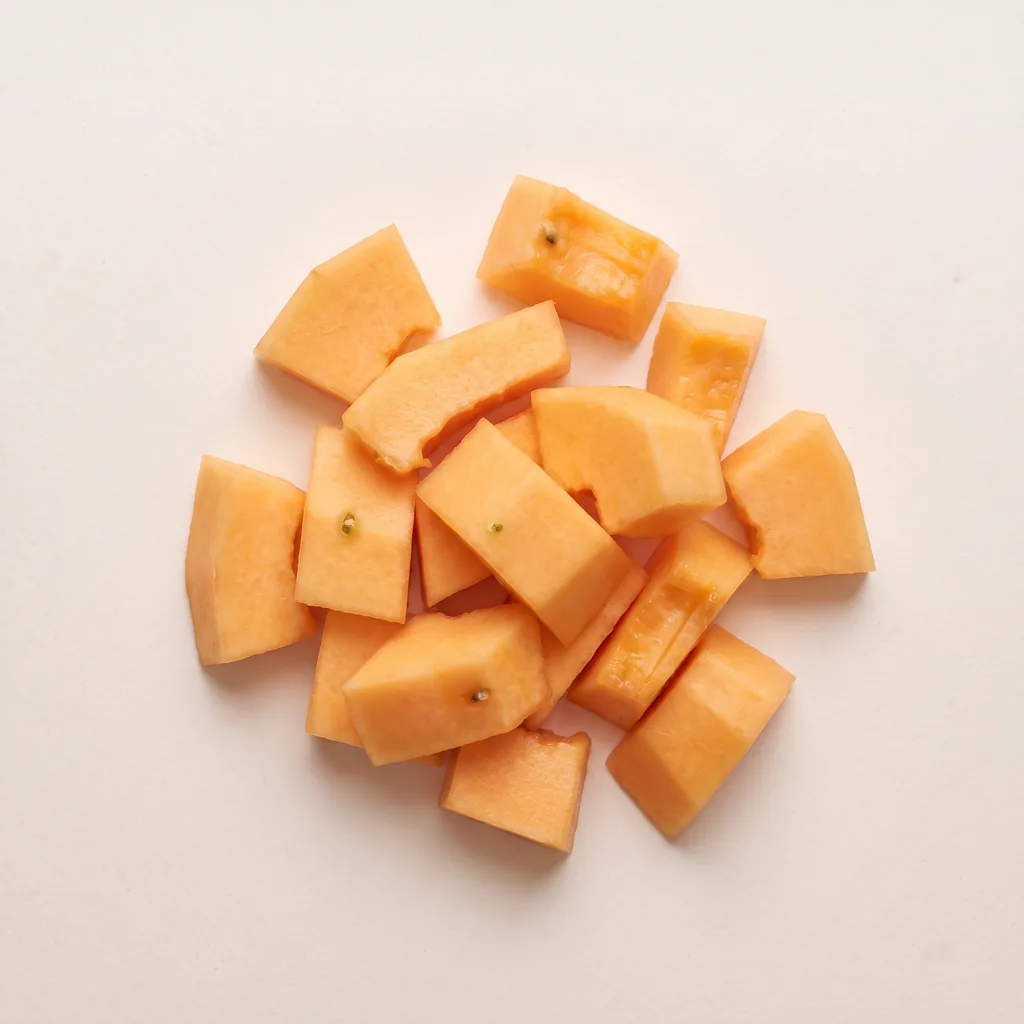
Ripe, long flat slices · no balls or chunks
When can babies eat cantaloupe?
Cantaloupe can start when your baby is about 6 months old and ready for solids. Be careful: melon balls and large chunks are a choking risk.
Cantaloupe belongs to the muskmelon family, which has many varieties. Its exact origin is unknown, but it has grown in the warm parts of Africa and Asia for a long time. Today it is grown worldwide and has local names. Names differ by place: rock melon (Southeast Asia, Australia), spanspek (South Africa), cantaloupe (North America). Some European types have smooth white rind with green ribs and sweeter orange flesh.
Cantaloupe offers plenty of potassium, folate and vitamins A, B6 and C. Beta carotene, lutein and zeaxanthin belong to the carotenoids it holds. It also has antioxidants, phenolic compounds and flavonoids. They help fluid balance, the nervous system, eyes, metabolism and immunity.
How do you prepare cantaloupe for babies?
Wash the rind
Bacteria from the soil can end up on melon rind, and some are harmful. Right before cutting, scrub the rind well under water, then dry it. No special produce wash or detergent is needed.
Serving as your child grows
After 18 months, if your child follows directions and chews well, you can try large wedges with the rind on. Wash the rind and remove leftover seeds. First show how to bite without chewing the rind. You may need to hold the rind at first.
Around age 2, a child may be ready for the pre-cut melon chunks sold in stores. They are hard and slippery, and many are as big as a toddler's mouth. Look for these skills first: biting off small pieces, chewing before swallowing, and using the tongue to move food over to the back teeth. Your child should also manage food that breaks apart and spit out what is needed. First show how to bite and move a piece to your molars. Hold the chunk at the corner of your child's mouth and let them bring their teeth together on it.
Preparation by age
The same food is served differently at each age. What matters is how your baby sits, grasps and chews, more than the calendar.
6 months
6 months · How to prepare crescent slicesslice
Cut: Thick wedge
Remove the rind and seeds from soft, ripe melon. Cut long, flat crescents or rectangles. Hold a slice in the air so your baby grabs it and brings it to the mouth. Even ripe melon is hard to chew, so do not worry if little gets eaten. Avoid balls and big chunks.
9 months
9 months · How to cut rectanglesstrip
Cut: Finger strip
Cut ripe melon, rind and seeds removed, into flat rectangles about as wide as two adult fingers side by side. You can keep serving crescents. Still avoid melon balls and big chunks.
12 months
12 months · How to cut and serveslice
Cut: Finger strip
Offer ripe melon in long, flat slices to bite from, with rind and seeds removed. Large wedges with rind wait until after 18 months, when your child follows directions and chews well. Pre-cut melon chunks wait until around age 2.
Is cantaloupe a choking hazard for babies?
Choking risk: high
Firm and slippery. Avoid melon balls and big chunks. Underripe melon is firmer, so the risk is higher. Serve long, flat slices.
Cantaloupe is firm and slippery, which raises the choking risk. The risk is highest with melon balls, large chunks and underripe, firmer fruit. Pick ripe fruit and cut it to suit your child's age. Stay with your baby during meals.
Is cantaloupe a common allergen?
Cantaloupe rarely causes allergy. People with oral allergy syndrome, especially those allergic to ragweed pollen, may react to it. The mouth itches, tingles or burns for a short time, which is usually not dangerous. Cooking the melon may lessen or remove the reaction.
A contact rash can appear on the hands and face. Wash your hands right after handling melon. A barrier ointment such as plain petroleum jelly on baby's face before eating may also help.
Offer a small amount for the first few meals. If there is no reaction, increase gradually.
Key nutrients
Frequently asked questions about cantaloupe
Can I give melon balls?
No. They are firm and slippery, so melon balls and big chunks are a choking risk. Offer long, flat slices.
How should I wash melon?
Scrub the rind with water right before cutting, then dry it. You do not need a special wash.
Is melon eaten raw?
Ripe melon is eaten raw. For oral allergy syndrome, cooking it may lessen the reaction.
Sources for this page
- Manchali S, Chidambara Murthy KN, Vishnuvardana, Patil BS. (2021). Nutritional Composition and Health Benefits of Various Botanical Types of Melon (Cucumis melo L.). Plants (Basel). doi:10.3390/plants10091755
- Kashyap RR, Kashyap RS. (2015). Kashyap RR, Kashyap RS. Oral Allergy Syndrome: An Update for Stomatologists. Journal of Allergy. doi:10.1155/2015/543928
- CDC, Infant and Toddler Nutrition. (n.d.). Choking Hazards.
- Dünya Sağlık Örgütü. (2023). Guideline for complementary feeding of infants and young children 6-23 months of age.
Guides on iron, allergen introduction, gagging and drinks. Read the starting solids guides
Medical note
This page is for information only and is not a substitute for medical advice, diagnosis or treatment. Talk to your pediatrician before any feeding decision, especially about allergen introduction and reactions.
The Lokmini app
Log cantaloupe, reactions and your allergen journey in the app.
Open in LokminiLokmini is coming soon to the App Store.
Astro Tasarım Simay Yenice · Türkiye · merhaba@lokmini.com