Bulgur
- First taste
- 6 months
- Choking risk
- low
- Common allergen
- yes
- Iron
- medium
Wheat allergen · contains gluten
Contains allergens
Each new allergen is offered on its own and watched for two hours. Our allergen introduction guide is available in Turkish for now.
When can babies eat bulgur?
Bulgur can start when your baby is about 6 months old and ready for solids. Bulgur is made from wheat. Wheat is a common allergen, and bulgur contains gluten.
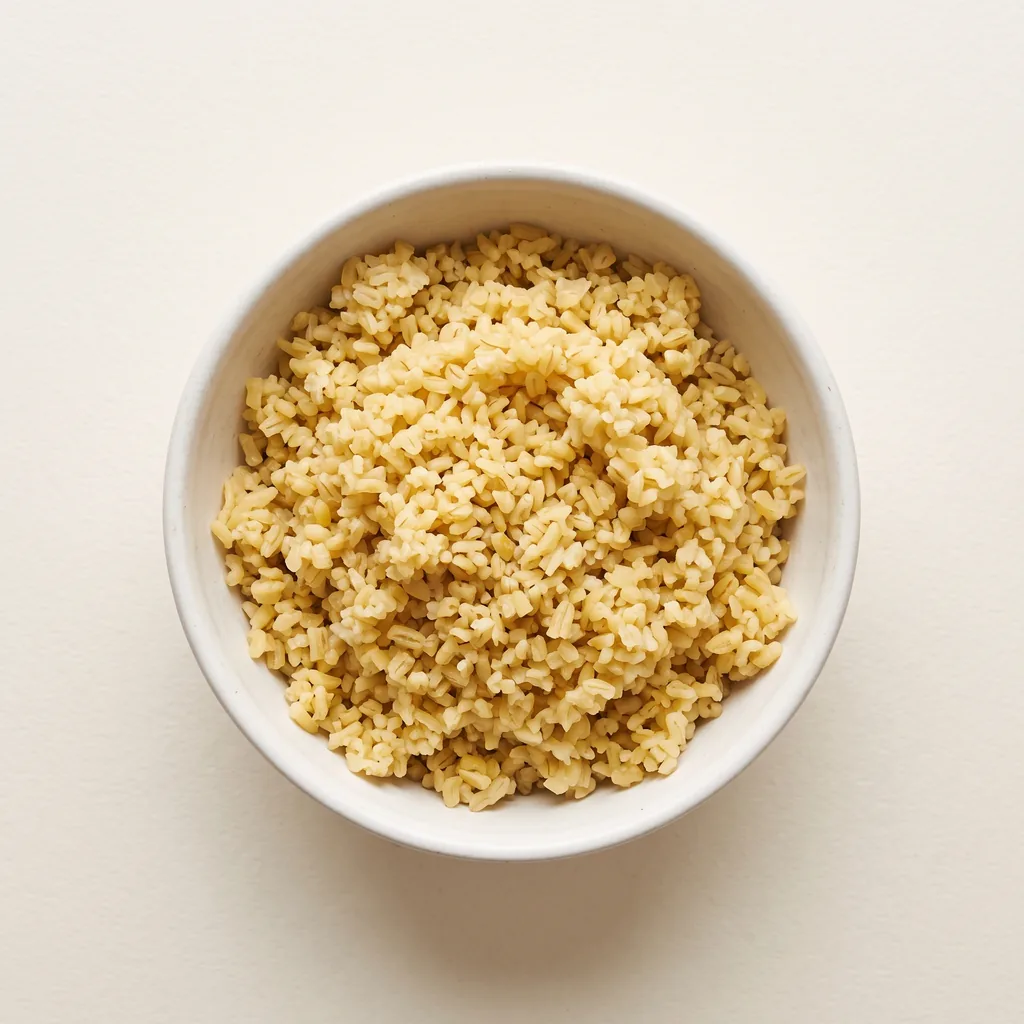
Bulgur is a wheat food native to the lands east of the Mediterranean. The kernels are first turned into groats. These are partly boiled, dried, milled and sieved. After that the cracked grains are graded by size, from fine (sometimes marked 1) up to extra coarse (4). It is traditionally made from wheat, and barley and other grains can be used too.
Compared with many grains, bulgur has more fiber, and it supplies carbohydrates and protein. Because it comes from whole wheat kernels, it is more nutritious than refined products. It has many B vitamins, iron, magnesium, zinc and some antioxidants.
How do you prepare bulgur for babies?
Porridge and patties
Bulgur porridge is an easy way to introduce the grain. Add spices, mashed fruit or vegetables, or finely ground nuts for new flavors. For finger food, work cooked coarse bulgur into big, soft patties, fritters or pancakes. These shapes are easier for a baby to grab.
Soaking before cooking
Soaking bulgur before cooking may improve how well nutrients are absorbed. Soaked or not, it is a useful part of a varied diet.
Preparation by age
The same food is served differently at each age. What matters is how your baby sits, grasps and chews, more than the calendar.
6 months
6 months · How to prepare for the spoonmash
Cut: Smooth puree
Boil fine-ground (köftelik) bulgur in plenty of water until very soft, then mash until smooth. Coarse whole bulgur does not suit the chewing skills of this age. From 10 months, well-cooked coarse bulgur can be shaped into small balls or patties and offered as finger food for baby-led weaning.
9 months
9 months · How to prepare patties and pancakescube
Cut: Bite sized piece
Fold cooked bulgur into soft patties, fritters or pancakes. Cut them into bite-sized pieces. If your baby has trouble picking up tiny grains, mix bulgur salad with mashed vegetables or yogurt. Pressing the grains flat with a fork helps your child feed themselves.
12 months
12 months · How to prepare pilaf, patties and soupcube
Serve bulgur as pilaf, salad, patties, pancakes or porridge. Coarse bulgur thickens soups and stews, which helps a child learn to use a spoon. If your child refuses the spoon, do not push.
Is bulgur a choking hazard for babies?
Choking risk: low
Cooked bulgur is low risk. Tiny grains can slip into the airway. Never place bulgur in a baby's mouth. Let your baby self-feed.
Cooked bulgur does not carry a high choking risk. Because the grains are tiny, the main concern is aspiration rather than choking. Aspiration means a small grain slips into the windpipe during a meal. The body then coughs reflexively to protect the airway.
Do not place it in the mouth
Do not put bulgur into your baby's mouth with a spoon or your hand. When babies feed themselves, the aspiration risk drops noticeably.
Is bulgur a common allergen?
Bulgur is a wheat product, and the World Health Organization lists wheat as a priority allergen. In children, wheat ranks among the most frequent food allergies. About two thirds of children outgrow it by age 12.
Wheat allergy is different from celiac disease. A person with celiac disease must follow a strict gluten-free diet for life. Wheat-dependent exercise-induced anaphylaxis is rare. If so, avoid wheat for four hours before hard physical activity. People with grass pollen allergy can develop oral allergy syndrome.
If you suspect your baby may have a wheat allergy, speak to a pediatric health professional before serving it at home. Start with a small amount at the first meals and watch closely. If there is no reaction, increase the amount gradually.
Key nutrients
Frequently asked questions about bulgur
Is bulgur gluten-free?
No. Bulgur is made from wheat and contains gluten. It is not given to children with celiac disease or wheat allergy.
Can babies eat gluten?
Yes, as long as your child has no celiac disease, no gluten sensitivity and no wheat allergy. Gluten is a protein found in wheat, barley, rye and some oats. Ask a health professional if you have concerns.
Which bulgur suits a baby?
At 6 months, cook fine (köftelik) bulgur until soft and mash it. Coarse bulgur comes in patties or pancakes first, then as grains later.
Sources for this page
- Dünya Sağlık Örgütü. (2023). Guideline for complementary feeding of infants and young children 6-23 months of age.
- NHS. (n.d.). Preparing food safely for babies.
- CDC, Infant and Toddler Nutrition. (n.d.). Choking Hazards.
- Thielecke F, Nugent AP. (2018). Contaminants in Grain—A Major Risk for Whole Grain Safety? Nutrients. doi:10.3390/nu10091213
- Madsen CK, Brinch-Pedersen H. (2019). Molecular Advances on Phytases in Barley and Wheat. International Journal of Molecular Sciences. doi:10.3390/ijms20102459
- Elli L, Branchi F, Tomba C, Villalta D, Norsa L, Ferretti F, et al. (2015). Diagnosis of gluten related disorders: Celiac disease, wheat allergy and non-celiac gluten sensitivity. World Journal of Gastroenterology. doi:10.3748/wjg.v21.i23.7110
Guides on iron, allergen introduction, gagging and drinks. Read the starting solids guides
Medical note
This page is for information only and is not a substitute for medical advice, diagnosis or treatment. Talk to your pediatrician before any feeding decision, especially about allergen introduction and reactions.
The Lokmini app
Log bulgur, reactions and your allergen journey in the app.
Open in LokminiLokmini is coming soon to the App Store.
Astro Tasarım Simay Yenice · Türkiye · merhaba@lokmini.com