Bread
- First taste
- 6 months
- Choking risk
- medium
- Common allergen
- yes
- Iron
- medium
Gluten allergen
Contains allergens
Each new allergen is offered on its own and watched for two hours. Our allergen introduction guide is available in Turkish for now.
When can babies eat bread?
Many kinds of bread can be served around 6 months, once baby is ready. Still, bread carries choking risk, and some kinds are riskier than others. Bread usually contains wheat. It may also contain other common allergens such as dairy, egg, sesame and soy. Avoid bread containing honey before 12 months, because honey carries a risk of infant botulism.
Read the label
Wait to serve a bread until every common allergen on its ingredient list has been safely introduced one by one.
Origin
Bread is a basic food made from flour, water and heat. Around the world there are many hundreds of sweet and savory breads. Afghan bolani, Chinese laobing, Indian papadum and Jamaican bammy are examples, along with Nepali sel roti and Mexican pan dulce.
Nutrition
Every bread gives plenty of carbohydrate plus some fiber and protein. Nutrition varies widely by bread. Some are fortified with vitamins and minerals. Whole grain and sprouted breads usually hold more protein and fiber. In sourdough, nutrients are easier to absorb because of fermentation. Manufacturers often add folate and iron to white bread.
How do you prepare bread for babies?
For the youngest babies, toast is safer. Bread that is not toasted may become a sticky lump that is awkward to move around the mouth. That mass could plug the airway and cause choking.
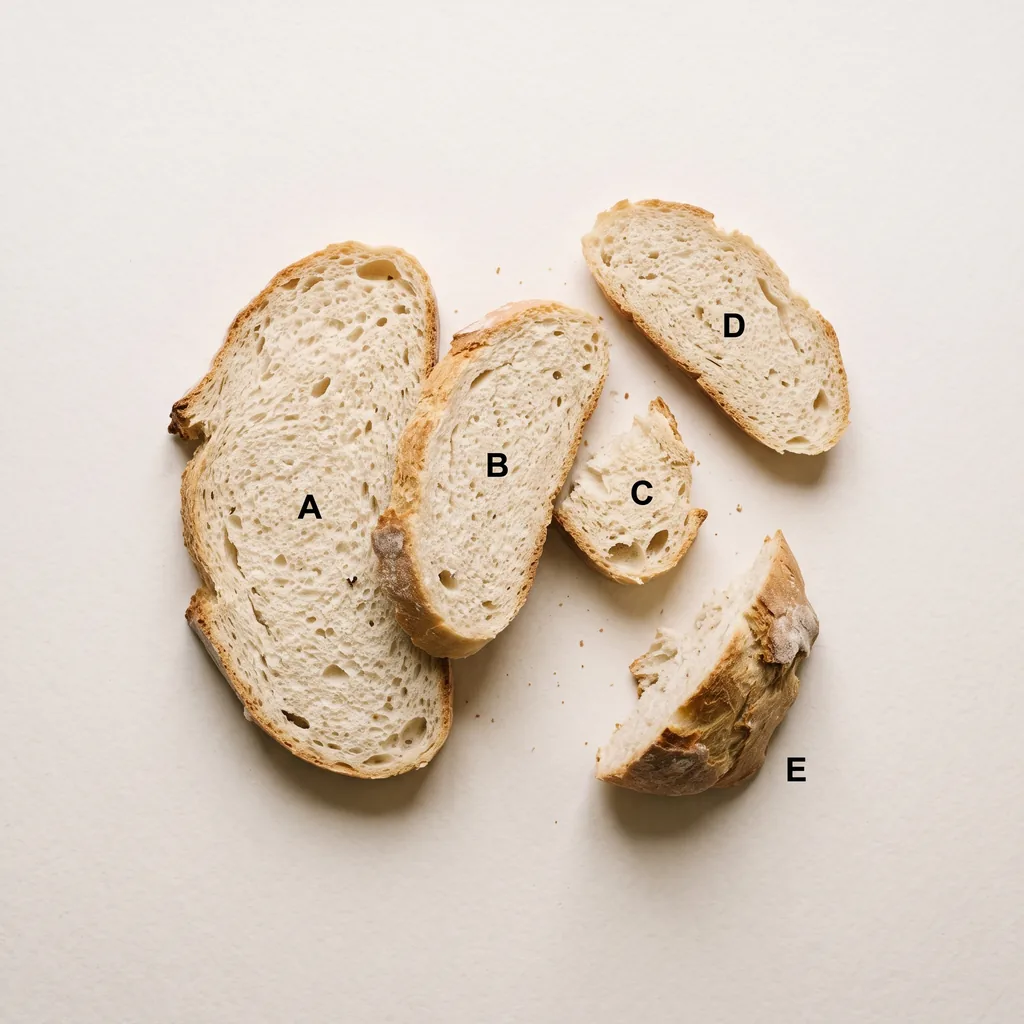
Very soft breads (brioche, challah, packaged sliced sandwich bread) turn into a sticky ball with saliva and cause gagging. Serve them as toasted strips. You can spread mashed avocado, fresh ricotta, hummus or yogurt on top. A smooth butter made of nuts or seeds can be thinned and spread in a very thin layer. Bread may break as baby chews. If a piece makes you nervous, take it away and put something else in its place.
Cracker-hard breads are risky. So are loaves with candied citrus, dried fruit, bits of nut or big seeds mixed in. After 18 months, as chewing improves, you can begin these.
Bagels: can be served after 6 months if honey-free. Toast one and cut half into a half-moon. A bagel is hard to tear and chew. Before 12 months it is more a skill tool than a filling food. Serve it with a soft spread such as labneh, ricotta or yogurt.
Flatbreads: crisp, cracker-like ones are for older children. Soft ones can be served after 6 months. Injera, roti and wheat tortillas can turn gummy in the mouth. Toast them lightly, or wait until around the first birthday. For a baby still learning to pick things up, roll soft flatbread into a stick.
At 18 months you can serve it any way you like, sandwiches included. A child may take a sandwich apart and eat the parts separately. If mixed textures are new to your child, watch closely.
How much per day?
There is no set amount. Some days a child eats a lot, other days less. Keep other foods on the plate too. If bread fills your child up, hold it back and serve the other parts of the meal first.
Preparation by age
The same food is served differently at each age. What matters is how your baby sits, grasps and chews, more than the calendar.
6 months
6 months · How to cut and serve for baby-led weaningstrip
Cut: Finger strip
Offer bread that keeps its shape while baby chews. Cut well-toasted bread into strips about two adult fingers thick, or hand over the crusty end of a firm loaf. Soft bread turns into a sticky ball with saliva, so always toast it. You can spread mashed avocado or yogurt on top. Skip breads that contain large seeds, nut pieces or dried fruit at this age.
9 months
9 months · How to cut and servecube
Cut: Bite sized piece
Serve toast in bite-sized pieces, and keep offering large pieces of crusty bread too. If baby tends to stuff the mouth, put out one piece at a time. A soft spread such as avocado, hummus or yogurt makes swallowing easier. Bread containing honey is not served before 12 months.
12 months
12 months · How to cut and serveslice
Serve a slice whole or cut in half. For children with little bread experience, keep toasting, since it is easier to move around the mouth. Once chewing skills advance, you can move to soft slices like brioche and a very thin layer of nut butter.
Is bread a choking hazard for babies?
Choking risk: medium
Soft white bread can ball up and stick in the mouth. Give lightly toasted bread as long sticks. Do not give fresh, spongy white crumb.
Breads that are very soft, and breads that are very hard and cracker-like, both raise the choking risk. So do loaves with dried fruit, bits of nut and big seeds. Soft bread turns into a clump with saliva that clings to the tongue and palate and causes gagging. Toast it and serve strips or small pieces as the age cards describe.
Safe setting
Seat your child upright and stay within arm's reach during meals.
Is bread a common allergen?
Bread contains wheat. Wheat, along with other gluten-containing grains, is on the World Health Organization's global priority allergen list. It ranks high among food allergens in children. About two thirds of children outgrow it by age 12.
Wheat allergy and celiac disease are two different things. Wheat allergy can pass. People with celiac disease must follow a strict gluten-free diet all their lives. What people call gluten allergy often means celiac disease. Gluten is a protein in wheat, barley, rye and some oats. Celiac disease is an autoimmune condition in which gluten damages the small intestine. Some people are gluten-sensitive without allergy or celiac disease. If you worry about gluten and digestion, talk to a health professional.
In rare wheat-dependent, exercise-induced anaphylaxis, exercising within a few hours of eating wheat brings a severe reaction. Such people should not eat wheat for four hours ahead of hard exercise.
People with pollen food allergy syndrome, especially grass pollen allergy, may react to wheat. The sign is a short spell of burning, itching or tingling in the mouth. Sometimes there is belly pain, bloating or diarrhea. A dangerous reaction is not expected.
If you suspect a wheat allergy in your baby, talk to your pediatrician before offering bread.
At the first try
For the first few servings give only a little, and watch for signs of allergy. If all is well, raise the amount slowly over later meals.
Key nutrients
Frequently asked questions about bread
Which suits babies better, toast or bread?
Toast is safer for the youngest babies. Untoasted bread may form a gummy lump in the mouth.
Can babies eat gluten?
Yes, as long as the child has no celiac disease, no non-celiac gluten sensitivity and no wheat allergy.
Which bread is most nutritious for babies?
Most breads are nutritious. Whole grain and sprouted breads hold more fiber and protein. Nutrients in sourdough are easier to absorb. Makers often enrich white bread with folate and iron.
What are the benefits of bread for babies?
It strengthens the jaw, teaches biting and tearing, and builds oral motor skills and flavor range. Firm breads such as crusty loaf, sourdough and baguette are a challenge, so serve them after baby has eaten a bit.
Sources for this page
- Dünya Sağlık Örgütü. (2023). Guideline for complementary feeding of infants and young children 6-23 months of age.
- NHS. (n.d.). Preparing food safely for babies.
- CDC, Infant and Toddler Nutrition. (n.d.). Choking Hazards.
- Feldweg AM. (2017). Food-Dependent, Exercise-Induced Anaphylaxis: Diagnosis and Management in the Outpatient Setting. The Journal of Allergy and Clinical Immunology: In Practice. doi:10.1016/j.jaip.2016.11.022
- Kashyap RR, Kashyap RS. (2015). Kashyap RR, Kashyap RS. Oral allergy syndromes in clinical practice. Journal of Allergy 2015:543928. Journal of Allergy. doi:10.1155/2015/543928
- Elli L, Branchi F, Tomba C, Villalta D, Norsa L, Ferretti F, et al. (2015). Diagnosis of gluten related disorders: Celiac disease, wheat allergy and non-celiac gluten sensitivity. World Journal of Gastroenterology. doi:10.3748/wjg.v21.i23.7110
Guides on iron, allergen introduction, gagging and drinks. Read the starting solids guides
Medical note
This page is for information only and is not a substitute for medical advice, diagnosis or treatment. Talk to your pediatrician before any feeding decision, especially about allergen introduction and reactions.
The Lokmini app
Log bread, reactions and your allergen journey in the app.
Open in LokminiLokmini is coming soon to the App Store.
Astro Tasarım Simay Yenice · Türkiye · merhaba@lokmini.com