Blackberry
- First taste
- 6 months
- Choking risk
- medium
- Common allergen
- no
- Iron
- low
Mash or cut · avoid small firm berries
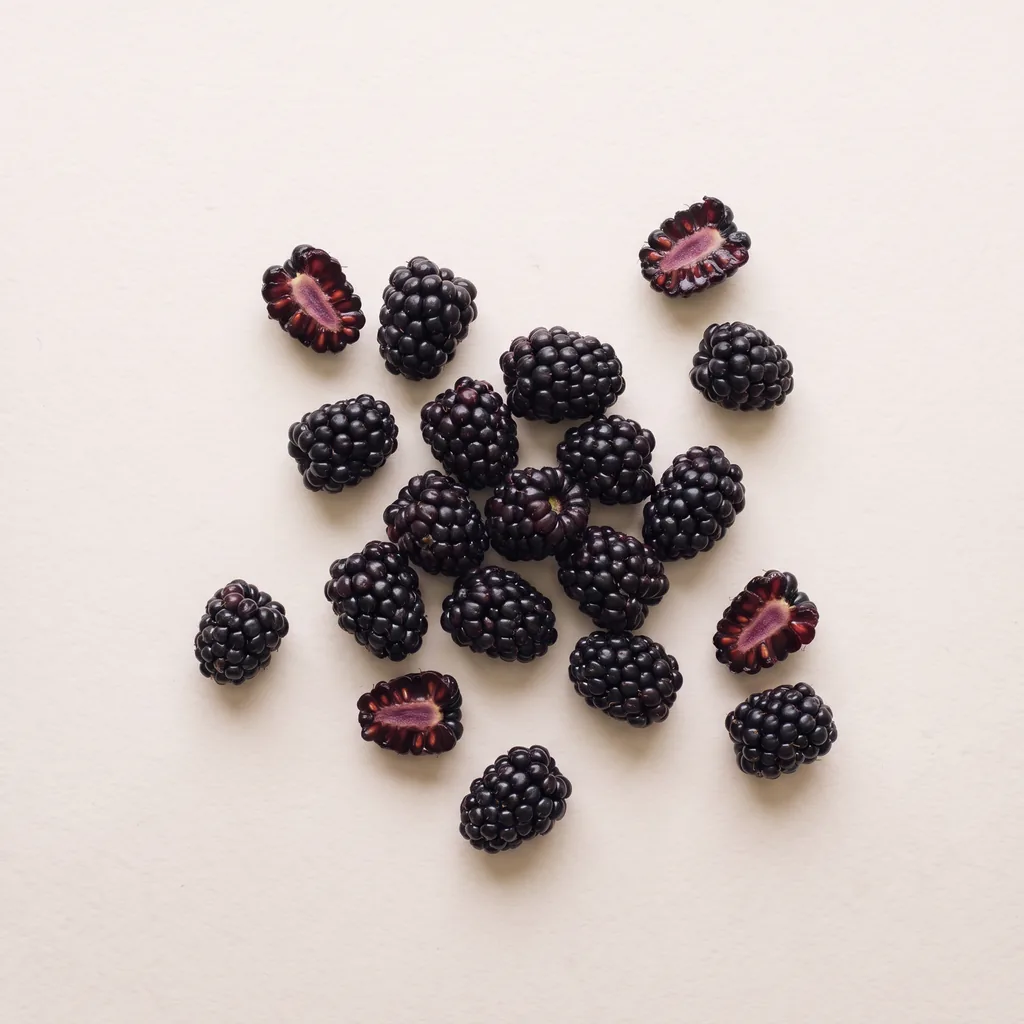
When can babies eat blackberry?
Blackberries can be served around 6 months, once baby is ready.
Blackberry grows in temperate climates and is found on every continent except Antarctica. The leaves, roots and stems of the plant have also been put to many uses. Wild crossing and farming have produced a large family. Boysenberry, dewberry, loganberry, marionberry and tayberry are some of them.
Nutrition
Blackberries hold plenty of fiber for gut health. Vitamin C supports immunity and helps absorb iron. They carry antioxidant plant compounds such as anthocyanins, flavanols and phenolic acids. Few foods have as many antioxidants.
How do you prepare blackberry for babies?
Choose ripe, soft fruit. Fresh or frozen berries can be cooked or mashed. Berries cooked in baked goods soften. Mash, split or cut the fruit by age.
Preparation by age
The same food is served differently at each age. What matters is how your baby sits, grasps and chews, more than the calendar.
6 months
6 months · How to prepare as a mashmash
Cook ripe fresh or frozen berries until they burst. Another way is to crush very soft, ripe berries between your fingers or with the back of a fork. Mix the mash into porridge, ricotta or yogurt. Berries baked into muffins or pancakes can stay whole or chopped, since heat softens them.
9 months
9 months · How to cut and servecube
Cut: Quartered
Cut ripe, soft berries into quarters lengthwise and serve as finger food. When ready, halves are fine. When your child crams in handfuls, put the halves straight on the tray or table instead of a bowl. That slows things down and they eat one at a time. Mash and bite-sized pieces of baked goods with cooked berries still work.
12 months
12 months · How to cut and serveslice
At this age many children can eat ripe berries whole. For whole berries, choose the largest, softest ones, roughly half the width of your child's palm. A large berry is actually less risky than a small one, which can match the size of the windpipe. Risk rises as berries get smaller and firmer. Keep quartering or halving when needed.
Is blackberry a choking hazard for babies?
Choking risk: medium
Blackberries are small and round and may be firm. Mash or cook them at 6 months, cut them lengthwise at 9 months, and give whole berries only from 12 months when ripe and soft.
A blackberry may be small, round and at times hard. Those qualities make choking more likely. Prepare them as the age cards describe.
Safe setting
Seat baby upright and stay within arm's reach during meals.
Is blackberry a common allergen?
Blackberry is not a common allergen. Few cases of blackberry allergy have been reported.
At the first try
Begin with a taste and watch closely. If all is well, raise the amount slowly over later meals.
Key nutrients
Frequently asked questions about blackberry
When can I serve whole blackberries?
Most children can eat ripe berries whole around 12 months. Pick the largest, softest ones. Small, firm berries are riskier.
Can I use frozen blackberries?
Yes, but cook them. Cooking until they burst softens them and lowers the choking risk.
What if my child stuffs their mouth?
Halved berries go straight on the tray or table, not into a bowl. This slows the child to one piece at a time.
Sources for this page
- Dünya Sağlık Örgütü. (2023). Guideline for complementary feeding of infants and young children 6-23 months of age.
- CDC, Infant and Toddler Nutrition. (n.d.). Choking Hazards.
- Khoo HE, Azlan A, Tang ST, Lim SM. (2017). Anthocyanidins and anthocyanins: colored pigments as food, pharmaceutical ingredients, and the potential health benefits. Food & Nutrition Research. doi:10.1080/16546628.2017.1361779
- Bushman BS, Phillips B, Isbell T, Ou B, Crane JM, Knapp SJ. (2004). Chemical Composition of Caneberry (Rubusspp.) Seeds and Oils and Their Antioxidant Potential. Journal of Agricultural and Food Chemistry. doi:10.1021/jf049149a
Guides on iron, allergen introduction, gagging and drinks. Read the starting solids guides
Medical note
This page is for information only and is not a substitute for medical advice, diagnosis or treatment. Talk to your pediatrician before any feeding decision, especially about allergen introduction and reactions.
The Lokmini app
Log blackberry, reactions and your allergen journey in the app.
Open in LokminiLokmini is coming soon to the App Store.
Astro Tasarım Simay Yenice · Türkiye · merhaba@lokmini.com