Black pepper
- First taste
- 6 months
- Choking risk
- low
- Common allergen
- no
- Iron
- low
Finely ground, small amounts · remove whole peppercorns
When can babies eat black pepper?
Black pepper can be served around 6 months, once baby is ready. From the first solids, babies can enjoy strong spice flavors. Keeping the amount small is enough.
Origin
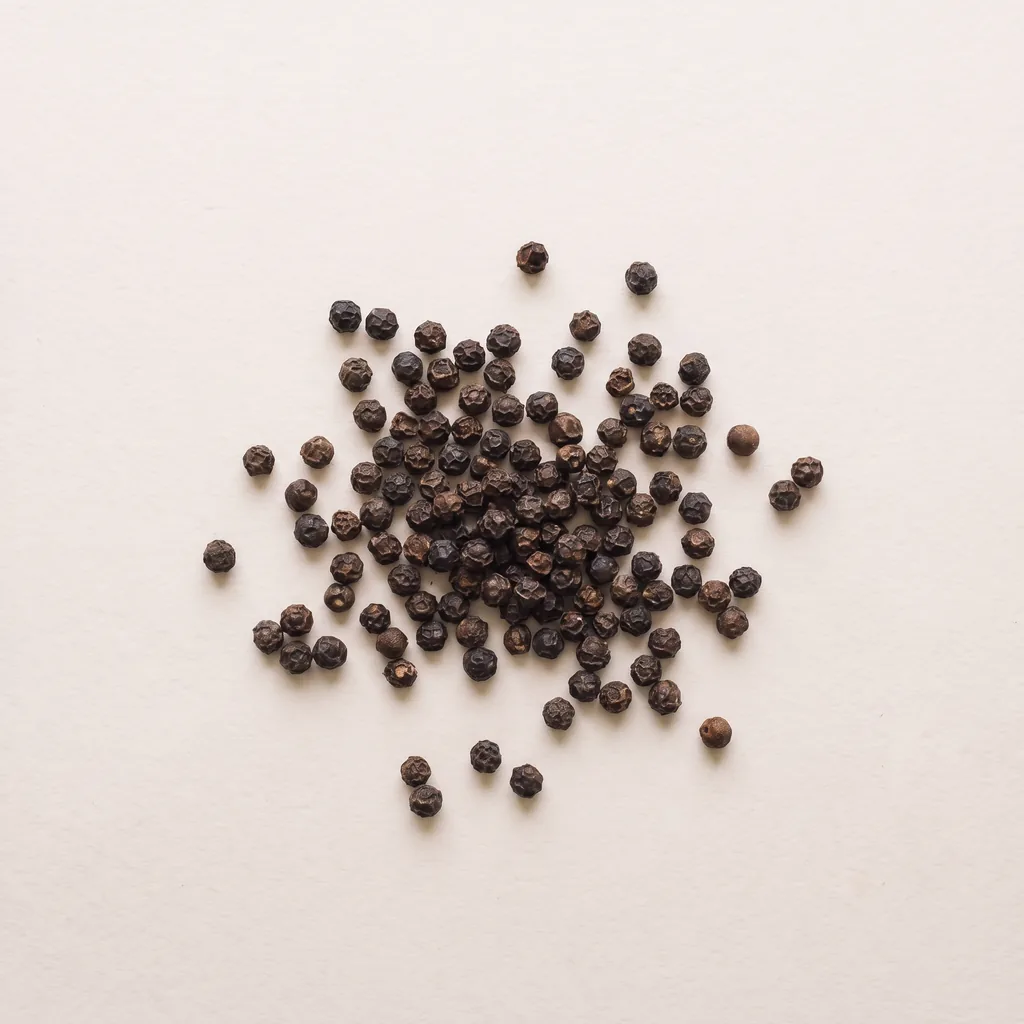
Black pepper is the small fruit of Piper nigrum, a plant from South Asia. Makers ferment, cook and dry the fruits until the skins shrivel. Depending on processing, the peppercorns turn black, green or white. Its bite and germ-fighting action come from a compound called piperine. Today it is among the most used spices in the world.
Nutrition
Because so little is used, pepper adds little nutritionally. Vitamins A, C and E appear only in trace amounts. Piperine is reported to help the body absorb iron and calcium when they are eaten together.
How do you prepare black pepper for babies?
Use finely ground pepper in the amounts a recipe calls for. Pepper supplements and essential oil are not well studied for babies, so do not offer them. Spice blends sometimes contain allergens like nuts or sesame, so check the label.
Storage
Keeping pepper away from sunlight helps it hold its flavor.
Preparation by age
The same food is served differently at each age. What matters is how your baby sits, grasps and chews, more than the calendar.
6 months
6 months · How to add to foodmash
Cut: Ground
Season food lightly with finely ground black pepper. You may wait a little before serving very spicy dishes often. Keep the amount small so baby can get used to the spice and still taste the dish. If a dish was cooked with whole peppercorns, pick them out of baby's plate one by one.
12 months
12 months · How to add to foodmash
Cut: Ground
Finely ground pepper can season meat, vegetable and grain dishes. A pinch on sweet foods works too, as do spice blends that include pepper. Near age 2, your child can sprinkle a little from a tiny bowl onto their own food. They may tip it all out, so put in only as much as you could live with on the plate.
Is black pepper a choking hazard for babies?
Choking risk: low
Finely ground black pepper carries a low choking risk. If a dish was cooked with whole peppercorns, pick them out of baby's portion.
Black pepper carries a low choking risk. In theory any food can cause choking. If a dish was cooked with whole peppercorns, remove them before serving to baby.
Safe setting
Seat baby upright and stay within arm's reach during meals.
Is black pepper a common allergen?
Black pepper allergy is rare but has been reported. Some specialty blends also contain pink peppercorn, which can cross-react in people allergic to cashew or pistachio. Mugwort pollen allergy or celery allergy can bring reactions to many spices, and black pepper is one of them. A mild, passing tingle, itch or sting around the lips and tongue is the sign.
Spices can also cause symptoms that look like allergy. Breathing in powdered pepper makes people sneeze and cough, which is irritation. A rash around the mouth is usually skin irritation and seldom a true allergy. Spicy food can also worsen diaper rash. For sensitive skin, ask your doctor about a thin barrier cream on the face and diaper area.
At the first try
Give only a small amount over the first few servings. When all goes well, raise it slowly at later meals.
Key nutrients
Frequently asked questions about black pepper
Should baby food be bland?
No. Babies can take on bold spice flavors from the first solids. Keep amounts small so baby gets used to both the spice and the dish.
Can pepper cause a rash around the mouth?
It can. After spicy food, a rash near the mouth is typically skin irritation and rarely a true allergy. Since pepper is used in tiny amounts, the risk of a severe rash is low.
Can I give pepper supplements or oil?
No. Their safety in babies is not well studied. The amount used in cooking is regarded as safe.
Sources for this page
- Dünya Sağlık Örgütü. (2023). Guideline for complementary feeding of infants and young children 6-23 months of age.
- CDC, Infant and Toddler Nutrition. (n.d.). Choking Hazards.
- Zou L, Hu YY, Chen WX. (2015). Antibacterial mechanism and activities of black pepper chloroform extract. Journal of Food Science and Technology. doi:10.1007/s13197-015-1914-0
- Tiwari A, Mahadik KR, Gabhe SY. (2020). Tiwari A, Mahadik KR, Gabhe SY. Piperine: a comprehensive review of methods of isolation, purification, and biological properties. Medicine in Drug Discovery. doi:10.1016/j.medidd.2020.100027
- Zheng J, Zhou Y, Li Y, Xu DP, Li S, Li HB. (2016). Spices for Prevention and Treatment of Cancers. Nutrients. doi:10.3390/nu8080495
Guides on iron, allergen introduction, gagging and drinks. Read the starting solids guides
Medical note
This page is for information only and is not a substitute for medical advice, diagnosis or treatment. Talk to your pediatrician before any feeding decision, especially about allergen introduction and reactions.
The Lokmini app
Log black pepper, reactions and your allergen journey in the app.
Open in LokminiLokmini is coming soon to the App Store.
Astro Tasarım Simay Yenice · Türkiye · merhaba@lokmini.com