Black-eyed peas
- First taste
- 6 months
- Choking risk
- medium
- Common allergen
- yes
- Iron
- high
Iron-rich · Turkish cuisine
Contains allergens
Each new allergen is offered on its own and watched for two hours. Our allergen introduction guide is available in Turkish for now.
When can babies eat black-eyed peas?
Black-eyed peas can be served around 6 months, once baby is ready.
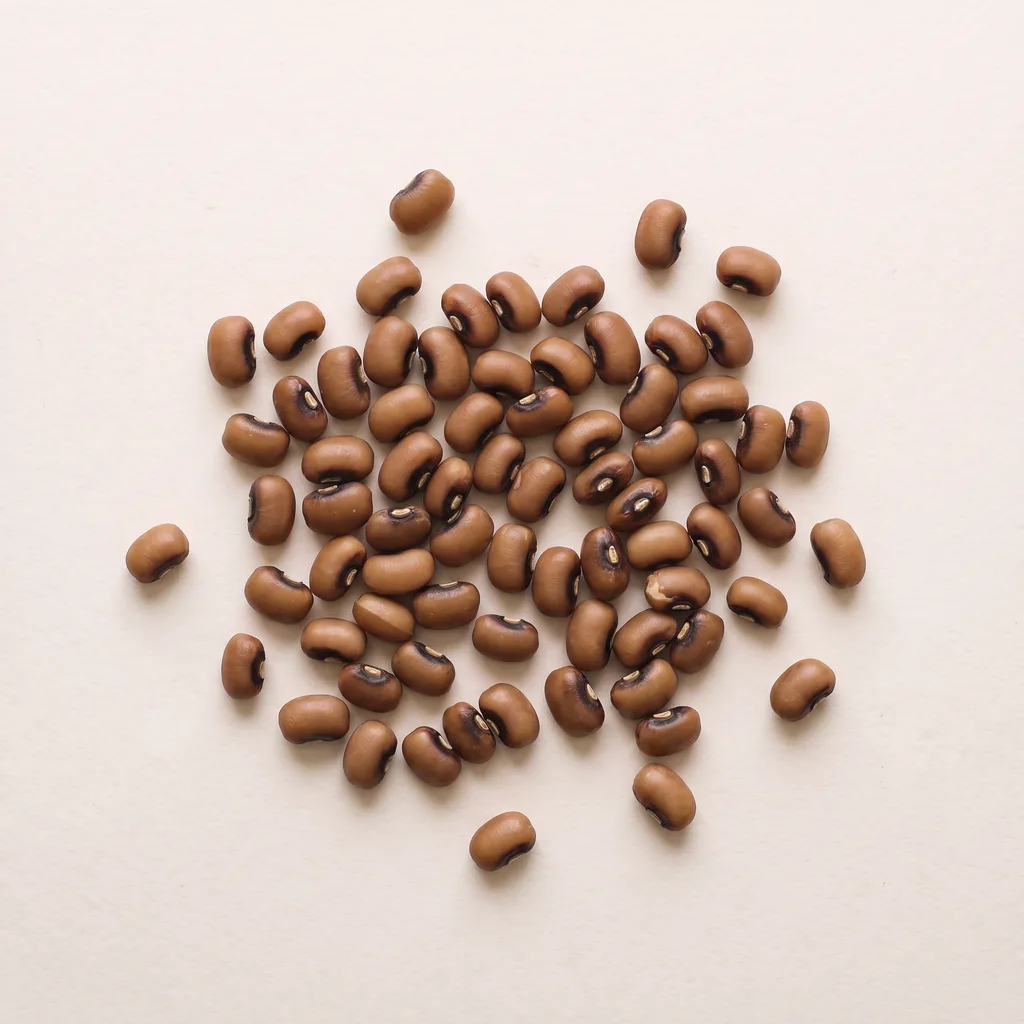
This small cream bean with a dark spot belongs to the large legume family. It is also known as cowpea and field pea. Its homeland is West Africa. Today it is a staple in many cuisines.
Nutrition
Black-eyed peas offer plenty of carbohydrate, fiber and protein. They supply calcium and iron, along with potassium, zinc, selenium, folate, vitamin K and B vitamins. These nutrients support energy, growth, the gut microbiome, bone density and red blood cells.
Boost the iron
Serving with vitamin C rich foods such as tomato and bell pepper helps the body absorb the iron.
How do you prepare black-eyed peas for babies?
Always cook black-eyed peas well. Soak dried ones first, then boil until very soft. Baby may gag harmlessly because of the texture. If so, smear a thin layer of the mash over a rice cake or a strip of toast, or thin it with yogurt, olive oil, formula or breast milk. You can fold the mash into polenta, vegetable purée, rice porridge or cooked greens. Because the peas are high in fiber, start with a small portion.
Preparation by age
The same food is served differently at each age. What matters is how your baby sits, grasps and chews, more than the calendar.
Prep time: 45 min
6 months
6 months · How to prepare as a puréemash
Cut: Fork mashed
Soak dried peas and boil them until very soft. Pass them through a sieve to remove the skins, then mash. For fresh peas, string them like green beans, cook well, chop finely and mix into the purée.
9 months
9 months · How to cut and servecube
Cut: Flattened
Press each boiled pea flat with a finger before serving. Cook fresh pods and serve in small pieces. Unsalted olive oil black-eyed peas suit this age, with the peas mashed.
12 months
12 months · How to cut and servecube
Cut: Flattened
Keep serving flattened peas, lightly salted black-eyed pea salad, and olive oil black-eyed peas. Whole peas are given mashed until age 4.
Is black-eyed peas a choking hazard for babies?
Choking risk: medium
A whole black-eyed pea is small and round. Mash at 6 months. After 9 months, flatten each pea with a finger. Do not serve whole peas at first.
Black-eyed peas are small and round, and firm when raw or undercooked. These traits raise the choking risk. Mash or flatten them as the age cards describe.
Safe setting
Seat baby upright and stay within arm's reach during meals.
Is black-eyed peas a common allergen?
Black-eyed peas rarely cause allergy. Still, a person who is allergic to another legume, for instance peanut or lentil, can sometimes react to these peas as well. People with birch pollen allergy or pollen food allergy syndrome may also react. It shows up as a short spell of itchy, tingly or burning feeling inside the mouth. A dangerous reaction is not expected.
At the first try
Start with a taste at the first meals. If all goes well, add a little more each time.
Key nutrients
Frequently asked questions about black-eyed peas
Are black-eyed peas rich in iron?
Yes. They are a plant iron source. Serving them with vitamin C foods helps absorption.
Do I have to purée black-eyed peas?
No. After 9 months, baby can eat peas flattened with a finger. Starting with purée is not a developmental need.
Can black-eyed peas cause gas?
Because they are high in fiber, they can cause digestive discomfort. Start with a small portion.
Sources for this page
- Dünya Sağlık Örgütü. (2023). Guideline for complementary feeding of infants and young children 6-23 months of age.
- NHS. (n.d.). Preparing food safely for babies.
- CDC, Infant and Toddler Nutrition. (n.d.). Choking Hazards.
- Halken S, Muraro A, de Silva D, Khaleva E, Angier E, Arasi S, et al. (2021). EAACI guideline: Preventing the development of food allergy in infants and young children (2020 update). European Academy of Allergy and Clinical Immunology. doi:10.1111/pai.13496
- Türkiye Ulusal Alerji ve Klinik İmmünoloji Derneği. (n.d.). Besin Alerjisi, öncelikli 10 besin.
- Verma AK, Kumar S, Das M, Dwivedi PD. (2013). A Comprehensive Review of Legume Allergy. Clinical Reviews in Allergy & Immunology. doi:10.1007/s12016-012-8310-6
Guides on iron, allergen introduction, gagging and drinks. Read the starting solids guides
Medical note
This page is for information only and is not a substitute for medical advice, diagnosis or treatment. Talk to your pediatrician before any feeding decision, especially about allergen introduction and reactions.
The Lokmini app
Log black-eyed peas, reactions and your allergen journey in the app.
Open in LokminiLokmini is coming soon to the App Store.
Astro Tasarım Simay Yenice · Türkiye · merhaba@lokmini.com