Bison
- First taste
- 6 months
- Choking risk
- high
- Common allergen
- no
- Iron
- high
Iron-rich · no cubes, cook through
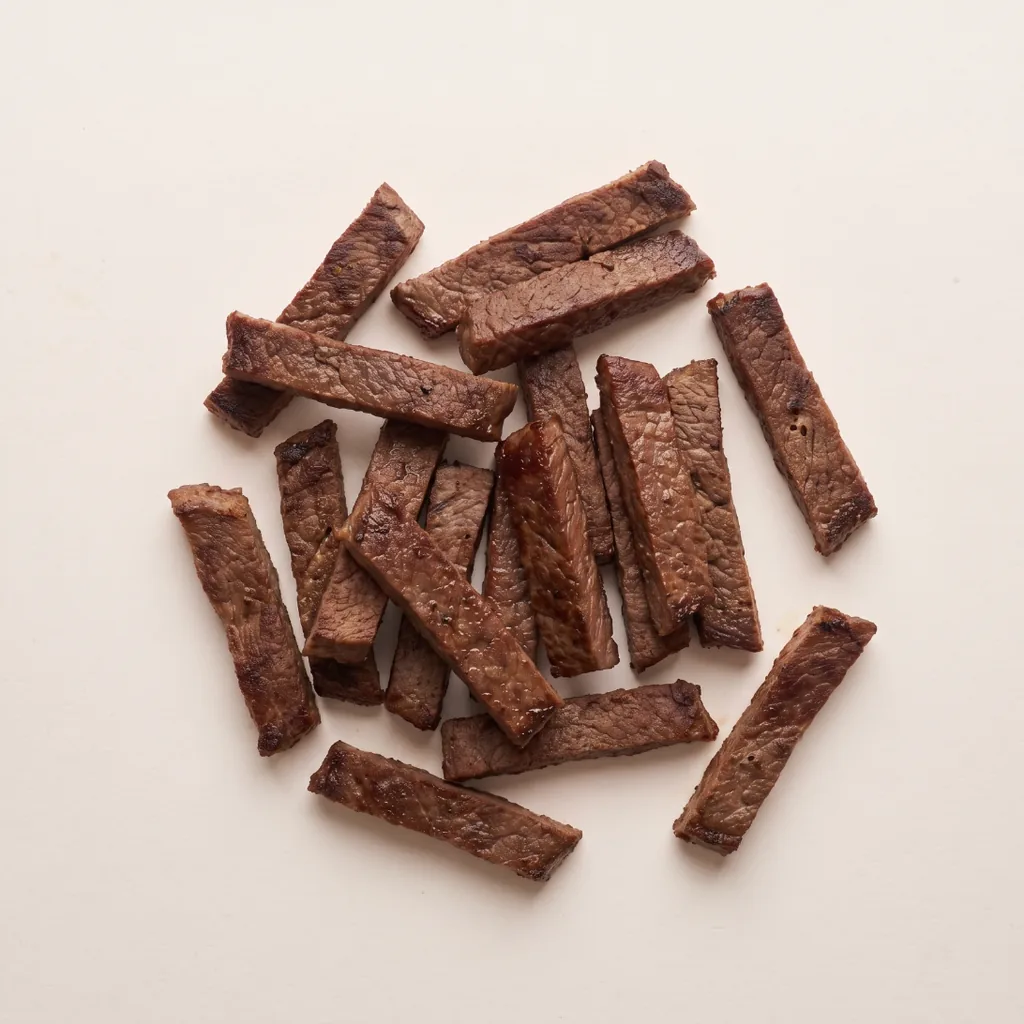
When can babies eat bison?
Bison can be served around 6 months, once baby is ready.
Bison are native to North America. Today they are also raised on farms. Bison is growing in popularity as a lean red meat.
Nutrition
Bison is rich in protein, which supplies the building blocks and energy for fast growth. It also carries iron, zinc, selenium and choline, plus vitamin B6 and B12. These nutrients help prevent anemia and support metabolism, growth and immunity. A baby's iron need rises from month 6. Compared with many other meats, bison brings extra iron.
How do you prepare bison for babies?
At first, pick lightly processed cuts such as steak, stew meat and ground meat. Skip jerky, meat sticks and cured or smoked bison until after the first birthday, since they are high in sodium.
Cooking: Ground meat is more open to harmful bacteria. Cook it to an internal temperature of 71 C (160 F). Steaks and other cuts are safe at a lower 63 C (145 F). Bison is lean and dries out easily. Sauce, stew or a braise keeps the meat tender.
Meatballs
Meatballs can be served from 6 months. They should be well cooked, soft and at least 5 cm (2 in) wide. A big meatball is harder for baby to pop whole into the mouth. A soft one is safer. Simmering meatballs in sauce softens them. You can stir nut or seed flour, cooked grains or breadcrumbs into the meat as well.
Be careful with store-bought or frozen meatballs. Many are salty, small and firm. If you share them with baby, crumble them finely into purée, porridge or yogurt.
As meatballs crumble in the mouth they may trigger gagging. Dry meat can stick to the palate and cause stronger gagging and even vomiting. Stay calm and let baby work the food forward alone. Meatballs may hold common allergens such as dairy, egg, sesame and wheat. Read the labels on prepared foods.
Preparation by age
The same food is served differently at each age. What matters is how your baby sits, grasps and chews, more than the calendar.
6 months
6 months · How to mix into foodmash
Cook ground bison well done and mix it into spoonable foods such as purée, porridge or yogurt. Do not serve ground meat alone as small crumbles, since that raises the choking risk. For meatballs or burgers, make them at least 5 cm (2 in) wide and cook to an internal temperature of 71 C (160 F). They should be soft enough for baby's gums to squash. Dipping in sauce helps swallowing.
6 months · How to cut and serve for baby-led weaningstrip
Cut: Finger strip
Cut well-done bison steak into strips about as thick as two adult fingers held together. Bone-in steak with big pieces of meat and fat trimmed off also works. Pick off loose bits of meat and fat first. Baby will mostly suck and gnaw. If a big piece comes off, stay calm. More often than not, baby spits it out. Otherwise the gag reflex pushes it to the front of the mouth. If help is needed, tilt baby gently forward and cup a hand under the chin.
9 months
9 months · How to cut and servecube
Cut: Bite sized piece
Pull meatballs, burgers or patties apart into small bites. Bites give baby practice with the pincer grasp and small-hand coordination. If small pieces are still too tricky, keep serving ground meat in sauce or whole meatballs at least 5 cm (2 in) wide. When it is time for steak, chop it finely or shred it.
12 months
12 months · How to cut and servecube
Serve shredded bison steak. Thin strips cut into small pieces work too, with sauce to dip them in. Do not cut meat into cubes, since cubes still carry a high choking risk. Bite-size meatballs make good finger food and fork practice. If a big piece breaks off in the mouth, stick out your tongue and say 'ah' over and over to show your child how to spit. Serve bison sausage in moderation, split lengthwise so it is not round.
12 months and up · How to serve a burgerslice
Around 18 months you can serve a bison burger as a sandwich in a bun. The meat should still reach 71 C (160 F). For chewing practice you can try razor-thin steak strips on their own. Do not offer bison jerky before at least 24 months.
Is bison a choking hazard for babies?
Choking risk: high
Choking on meat is common in children. Do not serve it in chunks or cubes. Make meatballs at least 5 cm (2 in) wide, soft and cooked through.
Choking on meat happens often, in adults and kids both. Prepare bison to suit the age. Never serve it as chunks or cubes.
Bison jerky
Hold off until your child is at least 24 months old. Try it only if the child takes small bites, chews well, does not stuff the mouth and can spit out poorly chewed food. Connective tissue may not break down. The child should sit upright and focus on the meal. Do not serve it on the go, in a car seat or in a stroller.
Safe setting
Seat baby upright and stay within arm's reach during meals.
Is bison a common allergen?
Bison rarely causes food allergy. Allergies to meat, bison included, have been reported.
Certain tick bites can cause alpha-gal allergy. In the US the culprit is the Lone Star tick, and other tick species do it elsewhere. Alpha-gal is a sugar in the meat of non-primate mammals. The reaction starts late, 3 to 8 hours after eating red meat. Some people with alpha-gal allergy react as well to traces of that sugar in dairy, gelatin and mammal organ meats.
At the first try
For the first few servings, give a small amount and watch your baby closely. If all is well, increase the amount over time.
Key nutrients
Frequently asked questions about bison
Can babies have bison sausage?
Around 12 months, in moderation. Slice the sausage along its length so no round pieces remain. Processed products are high in sodium.
Does bison help with pooping?
No. Bison has plenty of protein but no fiber, so digestion and pooping may slow down. Poop patterns vary widely between babies. Ask your pediatrician if you are concerned.
To what temperature should I cook bison?
Cook ground meat to an internal temperature of 71 C (160 F). Steak and other cuts are safe at 63 C (145 F). Meatballs and burgers count as ground meat and need 71 C.
Sources for this page
- Dünya Sağlık Örgütü. (2023). Guideline for complementary feeding of infants and young children 6-23 months of age.
- NHS. (n.d.). Preparing food safely for babies.
- CDC, Infant and Toddler Nutrition. (n.d.). Choking Hazards.
Guides on iron, allergen introduction, gagging and drinks. Read the starting solids guides
Medical note
This page is for information only and is not a substitute for medical advice, diagnosis or treatment. Talk to your pediatrician before any feeding decision, especially about allergen introduction and reactions.
The Lokmini app
Log bison, reactions and your allergen journey in the app.
Open in LokminiLokmini is coming soon to the App Store.
Astro Tasarım Simay Yenice · Türkiye · merhaba@lokmini.com