Basil
- First taste
- 6 months
- Choking risk
- low
- Common allergen
- no
- Iron
- low
Mint family herb · added to food
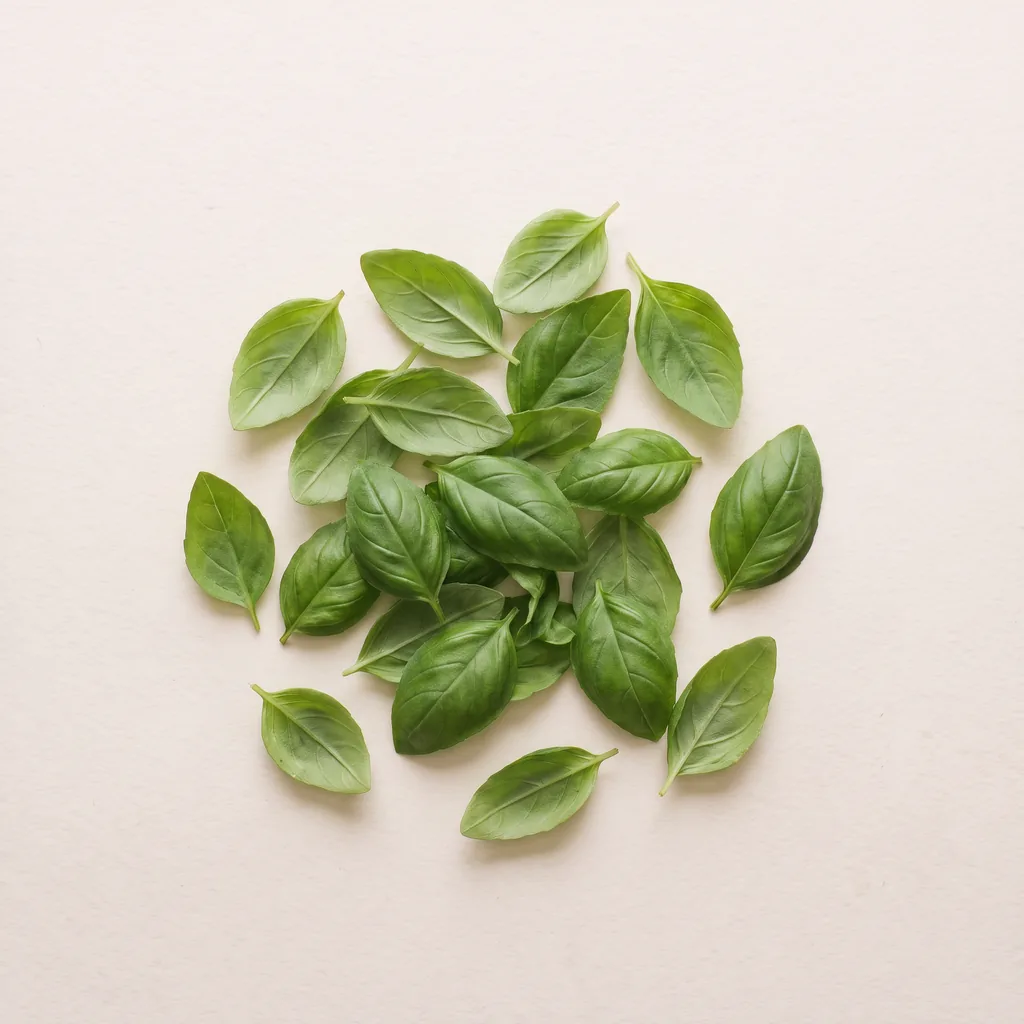
When can babies eat basil?
Basil can be offered around 6 months, once baby starts solids. It is a flavoring herb and is used in small amounts.
It grows in warm regions from North Africa to Southeast Asia. The best-known type has a strong scent and bright green leaves. Other types include Thai basil, holy basil (tulsi) and purple basil.
Nutrition
Basil holds beta carotene, lutein and zeaxanthin, which support vision. Vitamin K helps blood clotting and bones. A little vitamin C and folate add support for immunity and the nerves. Studies also point to antioxidant, anti-inflammatory and germ-fighting effects.
How do you prepare basil for babies?
Basil is easiest inside a dish rather than on its own. Stir it into purées, porridges, sauces and soft meatballs. In the first year, chop the leaves very fine.
After 9 months you can offer thin ribbons or small bits, raw or cooked. A child may spit while getting used to the leaf texture. That is normal.
Baby decides how much to eat. Watch for cues that show wanting more or being done.
Preparation by age
The same food is served differently at each age. What matters is how your baby sits, grasps and chews, more than the calendar.
6 months
6 months · How to add to foodmash
Chop fresh basil very fine or crumble dried basil. Stir it into soft foods such as purées, porridges and sauces. You can also work it into large, soft meatballs. If you serve a sauce like pesto or chimichurri, check it for common allergens first and make sure those allergies have been ruled out.
9 months
9 months · How to cut and servecube
Cut fresh leaves into thin ribbons or small bits. Mix them into dishes raw or cooked, or offer them alone so your child can taste the herb. Pieces can stick inside the mouth and cause coughing. If that happens, offer a few sips of water. Expect plenty of spitting, since the leaf texture is hard to manage. Spitting eases as molars come in, around 18 months.
12 months
12 months and up · How to serveslice
Cut: Finely chopped
Keep adding chopped basil to meals, salad dressings and sauces such as pesto and chimichurri. The source suggests whole raw leaves from about 24 months, once a child can bite and tear off larger pieces. Until then, keep the leaves chopped.
Is basil a choking hazard for babies?
Choking risk: low
The risk is low when it is prepared well. Leaf pieces can cling inside the mouth and cause gagging. Chop leaves finely and skip whole leaves until your child can bite and tear food.
Basil carries a low risk when prepared well. In theory, any food can cause choking. Leaf pieces may stick inside the mouth and bring on gagging or coughing. Chop the leaves and serve them in an age-suited way.
Safe setting
Seat baby upright for meals and stay within arm's reach.
Is basil a common allergen?
Basil is not a common allergen. A basil allergy is rare but possible. Basil belongs to the mint family, so be careful if mint has bothered your baby before.
Ready-made sauces such as pesto may contain nuts or dairy. Read the label.
Key nutrients
Frequently asked questions about basil
Is basil healthy for babies?
Yes. It contains carotenoids that support vision, vitamin K, and a little vitamin C and folate.
What portion should I offer?
Start small. Baby shows wanting more by making sounds, pointing or reaching. Most babies eat little between 6 and 9 months. Between 10 and 12 months, aim for a balanced adult-style meal in smaller portions. Stop when baby shows being done.
How many meals a day?
It is flexible. Seat baby at the table at least once a day at 6 to 7 months, twice at 8 to 9 months, and three times from about 10 months.
Sources for this page
- Dünya Sağlık Örgütü. (2023). Guideline for complementary feeding of infants and young children 6-23 months of age.
- Nadeem HR, Akhtar S, Sestili P, Ismail T, Neugart S, Qamar M, et al. (2022). Toxicity, Antioxidant Activity, and Phytochemicals of Basil (Ocimum basilicum L.) Leaves Cultivated in Southern Punjab, Pakistan. Foods. doi:10.3390/foods11091239
- Vlaicu PA, Untea AE, Turcu RP, Saracila M, Panaite TD, Cornescu GM. (2022). Nutritional Composition and Bioactive Compounds of Basil, Thyme and Sage Plant Additives and Their Functionality on Broiler Thigh Meat Quality. Foods. doi:10.3390/foods11081105
- CDC, Infant and Toddler Nutrition. (n.d.). Choking Hazards.
Guides on iron, allergen introduction, gagging and drinks. Read the starting solids guides
Medical note
This page is for information only and is not a substitute for medical advice, diagnosis or treatment. Talk to your pediatrician before any feeding decision, especially about allergen introduction and reactions.
The Lokmini app
Log basil, reactions and your allergen journey in the app.
Open in LokminiLokmini is coming soon to the App Store.
Astro Tasarım Simay Yenice · Türkiye · merhaba@lokmini.com