Banana
- First taste
- 6 months
- Choking risk
- low
- Common allergen
- no
- Iron
- low
Soft and sticky · may cause gagging
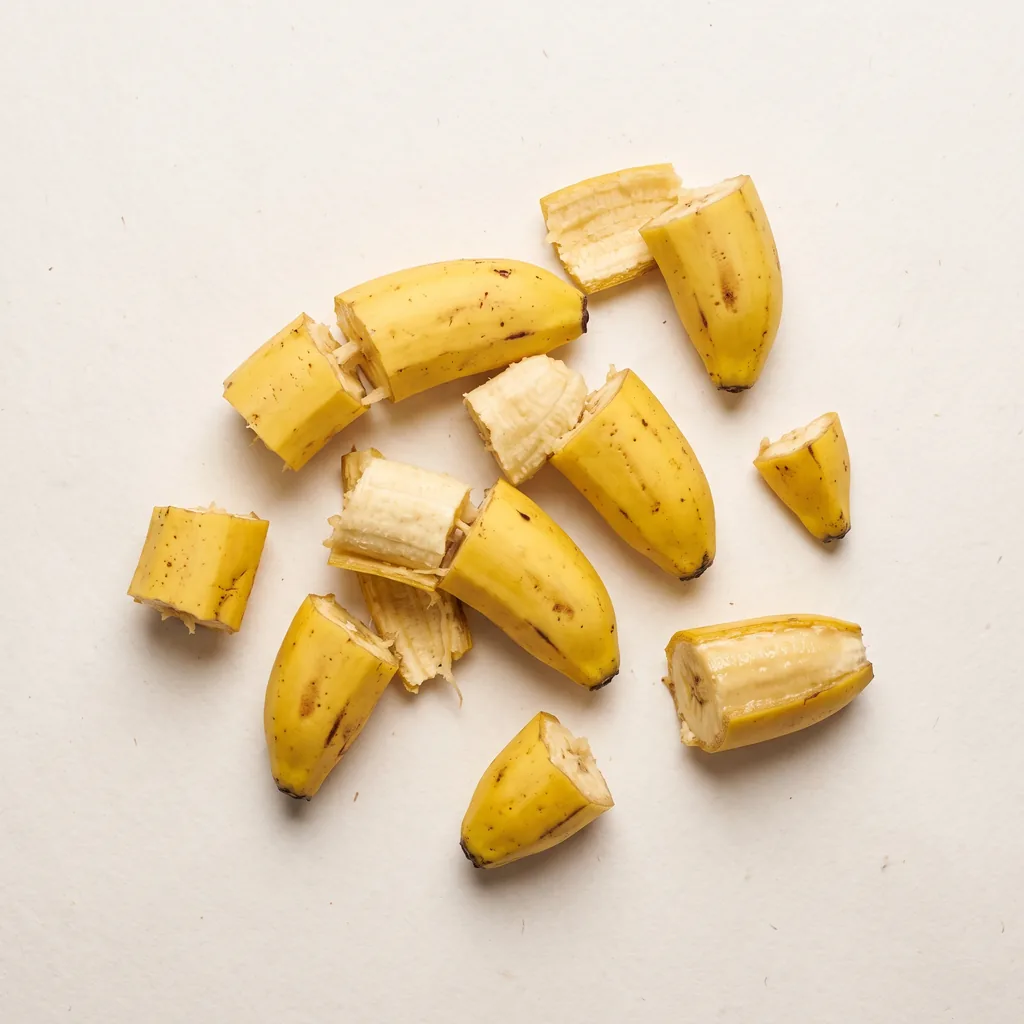
When can babies eat banana?
You can start banana once your baby is ready for solids, usually around 6 months.
The banana plant began its story in tropical Asia, and wild plants are still found there. There are kinds in many colors and sizes, from red to orange, pink and purple, and tastes from starchy to sweet. Over a thousand varieties are grown, but a single one, the Cavendish, dominates world trade. Its thick peel protects the fruit on long journeys, which gives it an edge over delicate kinds that must be eaten fast.
Banana supplies carbohydrate for energy. Potassium, folate, and vitamins B6 and C are in it. These support the nervous system, skin, iron absorption and blood pressure. Banana also holds more antioxidants than many fruits, herbs and vegetables.
How do you prepare banana for babies?
Gagging is normal
Banana is soft and sticky, so babies often gag on it. If it sticks to the roof of the mouth and causes a strong gag, try lengthwise spears instead of a whole half. Big, firm foods give the mouth more sensory feedback. Soft banana does not give the same kind.
If baby crams the mouth, shrink the pieces. Small pieces are less slippery and easier to hold.
Ripeness and constipation
Nutrients shift with ripeness. Every banana has fiber. Less ripe ones carry more prebiotic fiber. Ripe ones have more soluble fiber.
The evidence that banana causes constipation is weak. Some studies even suggest it can support regular bowel movements. The belief may come from differences in ripeness. Green bananas are high in resistant starch and soluble fiber, which feed gut bacteria. They also hold tannins, which dry the mouth. Tannins in large amounts can be linked with constipation.
If you worry about constipation, try ripe banana. As it ripens, starch and tannin fall and natural sugar rises, which may help a child who is already constipated. The cause is often more than banana. Other foods, past illnesses and the gut's natural change once solids begin all play a part. If you are concerned, talk with your child's doctor.
As your child grows, and storage
At 18 months you can go back up in size and offer a whole banana. Learning to peel one is a fun task for a toddler.
Green bananas ripen faster in a brown paper bag. Once ripe, peel them and freeze in an airtight container. They keep for a few months.
Preparation by age
The same food is served differently at each age. What matters is how your baby sits, grasps and chews, more than the calendar.
6 months
6 months · How to cut and serve for baby-led weaningslice
Serve half of a peeled banana whole, or split the banana lengthwise into thirds and serve the spears. To cut it in thirds, push a finger down into the top end of the peeled banana. Banana is soft and sticks to things, so gagging often happens. If you notice it sticking to the roof of the mouth, choose lengthwise spears over a whole half. If you are spoon-feeding, mash it and offer it on a preloaded spoon.
9 months
9 months · How to cut and servestrip
Cut: Finger strip
Split the banana lengthwise into three spears and serve them. If baby crams too much food into the mouth, reduce the pieces to bite size, which makes them easier to hold and less slippery. Banana slices suit pincer grasp practice. You can also add them to yogurt and oatmeal porridge.
12 months
12 months · How to cut and servecube
Cut: Bite sized piece
Offer bite-sized pieces. If you are sure of your child's skills, you can also serve slices or a whole banana. The size you choose depends on your child's eating skills. This is also a good age to teach peeling a banana.
Is banana a choking hazard for babies?
Choking risk: low
Banana is soft and sticky and often causes gagging. If it sticks to the roof of the mouth, offer lengthwise spears instead of a whole half.
Banana is a low choking risk when prepared to suit your baby's age. Still, any food can cause choking.
Since banana is soft and clingy, expect some gagging. It is usually harmless. If it clings to the palate, offer lengthwise spears or small pieces. Stay within arm's reach while your baby eats.
Is banana a common allergen?
Banana is not counted as a common allergen, though reactions have been reported. Sensitivity is possible in people who react to ragweed or latex, and in those with the pollen-related mouth allergy known as oral allergy syndrome. Symptoms are a mild, short itch, tingle or burn in the mouth, and they typically fade on their own. Cooking banana can reduce symptoms. Foods that only taste of banana are unlikely to bother these people.
For babies and toddlers with FPIES, banana can set off a reaction. FPIES is a delayed allergy. Within hours of eating, it can bring vomiting, diarrhea, a drop in blood pressure and dehydration.
Start with a small amount at the first meals. If nothing unusual happens, raise it slowly.
Vomiting and diarrhea
If repeated vomiting and diarrhea begin a few hours after banana, contact a doctor.
Key nutrients
Frequently asked questions about banana
Does banana cause constipation in babies?
The evidence is weak. Ripe banana may be gentler, while green banana contains tannins. If you are concerned, ask your child's doctor.
What if my baby gags on banana?
This is common because banana is soft and sticky. If it sticks to the palate, try lengthwise spears or small pieces.
How do I store bananas?
To ripen green bananas, put them in a brown paper bag. Once ripe, peel and freeze them in an airtight container, where they keep for a few months.
Sources for this page
- Dünya Sağlık Örgütü. (2023). Guideline for complementary feeding of infants and young children 6-23 months of age.
- NHS. (n.d.). Preparing food safely for babies.
- CDC, Infant and Toddler Nutrition. (n.d.). Choking Hazards.
- M??ller-Lissner SA, Kaatz V, Brandt W, Keller J, Layer P. (2005). The perceived effect of various foods and beverages on stool consistency. European Journal of Gastroenterology and Hepatology. doi:10.1097/00042737-200501000-00020
- Falcomer AL, Riquette RFR, de Lima BR, Ginani VC, Zandonadi RP. (2019). Health Benefits of Green Banana Consumption: A Systematic Review. Nutrients. doi:10.3390/nu11061222
- El-Sayed ZA, El-Ghoneimy DH, El-Shennawy D, Nasser MW. (2013). Evaluation of Banana Hypersensitivity Among a Group of Atopic Egyptian Children: Relation to Parental/Self Reports. Allergy, Asthma and Immunology Research. doi:10.4168/aair.2013.5.3.150
Guides on iron, allergen introduction, gagging and drinks. Read the starting solids guides
Medical note
This page is for information only and is not a substitute for medical advice, diagnosis or treatment. Talk to your pediatrician before any feeding decision, especially about allergen introduction and reactions.
The Lokmini app
Log banana, reactions and your allergen journey in the app.
Open in LokminiLokmini is coming soon to the App Store.
Astro Tasarım Simay Yenice · Türkiye · merhaba@lokmini.com