Asparagus
- First taste
- 6 months
- Choking risk
- medium
- Common allergen
- no
- Iron
- low
Fibrous spear, cook until soft
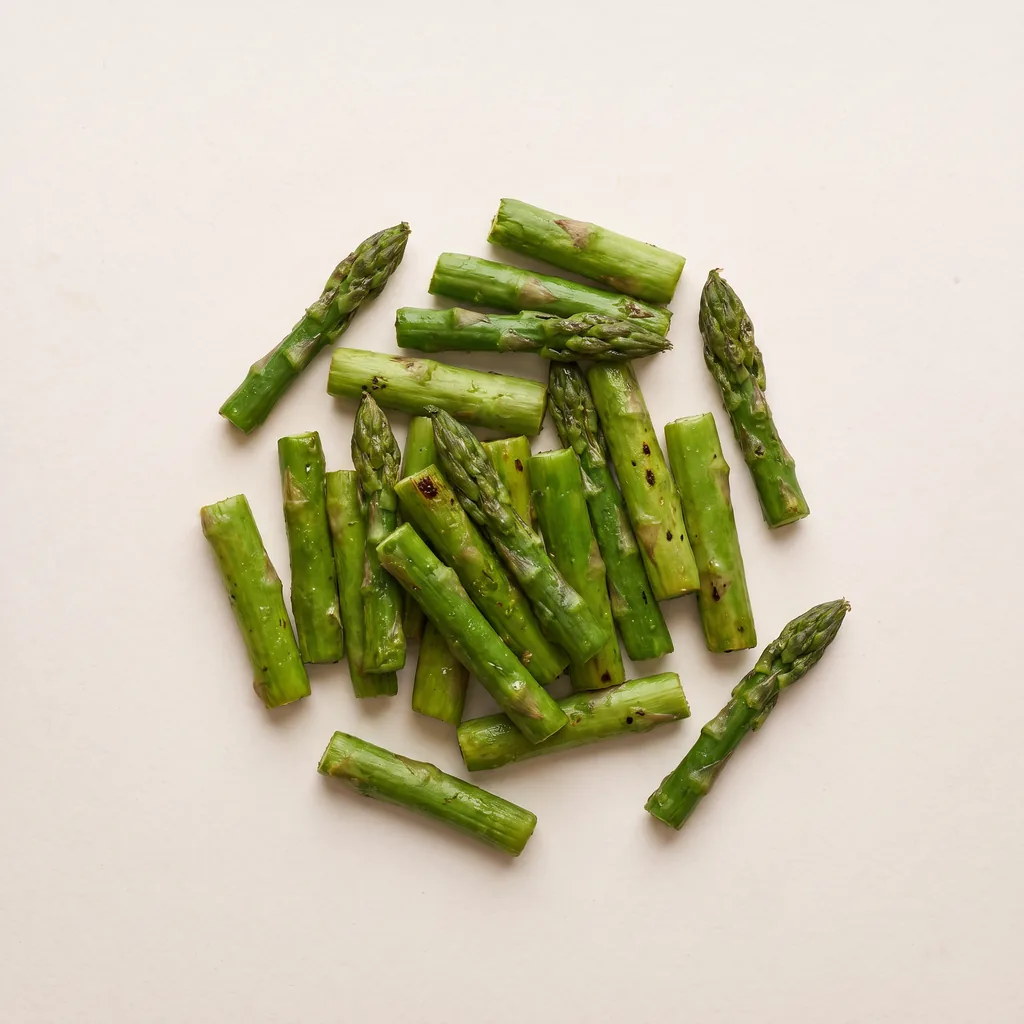
When can babies eat asparagus?
You can start asparagus once your baby is ready for solids, usually around 6 months.
Asparagus grows in sunny places. The young, tender spears are picked before the skin turns woody and the buds at the tip open. Many people think of it as a green vegetable, yet purple and white types exist. Their flavors differ a little, some more grassy and some sweeter.
Folate supports cell health and the making of amino acids. Vitamin B6 helps a child process protein and carbohydrate. Fiber, including prebiotic fiber, is good for digestion and the microbiome. Green and purple spears hold more vitamin A, plant iron and antioxidants than white ones.
How do you prepare asparagus for babies?
Cooking and cutting
Pierce a spear with a fork to check that it is soft. Steaming or boiling can leave spears floppy and hard for small hands to hold. Grilling, sautéing or roasting keeps them sturdier.
A whole spear does not add much to the belly. It is still great practice for tongue movement and chewing. To get more food in, split cooked spears lengthwise, chop them and stir them into egg dishes, grain salads or mashed vegetables.
As your child grows
At 9 months babies start to pick up small bits between two fingers. It is time to cut cooked spears into smaller pieces. Cut lengthwise first, then chop. You can still offer a whole spear for biting and tearing practice.
At 18 months a whole spear, chopped pieces, or asparagus folded into soft dishes all work. Many children can try raw asparagus at this age. It is woody and fibrous, so expect a lot of spitting until close to age 2.
Gas and storage
Asparagus can cause gas and belly discomfort because of its carbohydrate and fiber content. Certain sugars (raffinose) and fructans are hard to digest. Fiber travels undigested to the large intestine, where bacteria ferment it and produce gas. Start slowly and build up over time.
Store spears in the fridge, wrapped in a damp cloth or standing in a glass of water. Nutrients decline within a few days, which is why spears are best cooked soon after purchase.
Urine smell
Asparagus can give urine a strong but harmless smell. It comes from sulfur compounds the body makes. Not everyone can smell it.
Preparation by age
The same food is served differently at each age. What matters is how your baby sits, grasps and chews, more than the calendar.
Prep time: 15 min
6 months
6 months · How to cut and serve for baby-led weaningstrip
Cut: Large piece
Pick thick spears, snap off the woody end and cook until soft, for example by steaming. Serve the whole spear about as long as a palm, and baby will gnaw on it. Peeling the fibrous outer skin with a peeler softens the texture.
9 months
9 months · How to cut and servecube
Cut cooked asparagus into small pieces, or mince it finely and stir it into omelets and rice. Stringy fibers can linger in the mouth and cause gagging, so skip the bottom third of the stalk.
12 months
12 months · How to cut and servecube
Cut: Bite sized piece
Keep serving cooked asparagus in bite-sized pieces. Raw asparagus is not suitable because it is tough and fibrous.
Is asparagus a choking hazard for babies?
Choking risk: medium
The stringy spear can leave long fibers in the mouth. Snap off the woody end, peel the tough outer skin and cook until soft. Small round pieces carry more risk than a whole spear, so cut lengthwise first.
Yes, asparagus can be a choking risk. It is cylindrical and hard to chew.
Surprisingly, chopped asparagus is riskier than a whole spear. A small round piece may go down whole when baby does not chew it. A whole spear gets chewed soft and flat, or triggers a strong gag. So cut small pieces lengthwise first. Stay within arm's reach while your baby eats.
No small round pieces
Split asparagus lengthwise before chopping. Do not serve small round rings.
Is asparagus a common allergen?
Asparagus is not a common allergen. Allergy is rare but has been reported. People sensitive to plants in the lily and onion family (Liliaceae), such as shallots, may face a higher chance of asparagus allergy. Handling it may bring on hives or contact dermatitis.
Start with a small amount at the first meals. If nothing unusual happens, raise it slowly over later meals.
Key nutrients
Frequently asked questions about asparagus
How do I serve asparagus to a baby?
At 6 months, offer a whole spear cooked until soft. At 9 months, serve small pieces cut lengthwise. Do not give small round pieces without cutting lengthwise first.
Why does urine smell after asparagus?
Asparagusic acid in the vegetable turns into sulfur compounds in the body and passes into urine. The smell is harmless, and not everyone can smell it.
Can asparagus cause gas in babies?
It can. Fiber and certain sugars may cause gas and bloating. Start with a small amount and increase slowly.
When can toddlers have raw asparagus?
Raw asparagus is woody and fibrous, so it is hard to chew. The source says it can be tried around 18 months. Expect lots of spitting until close to age 2.
Sources for this page
- Dünya Sağlık Örgütü. (2023). Guideline for complementary feeding of infants and young children 6-23 months of age.
- NHS. (n.d.). Preparing food safely for babies.
- CDC, Infant and Toddler Nutrition. (n.d.). Choking Hazards.
- Amaro-López MA, Zurera-Cosano G, Moreno-Rojas R. (1998). Trends and nutritional significance of mineral content in fresh white asparagus spears. International Journal of Food Sciences and Nutrition. doi:10.3109/09637489809089410
- Wang M, Tadmor Y, Wu QL, Chin CK, Garrison SA, Simon JE. (2003). Quantification of Protodioscin and Rutin in Asparagus Shoots by LC/MS and HPLC Methods. Journal of Agricultural and Food Chemistry. doi:10.1021/jf0344587
- Tabar AI, Alvarez‐puebla MJ, Gomez B, Sanchez‐monge R, García BE, Echechipia S, et al. (2004). Diversity of asparagus allergy: clinical and immunological features. Clinical and Experimental Allergy. doi:10.1111/j.1365-2222.2004.01856.x
- Lison M, Blondheim SH, Melmed RN. (1980). A polymorphism of the ability to smell urinary metabolites of asparagus. The BMJ. doi:10.1136/bmj.281.6256.1676
Guides on iron, allergen introduction, gagging and drinks. Read the starting solids guides
Medical note
This page is for information only and is not a substitute for medical advice, diagnosis or treatment. Talk to your pediatrician before any feeding decision, especially about allergen introduction and reactions.
The Lokmini app
Log asparagus, reactions and your allergen journey in the app.
Open in LokminiLokmini is coming soon to the App Store.
Astro Tasarım Simay Yenice · Türkiye · merhaba@lokmini.com