Asiago cheese
- First taste
- 6 months
- Choking risk
- high
- Common allergen
- yes
- Iron
- low
Milk allergen · pasteurized only · salty
Contains allergens
Each new allergen is offered on its own and watched for two hours. Our allergen introduction guide is available in Turkish for now.
When can babies eat Asiago cheese?
Pasteurized asiago can be offered as an occasional taste once your baby is ready for solids, usually around 6 months. Unpasteurized cheese carries a foodborne illness risk, so choose pasteurized.
Asiago is one of Italy's oldest cheeses. It started on the lower slopes of the Alps in northern Italy, in a town that shares its name. It was once made with sheep's milk and tasted different from the cheese of today. Now it comes mostly from cow's milk. European protected-origin rules decide where: the milk must come from cows in certain mountain provinces of Italy. There are two types, fresh asiago fresco and aged asiago d'allevo.
Asiago is a source of protein and fat. It also has calcium, zinc, selenium and vitamins A and B12. These are building blocks for growth, the brain, bones, vision and immunity.
How do you prepare Asiago cheese for babies?
Salt and amounts
Asiago is usually salty. Babies tend to eat only a little. Some sodium is needed for baby's fluid balance. Sharing the family table is also a chance to try new tastes and textures. A bite now and then is not a worry.
There is no firm upper limit for cheese. You could serve pasteurized cheese every day if you like. Try not to fuss over how much baby eats. At one meal baby may eat a lot, at another very little. Both are fine.
Choose pasteurized
To lower the risk of foodborne illness, serve only pasteurized asiago.
How much to offer
Start with a small amount. A baby wanting more will grunt, point or reach. At first, most babies aged 6 to 9 months eat only a little solid food. From 10 to 12 months, move toward a balanced adult-style meal in smaller portions. Stop offering food when baby shows they are done.
Preparation by age
The same food is served differently at each age. What matters is how your baby sits, grasps and chews, more than the calendar.
6 months
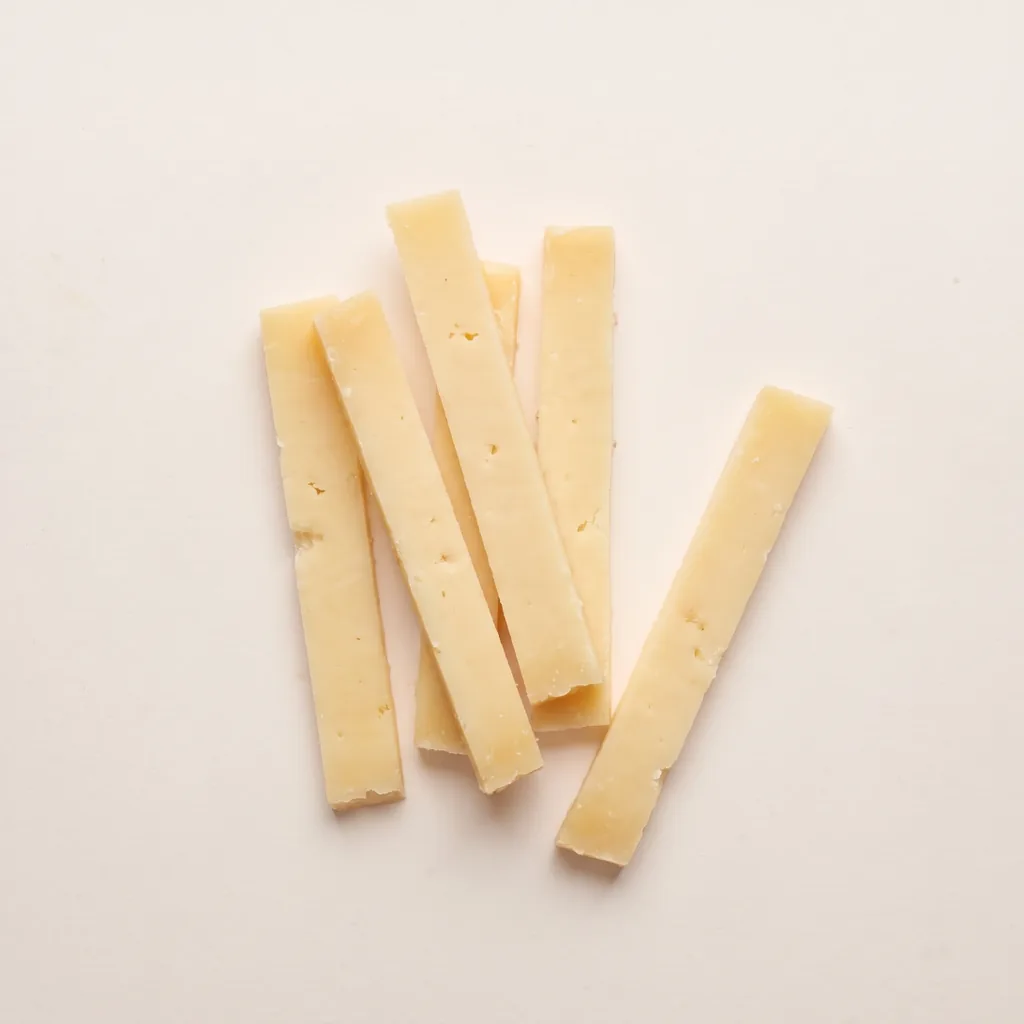
6 months · How to prepare as long slicesstrip
Cut: Finger strip
Offer pasteurized asiago now and then as a taste. Cut long, flat slices. This shape lowers the choking risk and is easy for baby to hold alone. Avoid cubes and large chunks.
6 months · How to prepare gratedcube
To melt the cheese, sprinkle a little grated asiago. Big melted globs are hard for a young baby to chew and manage.
9 months
9 months · How to prepare as slices and shredsstrip
Serve pasteurized cheese in long flat slices, or in bite-sized bits torn from a flat slice. You can also grate it and offer it alone or mixed into meals. Cubes and large melted globs carry a high choking risk, so keep avoiding them.
12 months
12 months · How to prepare as pieces and meltedcube
Offer small pieces cut from a thin slice, grated cheese, or long flat slices that let your child practice biting off bits. Thin melted layers on toast, wraps, noodles, legumes or vegetables also work. It should not be too hot, but it also should not cool until it hardens again or clumps.
Is Asiago cheese a choking hazard for babies?
Choking risk: high
Firm cheese clumps in the mouth. Skip cubes and large chunks. Use long flat slices or grated cheese.
Yes, cheeses like asiago carry a choking risk. They are firm and can clump in the mouth, which makes them hard to manage.
Cubes and large chunks are high risk, and so are big melted globs. Serve long flat slices, grated cheese, or small pieces torn off a flat slice. Stay within arm's reach while your baby eats.
No cubes or globs
Do not serve cheese as cubes or large melted globs.
Is Asiago cheese a common allergen?
Yes, asiago contains a common allergen. It is usually made from cow's milk, which the World Health Organization lists as a global priority allergen. Milk causes about one in five food allergies in young children. Some asiago may come from sheep's milk, and dairy from sheep, goats and buffalo can set off reactions similar to cow's milk.
The good news is that milk allergy often fades. Most children with cow's milk allergy outgrow it by age 6. Many babies with mild milk protein allergy can try cow's milk again around their first birthday, guided by their doctor. Aged cheeses have histamine, which can lead to a rash in sensitive children.
If you suspect milk allergy
Speak with an allergist before offering cheese if you suspect your baby has a milk allergy.
FPIES and lactose intolerance
Milk is a frequent trigger of a delayed allergy called FPIES. Acute FPIES brings repeated vomiting and diarrhea a few hours after eating. Without treatment it can cause serious dehydration. When milk is eaten regularly, chronic FPIES may show up as reflux, weight loss and poor growth. Removing milk usually improves the symptoms. FPIES that starts early generally passes between ages 3 and 5.
Lactose intolerance is not an allergy. It can cause bloating, gas, diarrhea and nausea. It is uncommon in babies and toddlers. Cheeses, especially aged ones with little lactose, may be better tolerated than milk. Ask a child health professional if you have questions.
Vomiting and diarrhea
If repeated vomiting and diarrhea begin a few hours after cheese, contact a doctor.
First tries
Depending on your baby's risk factors, an allergist may order a test or have you try cheese in the office under supervision. When risk is judged small, starting at home may be advised. As with allergens, give a small amount alone for the first meals. If nothing unusual happens, raise it gradually over later meals. If milk has already been given and an allergy ruled out, pasteurized cheese needs no small first portion.
Key nutrients
Frequently asked questions about Asiago cheese
Can babies eat asiago cheese?
Yes, if it is pasteurized, as an occasional taste from about 6 months, as long as there is no milk allergy. Use long flat slices or grated cheese. Avoid cubes and large chunks.
Is asiago too salty for babies?
Asiago is salty, but babies usually eat only a little. An occasional taste is not a worry. Offer it as one part of a varied diet.
How much cheese can a baby eat?
There is no firm limit. You could serve pasteurized cheese every day if you like. Try not to fuss over the amount.
Can I serve melted asiago?
At 6 months, sprinkle a little grated cheese. Avoid big melted globs. After 12 months you can melt a thin layer over bread, pasta or vegetables.
Sources for this page
- Pediatrics. (2014). Hypoallergenic infant formulas, Committee on Nutrition, American Academy of Pediatrics.
- Strazzullo P, Campanozzi A, Avallone S. (2012). Does salt intake in the first two years of life affect the development of cardiovascular disorders in adulthood? Nutrition, Metabolism and Cardiovascular Diseases. doi:10.1016/j.numecd.2012.04.003
- Warren CM, Jhaveri S, Warrier MR, Smith B, Gupta RS. (2013). The epidemiology of milk allergy in US children. Annals of Allergy, Asthma and Immunology. doi:10.1016/j.anai.2013.02.016
- Liem D. (2017). Liem DG. Nutrients 9(9):1011. Nutrients (Liem). doi:10.3390/nu9091011
- FAO ve WHO. (2022). Risk Assessment of Food Allergens, Meeting Report.
Guides on iron, allergen introduction, gagging and drinks. Read the starting solids guides
Medical note
This page is for information only and is not a substitute for medical advice, diagnosis or treatment. Talk to your pediatrician before any feeding decision, especially about allergen introduction and reactions.
The Lokmini app
Log Asiago cheese, reactions and your allergen journey in the app.
Open in LokminiLokmini is coming soon to the App Store.
Astro Tasarım Simay Yenice · Türkiye · merhaba@lokmini.com