Apricot
- First taste
- 6 months
- Choking risk
- medium
- Common allergen
- no
- Iron
- low
Soft ripe fruit · remove the pit
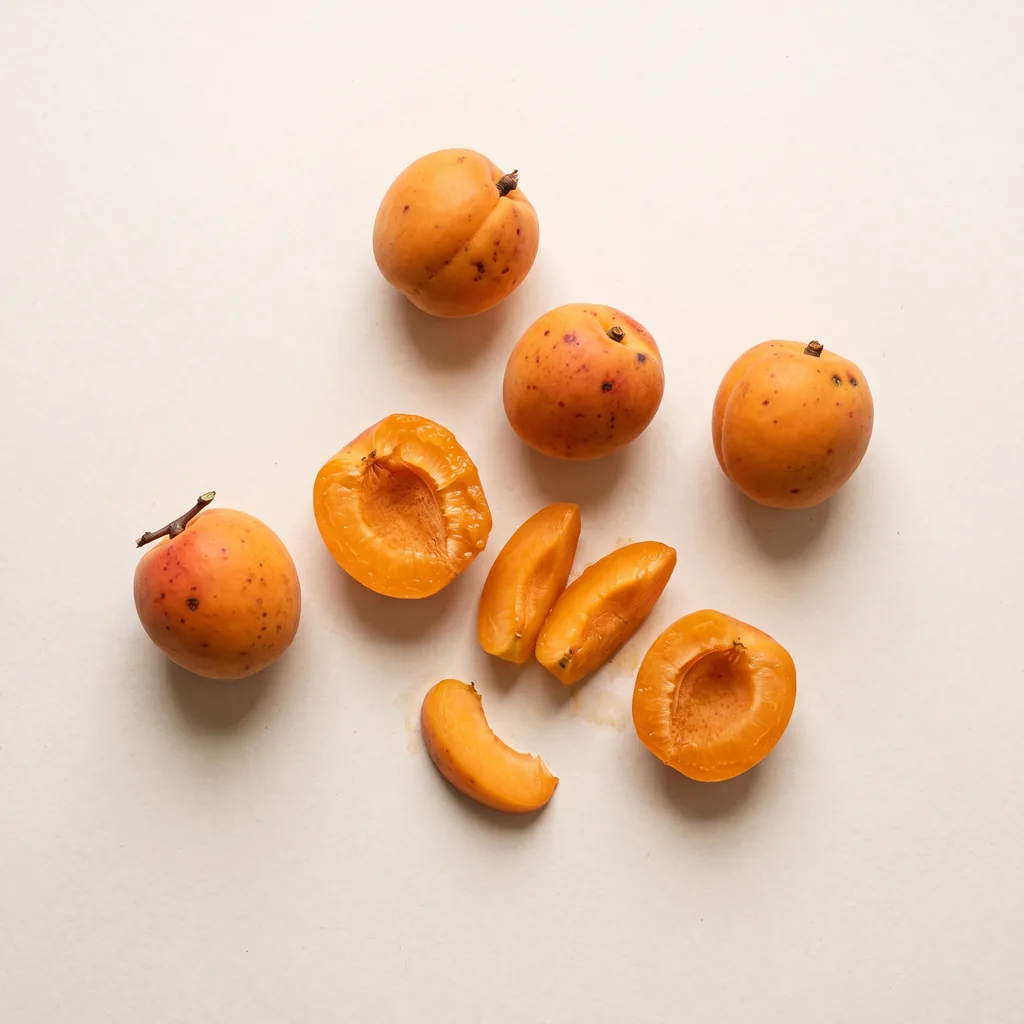
When can babies eat apricot?
Apricot can be offered around 6 months, once baby is ready for solids, provided the fruit is soft and fully ripe, or has been cooked tender. Among stone fruits, it shows up early in the season. Its sweetness is balanced by a little tartness, which works in savory dishes such as Moroccan tagine and Pakistani biryani, and it also appears in desserts, including Armenian doshab and Greek baklava.
Apricot gives carbohydrate, fiber and fluid. It also carries potassium plus vitamins K, E, C, B6 and A. These support a baby's energy, digestion, fluid and electrolyte balance, skin, vision, iron absorption, immunity and blood clotting. Apricot and other stone fruits can especially help babies with constipation.
How do you prepare apricot for babies?
Serve a very ripe apricot, pitted and halved. The flesh should mash easily when pressed between thumb and forefinger. Leaving the skin on gives baby something to hold on a slippery fruit. If the skin worries you, peel it, then coat the fruit with shredded coconut or finely ground nuts or seeds so it is easier to hold.
Should baby bite off a large chunk, keep your fingers out of the mouth. Kneel in front of baby and encourage them to look down. Gravity helps move the piece out.
Dried apricot is hard to chew and a choking risk. After 18 months, if the child has built biting, tearing and chewing skills, you may try a whole pitted dried apricot. Show how to bite each piece. At 24 months you can eat a whole apricot together and show the pit. If a pit goes into the mouth, stay calm. Kneel beside the child, stick out your tongue and ask them gently to spit it out, with your hand under their chin.
Preparation by age
The same food is served differently at each age. What matters is how your baby sits, grasps and chews, more than the calendar.
6 months
6 months · How to cut and serve for baby-led weaningstrip
Cut: Finger strip
Remove the pit and halve the fruit. Ripe apricot skin is soft, but peeling it for the first tries makes the texture easier for baby. Serve ripe, soft flesh in finger-thick slices. The natural fiber and sorbitol can act as a mild laxative. That may help a constipated baby, but start with a small portion the first time and watch the reaction.
6 months · How to prepare as a puréemash
Cut: Fork mashed
Mash a very ripe, pitted apricot with a fork. Stir it into a soft spoonable food such as porridge or yogurt. If the fruit is firm, cook it until soft first.
9 months
9 months · How to prepare as thin slicesslice
Cut: Thin slice
Cut ripe, soft apricot into thin slices, with or without skin. The slices should mash easily when pressed between thumb and forefinger. If baby cannot pick up slices yet, stay with pitted halves. Apricot is very slippery, so coating small pieces in shredded coconut gives your baby something to hold.
12 months
12 months · How to prepare for bites and fork practicecube
Keep serving ripe apricot as thin slices or pitted halves. If your child puts a whole half in the mouth, give them a minute, then show them how to get the piece out if needed. You can also cut apricot into bite-size pieces and preload a fork. Dried apricot is hard to chew. If a recipe calls for it, soak in warm water until completely soft, then chop finely or purée.
Is apricot a choking hazard for babies?
Choking risk: medium
The pit and firm flesh are risky. Remove the pit, then slice or mash ripe, soft fruit. Never serve hard, unripe apricots.
Apricots have a hard pit inside, and unripe ones are slippery and firm. These traits raise the choking risk. Always remove the pit. Slice or mash ripe, soft fruit. Do not serve hard, unripe apricots. Stay close while your baby eats.
Pit and dried apricots
Do not give a small baby apricot with the pit or whole dried apricot. If needed, soak dried apricot and chop it finely.
Is apricot a common allergen?
Apricot is not a common allergen, though serious reactions have been reported. Someone who once reacted badly to other stone fruits, without having pollen allergy, may face a higher chance of a serious apricot allergy. People allergic to almond or to relatives like apple, pear, cherry, peach, and nectarine may also be sensitive to apricot, as may people with pollen-food syndrome. This syndrome normally brings a short itch, tingle, or burn in the mouth, and a dangerous reaction is unlikely. Peeling and cooking the fruit may reduce reactions in sensitive people.
Give a small amount at the first meals. If nothing happens, raise the portion slowly.
Key nutrients
Frequently asked questions about apricot
Can babies eat dried apricots?
Dried fruit is hard to chew and a choking risk. If a recipe needs it, soak it in warm water until completely soft, then chop finely or purée. Do not offer whole dried apricot before 18 months.
Does apricot help with constipation?
Apricot and other stone fruits can help babies who are constipated. Fiber and sorbitol can have a mild laxative effect. Start with a small portion the first time and watch the reaction.
How do I know if an apricot is ripe enough?
It should mash easily when pressed gently between thumb and forefinger. Hard, unripe apricots are slippery and firm, so they are not suitable for babies.
Sources for this page
- Dünya Sağlık Örgütü. (2023). Guideline for complementary feeding of infants and young children 6-23 months of age.
- NHS. (n.d.). Preparing food safely for babies.
- CDC, Infant and Toddler Nutrition. (n.d.). Choking Hazards.
- Inomata N. (2020). Gibberellin-regulated protein allergy: Clinical features and cross-reactivity. Allergology International. doi:10.1016/j.alit.2019.10.007
Guides on iron, allergen introduction, gagging and drinks. Read the starting solids guides
Medical note
This page is for information only and is not a substitute for medical advice, diagnosis or treatment. Talk to your pediatrician before any feeding decision, especially about allergen introduction and reactions.
The Lokmini app
Log apricot, reactions and your allergen journey in the app.
Open in LokminiLokmini is coming soon to the App Store.
Astro Tasarım Simay Yenice · Türkiye · merhaba@lokmini.com