Açaí
- First taste
- 6 months
- Choking risk
- medium
- Common allergen
- no
- Iron
- low
Fiber-rich palm berry with anthocyanins
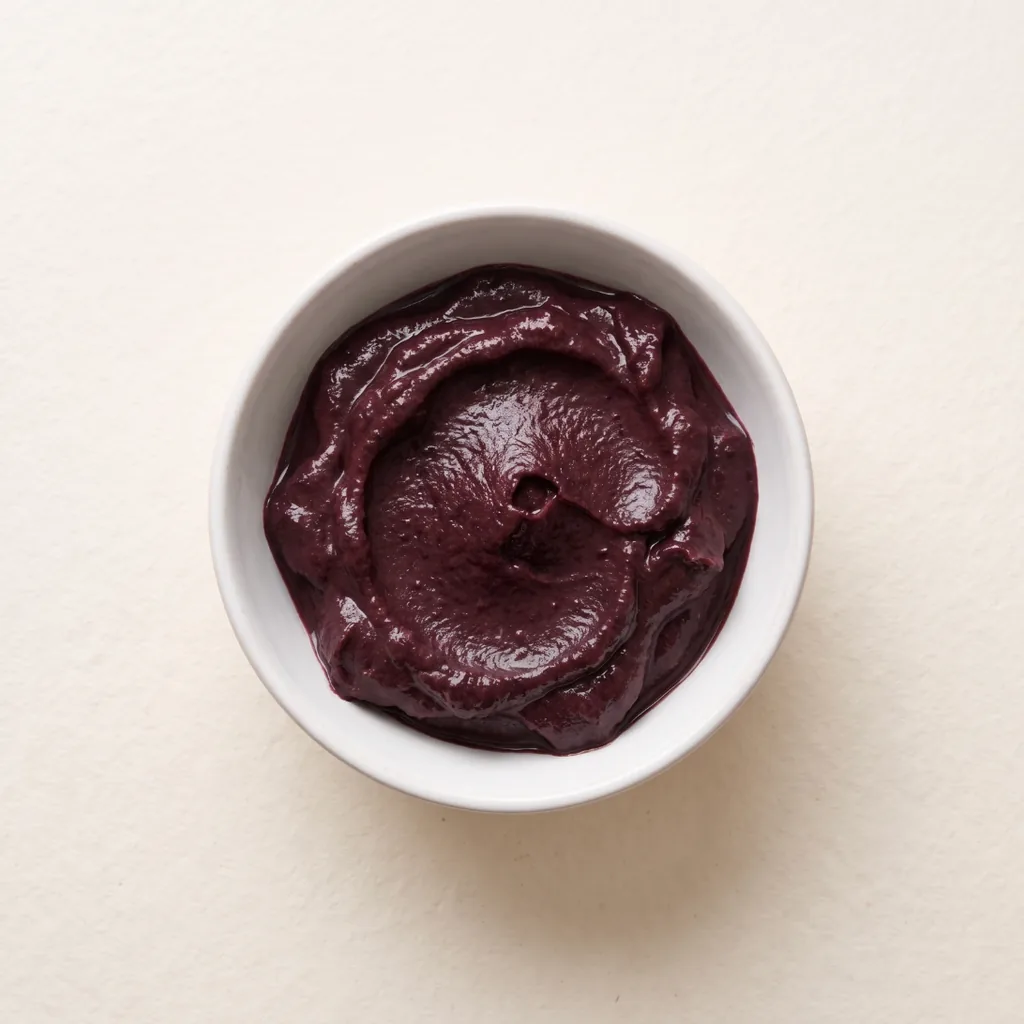
When can babies eat açaí?
Açaí can start once your baby is about 6 months old and ready for solids. It is the fruit of a palm tree that grows in the Amazon region.
You also get fiber and plant pigments known as anthocyanins, with a little vitamin B6, zinc, iron and calcium. These nutrients support digestion, bones, blood and immunity. Fresh berries are hard to find outside the Amazon, so frozen seedless purée or powder is usually the easier choice.
Skip supplements
Açaí supplements can include ingredients that are not safe for babies, for example large amounts of caffeine. Do not give them to your baby.
How do you prepare açaí for babies?
Purée, powder and popsicles
Purée or powder is the most practical form of açaí. Stir it into yogurt or porridge, or freeze it in molds for an icy snack.
Many açaí bowls contain honey, added sugar and granola. Build baby's bowl from suitable toppings such as avocado, banana and coconut flakes. Handing over a preloaded spoon also helps baby practice self-feeding.
Juice
A small amount of pasteurized açaí juice is fine after 12 months. It is better to wait until the second birthday before juice becomes a regular drink. Frequent sweet drinks raise the risk of cavities and can crowd out meals. Never offer raw juice.
Preparation by age
The same food is served differently at each age. What matters is how your baby sits, grasps and chews, more than the calendar.
6 months
6 months · How to prepare as a puréemash
Use seedless açaí purée or powder. Offer the purée plain or mix it into a soft food such as yogurt or porridge. You can also freeze the purée in molds for a baby-friendly icy treat. Keep honey, granola, big seeds, whole grapes and whole nuts out of the bowl.
12 months
12 months · How to prepare in bowls and popsiclesmash
Keep serving the purée plain or blended into a spoonable food. If your baby shares your açaí bowl, pick off the granola, big seeds, whole grapes and whole nuts first. After 18 months you can also add the purée to fruit smoothies.
Is açaí a choking hazard for babies?
Choking risk: medium
The seed and round shape of fresh berries are risky. Choose seedless purée or powder.
Fresh açaí berries are small, round and contain a seed, so they can block a baby's airway. Choose mashed, seedless fruit, ready-made purée or powder.
Toppings like granola, big seeds, whole grapes and whole nuts raise the risk further. Remove them or grind them finely. Stay within arm's reach while your baby eats.
No whole or seeded berries
Do not give whole or seeded açaí berries to your baby.
Is açaí a common allergen?
Açaí rarely causes allergy, yet any food can trigger one. It belongs to the palm family. People who react to dates or hearts of palm may have a slightly higher chance of reacting to açaí.
Begin with a small spoonful at the first meals. When nothing unusual happens, raise the portion slowly at later meals.
Key nutrients
Frequently asked questions about açaí
Can babies have açaí bowls?
Yes, as long as the bowl uses baby-friendly ingredients. Honey carries a risk of infant botulism before 12 months, so keep it out. Remove granola and whole nuts, or grind them finely.
At what age can babies have açaí juice?
Small amounts of pasteurized juice are fine after 12 months. Waiting until age 2 before it becomes a regular drink is better. Skip raw juice because it carries a higher risk of foodborne illness.
Is açaí healthy for babies?
Yes. Expect fiber and anthocyanins, with a little vitamin B6, zinc, iron and calcium on top. Fresh berries are rare, so seedless frozen purée or powder works well.
Sources for this page
- Dünya Sağlık Örgütü. (2023). Guideline for complementary feeding of infants and young children 6-23 months of age.
- ESPGHAN Committee on Nutrition, Fidler Mis N, Braegger C, Bronsky J, Campoy C, Domellöf M, et al. (2017). Sugar in Infants, Children and Adolescents. Journal of Pediatric Gastroenterology and Nutrition. doi:10.1097/MPG.0000000000001733
- Kwaasi AAA, Parhar RS, Al‐Sedairy ST, Collison KS, Al‐Mohanna FA, Harfi HA, et al. (1999). Allergy to date fruits: characterization of antigens and allergens of fruits of the date palm (Phoenix dactylifera L.). Allergy. doi:10.1034/j.1398-9995.1999.00116.x
- Mayoral M, Torres MJ, Muñoz M, Bartolomé B, Blanca M. (2006). Anaphylactic reaction following ingestion of fresh heart of palm (Chamaerops humilis L.). Allergy. doi:10.1111/j.1398-9995.2006.01051.x
Guides on iron, allergen introduction, gagging and drinks. Read the starting solids guides
Medical note
This page is for information only and is not a substitute for medical advice, diagnosis or treatment. Talk to your pediatrician before any feeding decision, especially about allergen introduction and reactions.
The Lokmini app
Log açaí, reactions and your allergen journey in the app.
Open in LokminiLokmini is coming soon to the App Store.
Astro Tasarım Simay Yenice · Türkiye · merhaba@lokmini.com