Mutton
- First taste
- 6 months
- Choking risk
- high
- Common allergen
- no
- Iron
- high
Iron-rich · cook well · choking risk
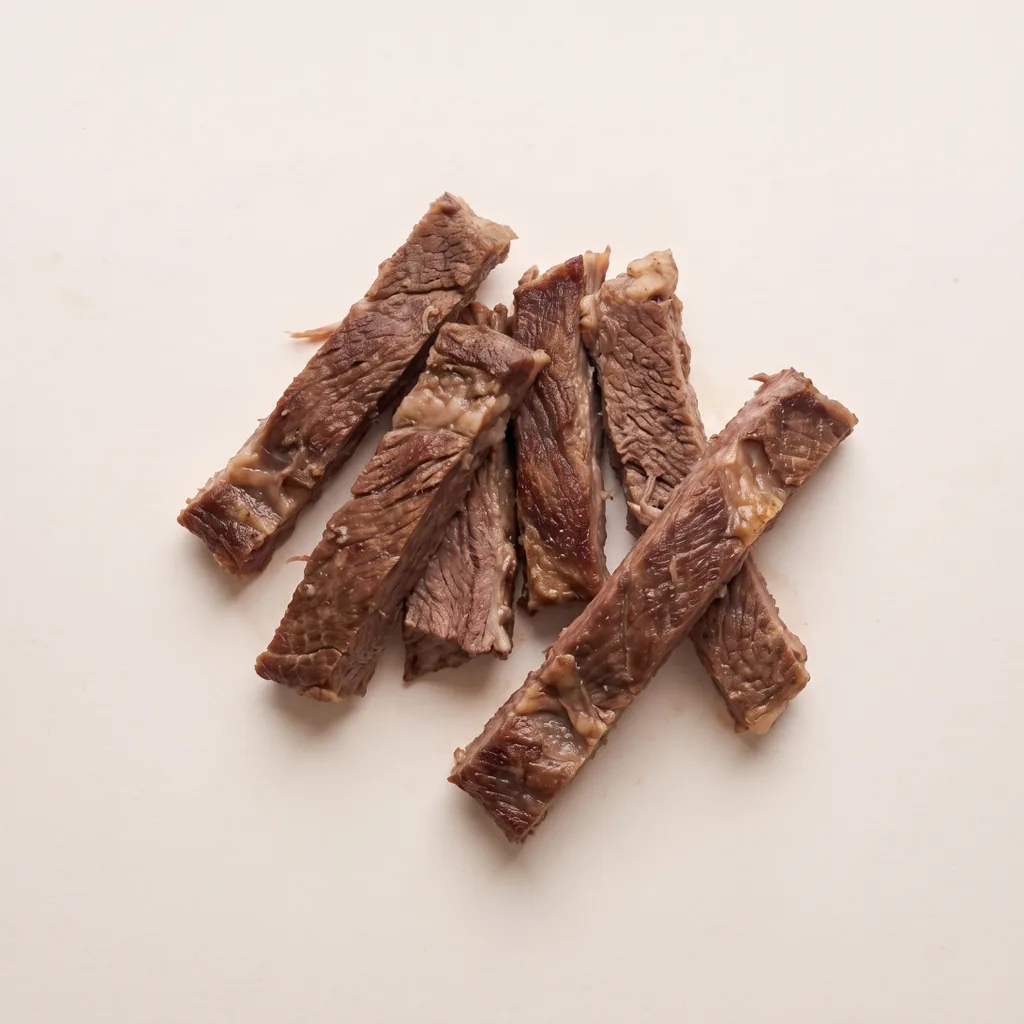
When can babies eat mutton?
Mutton can be offered once baby is about 6 months old and ready for solids. Mutton means meat from grown sheep, and in a few regions the word includes goat meat as well. Compared with lamb, the flavor is stronger and the texture tougher, so it is usually braised, marinated or stewed.
It is rich in protein and fat. Nutrient-wise it brings heme iron and zinc, selenium, choline, omega-3 fats and the B vitamins B6 and B12. A baby's iron needs rise after 6 months because stores run low. Mutton is a good source of iron.
Skip processed products
Cured and processed mutton such as sausage and mutton bacon is high in salt and nitrates. Do not offer it before the first birthday.
How do you prepare mutton for babies?
Always cook ground meat all the way through. The inside must reach 160 F (71 C). Undercooked ground meat can carry bacteria like E. coli and salmonella.
Keep meatballs tender and 5 cm (2 inches) or more across. A baby cannot pop a large meatball into the mouth whole. For a softer result, simmer them in stew or sauce, or work breadcrumbs or cooked grains into the mix.
Frozen ready-made meatballs are usually salty, and they are small and hard. Crumble them and stir into a soft food. Check the label, because meatballs may include wheat, dairy, egg, or sesame.
Dry meat may cling to the palate, and a child could gag. Stay calm and let your baby work it forward with the tongue. Dipping meat in sauce makes it easier to swallow.
Preparation by age
The same food is served differently at each age. What matters is how your baby sits, grasps and chews, more than the calendar.
6 months
6 months · How to prepare as a puréemash
Cook ground mutton until the inside reaches 160 F (71 C). Stir it into a spoonable food such as vegetable purée, porridge or yogurt. Do not serve loose crumbles on their own.
6 months · How to offer a bone-in piece or stripstrip
Offer a chop on the bone after trimming off any loose meat and fat, or a strip of braised shank about as thick as two adult fingers. At this age baby mostly sucks and gnaws. If a big piece comes off, stay calm and cup your hand under the chin.
9 months
9 months · How to prepare as shredscube
Cut: Shredded
Shred well-cooked meat into small strands and serve it alone or in a meal. In stews and kebabs with cubed meat, always shred the meat. Break meatballs and patties into small bites. Patties are still fine as long as they measure 2 inches (5 cm) or more across and are cooked until 160 F (71 C) at the center.
12 months
12 months · How to prepare as thin stripsstrip
Cut shredded chop, braised shank or thin strips of meat into bite-sized pieces. Because mutton tends to dry out, dipping the pieces in sauce helps keep them tender. Keep shredding cubes in stews and kebabs. Mutton sausage can be offered in moderation, split lengthwise into thin sticks.
Is mutton a choking hazard for babies?
Choking risk: high
Meat is a frequent cause of choking. Do not serve cubes or large chunks. Shred the meat and keep ground meat and meatballs soft.
Choking on meat is common. Do not serve cubes or large chunks. In stews, kebabs and skewers with cubed meat, shred the meat.
Meatballs can fall apart in the mouth and cause gagging. If your baby cannot move a piece forward, cup your hand under the chin and show how to spit by sticking out your tongue.
No cubed meat
Cubes, kebab pieces and skewered chunks stay a high choking risk up to 24 months. Shred or mince them.
Is mutton a common allergen?
Mutton rarely causes allergy, although cases have been reported. Cooking lowers the risk of a reaction.
Some tick bites can lead to alpha-gal allergy. Alpha-gal is a sugar found in the meat of all mammals except primates. The reaction is delayed and shows up 3 to 8 hours after eating red meat. A few people with this allergy also react to traces of the sugar in milk products, gelatin and mammal organs like liver.
Some people allergic to mutton are also sensitive to touching wool or lanolin. Most people with wool or lanolin sensitivity eat mutton without trouble.
Offer a small amount at the first few meals and watch your baby closely.
Key nutrients
Frequently asked questions about mutton
Can babies eat mutton meatballs?
Yes, from 6 months. Make the meatball well cooked, tender and 5 cm (2 inches) or wider. A baby cannot pop a big one into the mouth whole.
How is mutton different from lamb?
Mutton is the meat of adult sheep. It tastes stronger and is tougher than lamb, so it is softened by braising, marinating or stewing.
Can babies have mutton sausage?
Not before the first birthday, because it is high in salt and nitrates. After 12 months you can offer it in moderation, split lengthwise into thin sticks.
How hot should ground meat get?
The inside should reach 160 F (71 C). That lowers the risk of E. coli and salmonella.
Sources for this page
- CDC. (2022). Alpha-gal syndrome.
- USDA Food Safety and Inspection Service. (n.d.). Safe minimum internal temperature chart.
Guides on iron, allergen introduction, gagging and drinks. Read the starting solids guides
Medical note
This page is for information only and is not a substitute for medical advice, diagnosis or treatment. Talk to your pediatrician before any feeding decision, especially about allergen introduction and reactions.
The Lokmini app
Log mutton, reactions and your allergen journey in the app.
Open in LokminiLokmini is coming soon to the App Store.
Astro Tasarım Simay Yenice · Türkiye · merhaba@lokmini.com