Melon
- First taste
- 6 months
- Choking risk
- medium
- Common allergen
- no
- Iron
- low
Not an allergen · slippery, wash the rind
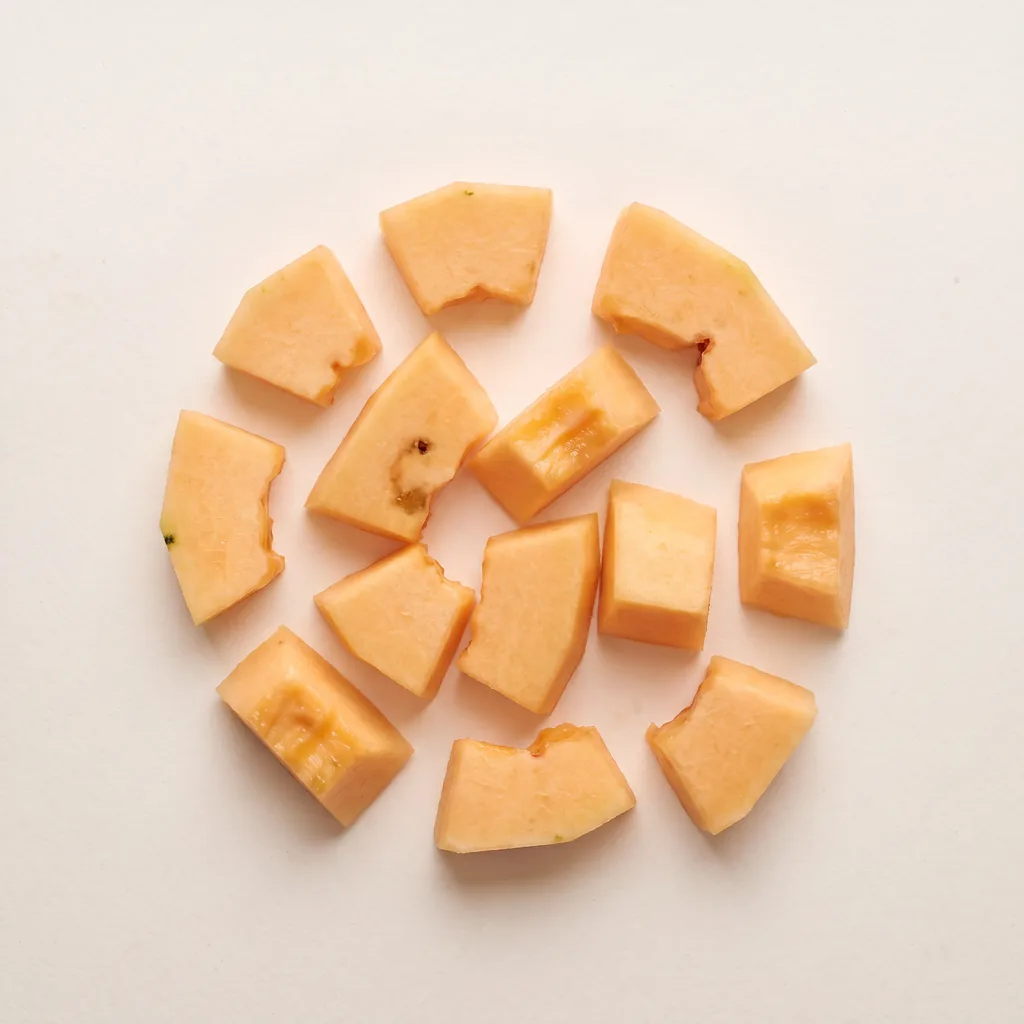
When can babies eat melon?
When can babies have melon?
Melon can be offered from about 6 months, once it is ripe and soft. It is a sweet, juicy fruit and a good way for baby to learn new textures.
Nutrition
A study on cantaloupe-type melon reported vitamin C, carotenoids and potassium in the fruit, along with a very high water share. Carotenoids are precursors of vitamin A.
How do you prepare melon for babies?
Preparation and hygiene
Bacteria can be present on the rind of a melon. A knife can carry them from the rind into the flesh. Wash your hands before cutting, scrub the outside of the melon under running water with a clean brush and dry it. Do not use soap.
Storage
Refrigerate cut melon within 2 hours, or within 1 hour in very hot weather. Do not serve a piece that has sat out. If you buy pre-cut melon, choose one sold refrigerated and keep it at 40 degrees F (4 degrees C) or colder at home.
Salmonella and Listeria
Salmonella outbreaks and product recalls have been linked to melons. Do not skip the hygiene steps.
Preparation by age
The same food is served differently at each age. What matters is how your baby sits, grasps and chews, more than the calendar.
Prep time: 5 min
6 months
6 months · How to cut and serve for baby-led weaningstrip
Cut: Finger strip
Peel ripe, soft melon and remove the seeds, then cut palm-length wedges about as thick as a finger. If the wedge is too slippery, roll it in finely ground oats so baby can grip it more easily.
9 months
9 months · How to cut and servecube
Cut: Bite sized piece
Serve ripe melon in small bite-size cubes. Firm, unripe melon that cannot be squashed with a finger is not suitable at this age. Choose a soft one.
12 months
12 months · How to cut and servecube
Keep serving melon as small cubes or thin slices. Large, slippery pieces can be swallowed quickly. Do not make pieces bigger than a bite.
Is melon a choking hazard for babies?
Choking risk: medium
Melon is slippery, and unripe melon is firm. Choose ripe, soft fruit. Cut it into strips or small cubes and stay close to baby.
Choking risk
Melon carries a medium choking risk. The pieces are slippery and unripe melon is firm. The CDC and NHS ask that foods be prepared in a shape and size suited to baby. Cut ripe melon into strips or small cubes and avoid large slippery pieces. Feed baby sitting upright.
Is melon a common allergen?
Allergen status
Melon is not among the common allergens. Start with a small amount the first time. If itching in the mouth, a rash or swelling appears, stop and contact your pediatrician.
Key nutrients
Frequently asked questions about melon
Why should I wash the rind of a melon?
A knife can carry bacteria from the rind into the flesh. Scrub the melon under running water with a clean brush and dry it before cutting. Do not use soap or bleach.
How long can cut melon sit out?
Put cut melon in the refrigerator within 2 hours at most, or within 1 hour when it is very hot. Do not give baby a piece that has been sitting out.
The wedge is too slippery. What can I do?
You can roll the wedge in finely ground oats so baby can grip it more easily. Still keep it about as thick as a finger and stay close to baby.
Can I buy pre-cut melon?
Salmonella outbreaks have been linked to pre-cut melon. If you buy it, choose one sold refrigerated and keep it at 40 degrees F (4 degrees C). If possible, cut a whole melon yourself.
Sources for this page
- Dünya Sağlık Örgütü. (2023). Guideline for complementary feeding of infants and young children 6-23 months of age.
- NHS. (n.d.). Preparing food safely for babies.
- CDC, Infant and Toddler Nutrition. (n.d.). Choking Hazards.
- CDC. (2018). 2018 Salmonella Adelaide Infections Linked to Pre-Cut Melon, Advice to Consumers and Retailers.
- FDA ile paylaşılan sektör rehberi. (2005). Commodity Specific Food Safety Guidelines for the Melon Supply Chain, 1st edition.
- FDA. (n.d.). Fruits, Veggies and Juices (Food Safety for Moms-to-Be).
- Plants (Basel). (2023). Insights on the Nutritional Profiling of Cantaloupe (Cucumis melo L.) via 1-Naphthalene Acetic Acid.
Guides on iron, allergen introduction, gagging and drinks. Read the starting solids guides
Medical note
This page is for information only and is not a substitute for medical advice, diagnosis or treatment. Talk to your pediatrician before any feeding decision, especially about allergen introduction and reactions.
The Lokmini app
Log melon, reactions and your allergen journey in the app.
Open in LokminiLokmini is coming soon to the App Store.
Astro Tasarım Simay Yenice · Türkiye · merhaba@lokmini.com