Kashar cheese
- First taste
- 6 months
- Choking risk
- medium
- Common allergen
- yes
- Iron
- low
Cow's milk allergen · pasteurized, small portions
Contains allergens
Each new allergen is offered on its own and watched for two hours. Our allergen introduction guide is available in Turkish for now.
When can babies eat Kashar cheese?
When can babies have kashar?
Kashar can be offered once your baby is ready for solids, from about 6 months. The NHS says pasteurized hard cheeses can be given from 6 months.
The Turkish Food Codex Cheese Communique describes kashar as a cheese made by scalding the curd, which can be fresh or ripened. It defines pasteurization as at least 72 °C for 15 seconds, or 63 °C for 30 minutes.
Salt
Kashar is salty. The NHS says babies should not eat much salt because it is not good for their kidneys. Keep portions small and do not add extra salt.
How do you prepare Kashar cheese for babies?
Preparation basics
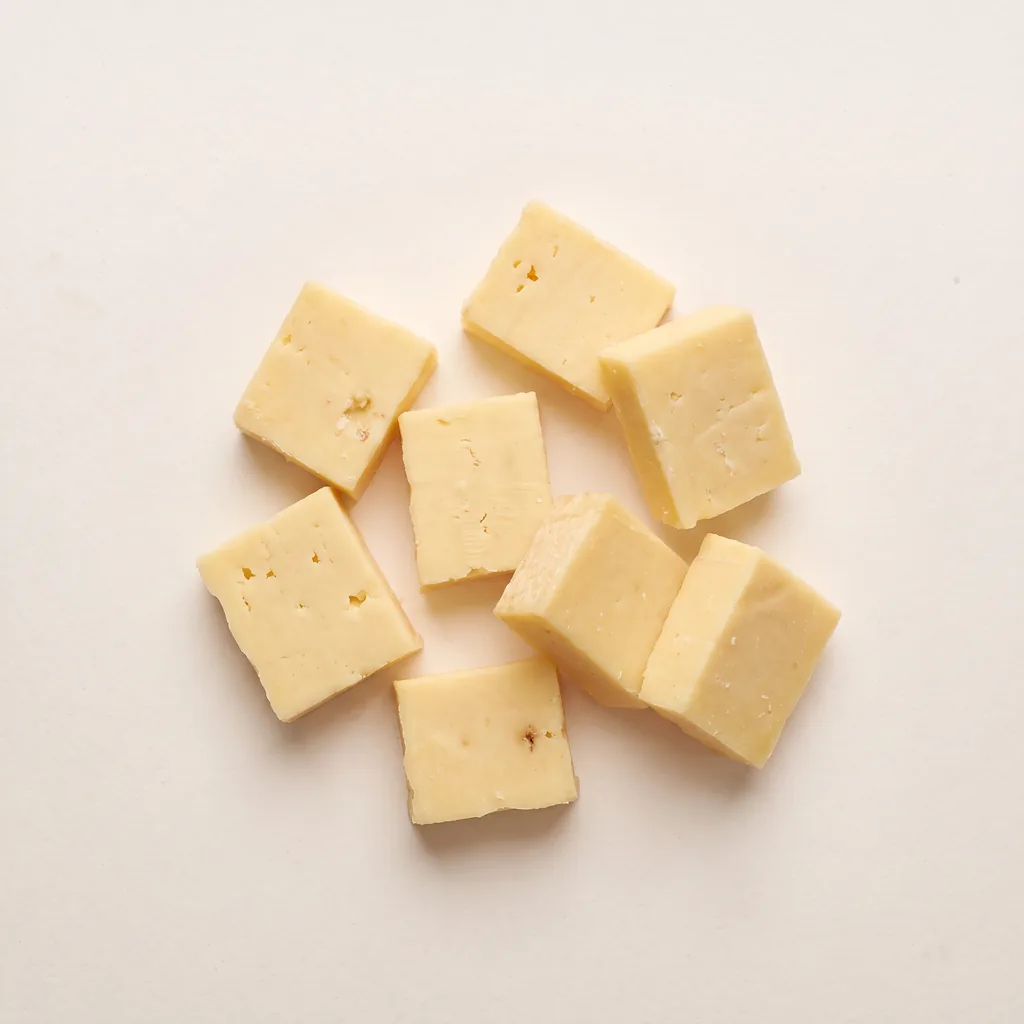
Choose fresh kashar made from pasteurized milk. Grate it finely or cut thin, flat slices. Melting it into a warm dish is also easy. Use aged kashar only when melted.
In kashar made the traditional way from raw milk, a study reported that the production and ripening steps are not an effective barrier against microorganisms. So choose a pasteurized product and read the label.
Preparation by age
The same food is served differently at each age. What matters is how your baby sits, grasps and chews, more than the calendar.
Prep time: 5 min
6 months
6 months · How to prepare as a puréemash
Cut: Grated
Finely grate fresh kashar made from pasteurized milk and melt it into warm vegetable purée, egg or pasta. Kashar is salty, so use only a small amount. Cow's milk protein is a new allergen. If your baby has not had yogurt or cheese before, offer a small amount in the morning the first time.
9 months
9 months · How to cut and serveslice
Serve fresh kashar as thin, flat slices or grated. Thick cubes and hard pieces of aged kashar can get stuck in the throat. Use aged kashar only when melted.
12 months
12 months · How to cut and servecube
Serve kashar as thin slices or small, thin cubes. Kashar melted between slices of bread, or cheesy zucchini fritters made without added salt, suit this age. Keep the portion small because of the salt.
Is Kashar cheese a choking hazard for babies?
Choking risk: medium
Thick cubes and hard chunks of aged kashar can get stuck in the throat. Grate finely, slice thinly or melt it.
Choking risk
Kashar carries a medium choking risk. The CDC lists large pieces of cheese as a choking hazard. The NHS suggests grating cheese or cutting it into short, narrow strips. Do not serve thick cubes or hard pieces of aged kashar. Stay with your baby during meals.
Is Kashar cheese a common allergen?
Allergen status
Kashar contains cow's milk protein and is a cow's milk allergen. Offer new allergens one at a time and in very small amounts. Trying it in the morning makes it easier to watch for a reaction.
A rash, vomiting, diarrhea, cough or swollen lips can be signs of a reaction. For severe symptoms, call emergency services. If cow's milk allergy has been diagnosed, do not serve it without your doctor's advice.
Key nutrients
Frequently asked questions about Kashar cheese
Is kashar too salty for babies?
Kashar is salty. Keep the portion small and add no extra salt. The NHS notes that babies should not eat much salt.
Can I give aged kashar?
Hard pieces of aged kashar can get stuck in the throat. Use it only melted and in small amounts.
Is kashar from raw milk okay?
Choose a pasteurized product. The NHS notes a listeria risk with unpasteurized cheeses. A Turkish study reported that the steps in traditional raw milk kashar are not an effective barrier against microorganisms.
How should I serve kashar?
Grate it finely, cut thin flat slices, or melt it into a warm dish. Do not serve thick cubes.
Sources for this page
- Dünya Sağlık Örgütü. (2023). Guideline for complementary feeding of infants and young children 6-23 months of age.
- NHS. (n.d.). Preparing food safely for babies.
- CDC, Infant and Toddler Nutrition. (n.d.). Choking Hazards.
- Halken S, Muraro A, de Silva D, Khaleva E, Angier E, Arasi S, et al. (2021). EAACI guideline: Preventing the development of food allergy in infants and young children (2020 update). European Academy of Allergy and Clinical Immunology. doi:10.1111/pai.13496
- Türkiye Ulusal Alerji ve Klinik İmmünoloji Derneği. (n.d.). Besin Alerjisi, öncelikli 10 besin.
- NHS. (n.d.). Foods to avoid giving babies and young children.
- T.C. Tarım ve Orman Bakanlığı, Resmî Gazete 29261. (2015). Türk Gıda Kodeksi Peynir Tebliği (Tebliğ No: 2015/6).
- Turkish Journal of Veterinary and Animal Sciences (Çetinkaya, Soyutemiz). (2006). Microbiological and chemical changes throughout the manufacture and ripening of kashar: a traditional Turkish cheese.
Guides on iron, allergen introduction, gagging and drinks. Read the starting solids guides
Medical note
This page is for information only and is not a substitute for medical advice, diagnosis or treatment. Talk to your pediatrician before any feeding decision, especially about allergen introduction and reactions.
The Lokmini app
Log Kashar cheese, reactions and your allergen journey in the app.
Open in LokminiLokmini is coming soon to the App Store.
Astro Tasarım Simay Yenice · Türkiye · merhaba@lokmini.com